
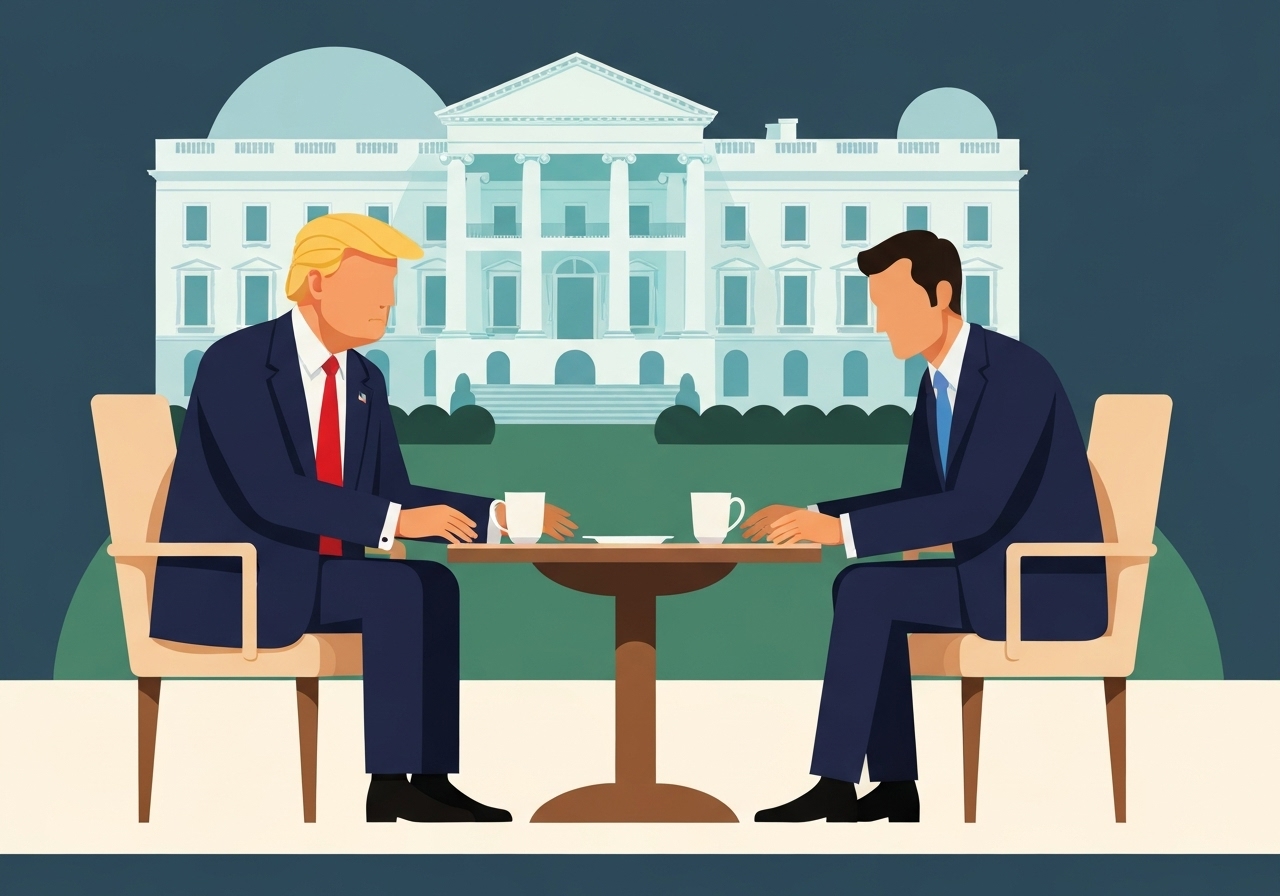
Lead: President Donald Trump announced he will meet New York City Mayor-elect Zohran Mamdani in the Oval Office on Friday, November 21, following a request from Mamdani’s team. The meeting, confirmed by Trump on Truth Social, comes after the 34-year-old democratic socialist defeated Andrew Cuomo in both the June Democratic primary and the November general election. Mamdani’s transition team says the discussion will cover public safety, economic security and an affordability agenda endorsed by more than one million New Yorkers. The announcement follows a tense run-up in which Trump last-minute endorsed Cuomo and warned he might withhold federal funds if Mamdani prevailed.
Key Takeaways
- President Trump said on November 19, 2025, that he and Mayor-elect Zohran Mamdani will meet at the White House on Friday, November 21.
- Mamdani, 34, beat former Governor Andrew Cuomo in the June Democratic primary and secured the mayoralty in November; his platform emphasizes affordability and public services for over one million voters.
- Trump called Mamdani a “Communist Mayor” in his public post; that characterization is disputed and flagged in news coverage as false.
- Mamdani’s spokesperson, Dora Pekec, said the incoming administration requested the meeting to discuss public safety, economic security and affordability priorities.
- Trump endorsed Cuomo late in the campaign and warned of cutting federal support, a threat whose implementation would face legal and political checks.
Background
Zohran Mamdani emerged as a nationally watched figure after his upset in the June Democratic primary over Andrew Cuomo and a decisive general-election win in November 2025. Running as a democratic socialist, he campaigned on rent stability, child care affordability, safer public transit and energy reliability—issues cited repeatedly by voters during the campaign. His victory marked a generational shift in New York City politics and attracted immediate national attention because of his policy positions and age, 34.
President Trump intervened late in the race by endorsing Cuomo and publicly criticizing Mamdani, including a warning about federal funds for the city if Mamdani won. Those comments heightened tensions between the incoming NYC mayor and the White House. At the same time, transition teams for incoming mayors typically meet federal officials to coordinate on policing, disaster response, infrastructure and funding matters; Mamdani’s office framed the request to meet as part of that routine transition activity.
Main Event
On the evening of November 19, 2025, President Trump posted that he had agreed to meet Mamdani in the Oval Office on Friday, November 21, and repeated a claim labeling Mamdani a communist. Trump’s post included a brief announcement that further details would follow. The White House did not immediately release an agenda beyond that public post.
Mamdani’s spokesperson, Dora Pekec, responded that the Mayor-elect planned the Washington visit to discuss public safety, economic security and an affordability agenda that over one million New Yorkers supported in the recent election. Officials emphasized the meeting was a standard part of transition coordination rather than a political spectacle.
In an interview on the MSNBC program All In with Chris Hayes, Mamdani said he intended to speak plainly with the president about the struggles New Yorkers face—cost of living pressures, child care, rent, and public utilities such as Con Edison outages. He framed the meeting as an opportunity to press for federal cooperation on those practical, city-level problems rather than ideological debates.
Analysis & Implications
The optics of a White House meeting between a Republican president and a newly elected democratic socialist mayor are complex. For Trump, the encounter offers a chance to demonstrate engagement with a major city while signaling toughness on progressive mayors; for Mamdani, it is an early test of his ability to translate campaign promises into practical negotiations with the federal government. Both sides have incentives to avoid a public rupture ahead of transitional discussions on funding and intergovernmental coordination.
Practically speaking, a president’s capacity to withhold federal funds is limited by statutory and constitutional constraints. Conditionality of federal grants typically requires formal determinations, specific legal authority and often judicial review. If Trump were to pursue funding cuts, the move would likely provoke legal challenges and sharp political backlash from city leaders, Congress and state officials.
Policy-wise, key bargaining areas include public safety grants, housing and homelessness programs, child care subsidies and infrastructure investment to stabilize electricity and transit. Mamdani’s campaign prioritized affordability measures that may require increased federal support or regulatory levers; securing federal cooperation could materially shape his first-year agenda in City Hall. Conversely, a hostile White House could complicate implementation of programs that rely on federal partnerships.
Comparison & Data
| Event | Date | Notable detail |
|---|---|---|
| NYC Democratic primary | June 2025 | Mamdani defeated Andrew Cuomo |
| NYC general election | November 2025 | Mamdani won mayoralty; >1,000,000 voters backed his affordability agenda |
| Oval Office meeting announced | November 21, 2025 | Requested by Mamdani; confirmed by President Trump |
The table frames the timeline: a June primary upset, a November general-election victory, and a rapid follow-up meeting request for November 21. These steps compress transition activity into weeks and create immediate expectations for federal-city coordination on tangible issues raised during the campaign.
Reactions & Quotes
Trump’s announcement and characterization of Mamdani drew quick attention and criticism. Context: the president’s social post repeated a label—”Communist Mayor”—that media outlets flagged as inaccurate; the remark intensified scrutiny of the president’s tone and aims.
“Communist Mayor of New York City, Zohran ‘Kwame’ Mamdani, has asked for a meeting.”
President Donald Trump (post)
Mamdani framed the meeting as pragmatic and focused on everyday hardships affecting New Yorkers, asking for federal engagement on cost-of-living challenges and city services.
“I want to just speak plainly to the president about what it means to actually stand up for New Yorkers…”
Zohran Mamdani, Mayor-elect (MSNBC interview)
Transition officials emphasized standard coordination topics; Mamdani’s spokesperson summarized the meeting request as routine for incoming administrations.
“As is customary for an incoming mayoral administration, the Mayor-elect plans to meet with the President in Washington to discuss public safety, economic security and the affordability agenda.”
Dora Pekec, Mamdani spokesperson
Unconfirmed
- Whether President Trump will follow through on previous threats to withhold specific federal funds from New York remains unconfirmed and would likely require formal legal steps.
- Exact agenda items, participants beyond the two principals, and any concrete commitments expected from the meeting have not been publicly released.
- Claims characterizing Mamdani as a communist are not supported by available evidence and remain a politicized label rather than an established fact.
Bottom Line
The scheduled Oval Office meeting on November 21, 2025, is an early consequential test for Mayor-elect Zohran Mamdani and for federal-city relations under a Republican president who intervened in the campaign. For Mamdani, the encounter is an opportunity to secure federal cooperation on measurable problems—public safety funding, housing affordability, child care and energy reliability—that drove voter concerns.
Observers should watch whether the meeting produces specific funding or administrative agreements, how both sides frame outcomes publicly, and whether any federal action proposed by the president is legally and politically viable. In the near term, the visit signals a pragmatic step by the new mayor to pursue results, while also exposing him to heightened national scrutiny over how he balances ideology with governance.