
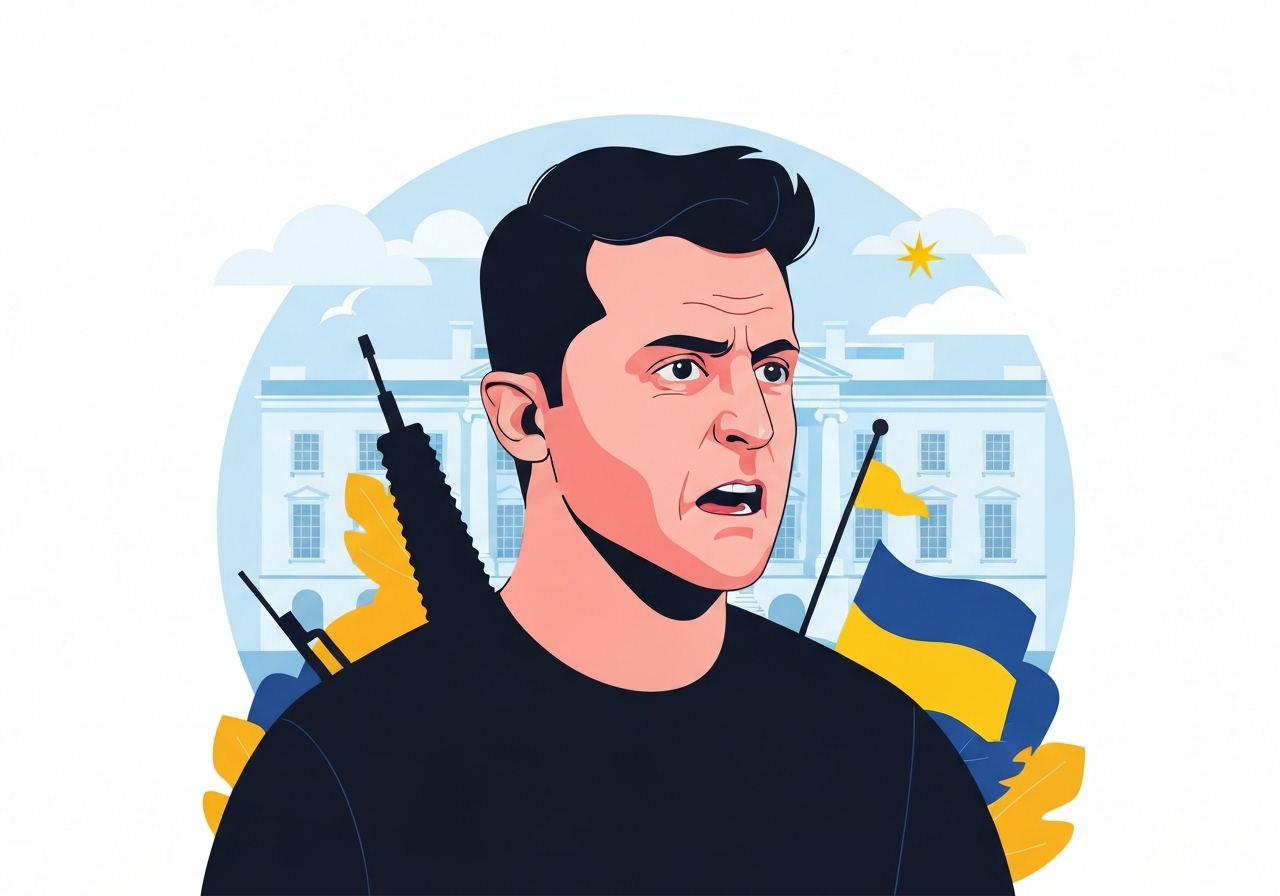
Ukrainian President Volodymyr Zelensky said on Friday that Kyiv could lose crucial US backing if it accepts a widely leaked White House peace proposal that would force territorial concessions and limits on its military. Speaking on Ukraine’s Dignity and Freedom Day, Zelensky framed the choice as between preserving national dignity or risking a key partner, and said his government would calmly pursue alternatives while under intense international pressure.
Key Takeaways
- The leaked 28-point US plan proposes Ukrainian withdrawal from parts of Donetsk, de facto Russian control of Donetsk and Luhansk, and recognition of Crimea as Russian-held territory.
- The draft would cap Ukraine’s military at 600,000 personnel and station European fighter jets in Poland, according to the document.
- The plan includes frozen front-line borders in parts of Kherson and Zaporizhzhia, regions partially occupied by Russia.
- US President Donald Trump said Ukraine must approve the plan by 27 November, though he suggested deadlines could be extended.
- Russia currently controls about 20% of Ukraine’s territory, while Kyiv still receives US air-defence systems and intelligence vital to its defence.
- Zelensky reported phone reassurances of continued backing from UK PM Keir Starmer, French President Emmanuel Macron and German Chancellor Friedrich Merz.
- Russian President Vladimir Putin said Moscow received the plan and would ‘show flexibility’ but is prepared to continue military operations.
Background
The US peace proposal emerged amid slow Russian territorial advances and heavy reported casualties for Moscow’s forces since the full-scale invasion launched in 2022. For Kyiv, sustained deliveries of US-made air-defence systems and other advanced weapons have been critical to blunt Russian strikes and preserve defensive lines. Domestically, President Zelensky faces political strain amid a separate $100m (£76m) corruption scandal that has implicated senior officials, increasing the stakes of any negotiated settlement.
Washington says the plan offers ‘reliable security guarantees’ but provides few public specifics on enforcement mechanisms, NATO’s future role, or what lifting sanctions would entail. The draft reportedly envisions reintegration of Russia into global economic forums and a return to G8 membership, an outcome that Western governments and Kyiv view very differently. International diplomacy is intensifying ahead of the G20 summit in South Africa, where leaders are expected to discuss the proposal.
Main Event
On Friday Zelensky addressed the nation, warning that Ukraine faced enormous pressure to accept terms that Kyiv has previously rejected, including territorial concessions and a commitment not to join NATO. He said his administration would work ‘calmly with America and all the partners’ to propose alternatives and protect the country’s national interest. The speech followed intensive diplomatic exchanges that day between Zelensky and Western leaders and US envoys.
President Trump publicly urged Zelensky to accept the plan, saying ‘he will have to like it’ and suggesting a deadline tied to 27 November. Trump also warned that Ukraine could lose more territory quickly if it does not agree. White House officials sent senior Pentagon representatives to Kyiv earlier in the week as part of efforts to press Ukraine to consider the draft.
Russian President Vladimir Putin told commanders that Moscow had received the proposal and, while claiming willingness to show flexibility, reaffirmed the Kremlin’s commitment to its military objectives. Russia has claimed small territorial gains in southeastern Ukraine in recent days, despite reports of significant battlefield losses. Reaction across Ukraine has been defiant, with civilians and relatives of fallen soldiers rejecting what they call compromises that cede land to Russia.
Analysis & Implications
If Kyiv were to accept provisions that cede control of parts of Donetsk, Luhansk and Crimea, the balance of power in eastern and southern Ukraine would shift decisively in Russia’s favour, with long-term implications for sovereignty and security. A capped Ukrainian military of 600,000 personnel would reduce Kyiv’s capacity to retake territory and deter future aggression, increasing dependence on external security guarantees whose scope and enforceability are currently unspecified.
Politically, acceptance of the plan risks domestic upheaval. Zelensky’s framing of the choice as dignity versus partnership reflects the intense public sensitivity to territorial concessions after three years of widespread mobilization and sacrifice. Internationally, a settlement perceived as biased toward Russia could fracture the Western coalition, complicating future aid flows and undermining allied unity on sanctions and deterrence.
Economically, proposals to reintegrate Russia into global fora and lift sanctions would alter trade and finance patterns, potentially rewarding a state that invaded its neighbour and creating moral and practical dilemmas for Western capitals. Any return of Russian economic privileges would likely be conditional and contested, and could weaken leverage that sanctions currently provide.
Comparison & Data
| Metric | Current / Proposed |
|---|---|
| Territorial control by Russia | About 20% (current) |
| Ukrainian military size | Proposed cap 600,000 personnel |
| Plan length | 28 points (leaked draft) |
The table summarizes key numeric elements in the leaked draft and the current situation. Quantities such as the 20% territorial figure and the 600,000 troop cap are central to public debate because they concretely reflect the scale of concessions being discussed. Analysts caution that numbers alone do not capture enforcement details or timelines, which will determine practical outcomes on the ground.
Reactions & Quotes
International leaders gave mixed immediate reactions while urging careful deliberation. UK Prime Minister Keir Starmer told journalists that allies remain committed to achieving a just and lasting peace and will discuss ways to strengthen any proposal under US leadership.
‘This proposal must be examined and, where necessary, improved to deliver a durable settlement and security for Ukraine.’
Keir Starmer, UK Prime Minister
From Kyiv, Zelensky warned citizens to stay united and said the government would propose alternatives rather than accept terms that would weaken the country. His tone reflected both defiance and a pragmatic note about continued diplomatic engagement with the United States and other partners.
‘We might face a very difficult choice: either losing dignity, or risk losing a key partner. Today is one of the most difficult moments in our history.’
Volodymyr Zelensky, President of Ukraine
President Trump urged acceptance and set a conditional timeline, stating publicly that Ukraine would need to approve the plan within a set period while leaving room to extend deadlines depending on progress.
‘We think we have a way of getting peace. He is going to have to approve it.’
Donald Trump, President of the United States
Unconfirmed
- Claims that the draft was prepared without Ukrainian input remain disputed; some US officials say Kyiv was consulted though the scope of that consultation is unclear.
- Reports that Russia agreed to specific territorial lines in private negotiations have not been publicly verified with documentary evidence.
Bottom Line
The leaked White House draft presents a possible diplomatic path that would, if enacted as described, entail substantial territorial and military concessions by Ukraine in exchange for vague security assurances and potential economic reintegration for Russia. Such terms would reshape the immediate battlefield and the geopolitical order in Europe, but implementation faces legal, political and enforcement hurdles.
For Kyiv, the central calculation is whether any security guarantees are credible and enforceable enough to compensate for territorial losses and a reduced military posture. For the US and its allies, pressing Kyiv toward a deal risks domestic credibility and alliance cohesion if a settlement is seen as disproportionately favouring Russia.
Expect intense negotiations in the coming days at the G20 and in bilateral channels, with outcomes hinging on the detail of guarantees, timelines for sanctions relief, and Kyiv’s ability to secure durable international enforcement mechanisms.