
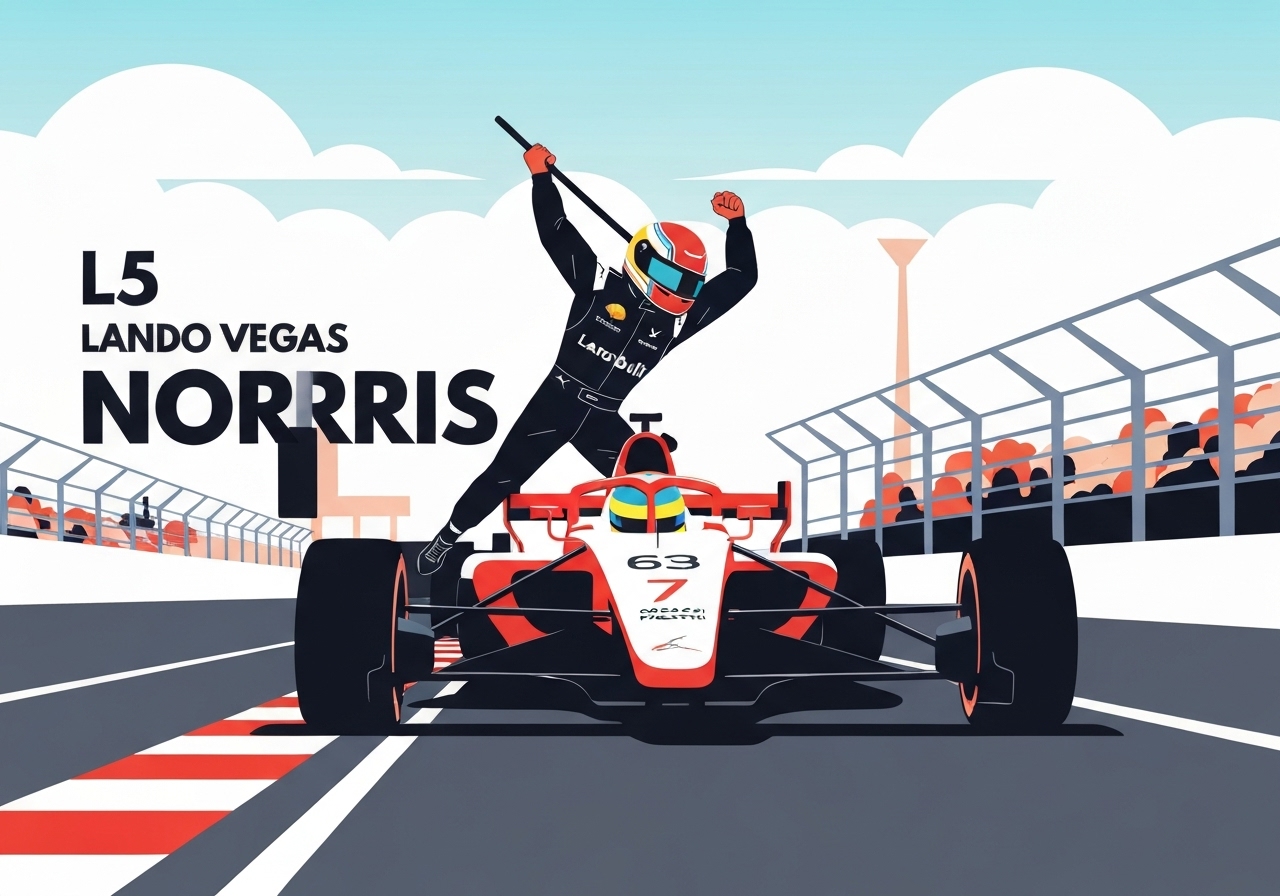
Lead: Lando Norris claimed pole position in a rain-affected qualifying session for the Las Vegas Grand Prix on Saturday, outpacing championship rival Max Verstappen by 0.323 seconds. The session took place on a sodden, newly laid street circuit that required extreme wet tyres for the early runs; Norris moved to intermediates in Q3 to set the fastest time. Team-mate Oscar Piastri, who trails Norris by 24 points with three races remaining, could only manage fifth on the grid. Lewis Hamilton, hampered by tyre-heating problems, was eliminated in Q1 and will start 20th.
Key Takeaways
- Lando Norris (McLaren) secured pole, his third consecutive pole, beating Max Verstappen (Red Bull) by 0.323s in wet qualifying.
- Carlos Sainz (Williams) produced an unexpected third-place qualifying run; George Russell (Mercedes) starts fourth.
- Oscar Piastri (McLaren), second in the championship, qualified fifth and lost time on his final lap due to a yellow flag.
- Conditions required extreme wet tyres in Q1–Q2; most drivers switched to intermediates for the final shootout in Q3.
- Charles Leclerc (Ferrari) reached Q3 but will start ninth; Lewis Hamilton was eliminated in Q1 and is 20th on the grid.
- Racing Bulls drivers Liam Lawson and Isack Hadjar qualified sixth and eighth respectively, with Fernando Alonso between them in seventh.
- Piastri benefits from running and tactical tyre choices in Q2, including an Aston Martin decision to put Lance Stroll on intermediates late in the session.
Background
The Las Vegas Grand Prix is one of three remaining races in a tightly contested 2025 championship. Norris entered the weekend leading Oscar Piastri by 24 points; Max Verstappen is the only other driver still mathematically in contention. Street circuits and night races have amplified the pressure on teams to find grip on new asphalt and painted surfaces, a challenge made worse by unpredictable desert weather.
Qualifying in Vegas was complicated by heavy rain earlier in the day, producing a wet track that required teams to choose between extreme wet and intermediate tyres. Teams had limited wet running data at this circuit because no previous wet sessions had been held here, forcing engineers and drivers to make rapid tyre and setup calls. The outcome of qualifying therefore hinged on timing, tyre choice, and how well drivers could extract heat from the tyres on a damp surface.
Main Event
Q1 and Q2 were run largely on extreme wet tyres as the track was still shedding water; most drivers used those tyres to get a safe flying lap. In Q3, the surface improved enough for most teams to gamble on intermediate tyres, a move that proved decisive. Norris was not fastest on the extreme wets, but after switching to intermediates in Q3 he produced consistently quicker sector times and converted that pace to pole.
Verstappen, typically potent in wet conditions, qualified second but was 0.323 seconds adrift of Norris. His grid slot leaves him well placed to contest the lead into Turn 1 given his strong starts, though the narrow street layout and mixed grip levels make an early overhead pass risky. Carlos Sainz impressed by placing the Williams third on the grid, a result that exceeded pre-session expectations for the team in wet conditions.
Oscar Piastri lost track time during his final flying lap after encountering a yellow flag and therefore could not complete a final push; he will line up fifth. Between Piastri and the front-runners, Liam Lawson (Racing Bulls) and Fernando Alonso (Aston Martin) split the McLaren drivers, with Isack Hadjar eighth. Charles Leclerc made Q3 but will start ninth; Pierre Gasly rounded out the top ten.
Lewis Hamilton, who struggled to generate tyre temperature on his first set of wets, was knocked out in Q1 and will start 20th — the first time the seven-time champion has been last on outright pace in qualifying in his career. Team reports indicate the team could not find a tyre window in the wet session that matched their FP3 balance, leaving Hamilton without a representative lap time in the decisive conditions.
Analysis & Implications
Norris’s pole in Las Vegas strengthens his title momentum: with three races left and a 24-point lead over Piastri, converting pole into a strong result on Sunday could put him in a position to wrap up the championship at the next rounds. However, street circuits and mixed grip conditions reduce the predictability of race outcomes; a mistake or safety car could quickly alter the points picture.
Verstappen’s second place ensures he remains a live threat to both McLarens. From P2 on a street track, his customary aggressive race starts could offer an opportunity to challenge Norris into Turn 1, particularly if the track surface on the inside line proves to have acceptable grip. Team strategy — tyre choice, pit timing, and safety-car responses — will be central to any pass attempts.
McLaren’s qualifying pace in the wet suggests their car balance is versatile across tyre compounds, but race pace over race distance and in variable conditions remains the key unknown. Williams’s podium slot in qualifying highlights how single-lap setups and tyre temperature management can temporarily elevate a team’s position, but sustaining that performance in the race requires consistent tyre life and traffic management.
Comparison & Data
| Pos | Driver | Team |
|---|---|---|
| 1 | Lando Norris | McLaren |
| 2 | Max Verstappen | Red Bull |
| 3 | Carlos Sainz | Williams |
| 4 | George Russell | Mercedes |
| 5 | Oscar Piastri | McLaren |
| 6 | Liam Lawson | Racing Bulls |
| 7 | Fernando Alonso | Aston Martin |
| 8 | Isack Hadjar | Racing Bulls |
| 9 | Charles Leclerc | Ferrari |
| 10 | Pierre Gasly | Alpine |
The table above lists the official top-10 qualifying order for Las Vegas. Compared with recent wet qualifying sessions this season, Norris’s third consecutive pole under mixed conditions highlights a run of consistency on single-lap pace. Teams that managed tyre temperatures and executed timely tyre changes gained crucial tenths during Q3, which were decisive given the tight margins.
Reactions & Quotes
Drivers and team representatives described the session as challenging and nervy, citing the unfamiliar wet lines and limited precedents for wet running at the circuit. Several drivers praised the tyre choices that allowed a late Q3 edge but noted that a full race distance would present different demands on degradation and cooling.
“That was stressful — the kerb nearly caught me out, but it was enough for pole,”
Lando Norris, McLaren
Norris warned that small errors on the kerbs could be costly and that his final lap was compromised by a twitch through the Turns 14–16 chicane. He emphasized the importance of executing clean laps in treacherous conditions and said the team will focus on race pace and strategy for tomorrow.
“There was more time left that we couldn’t use; we’ve got a good car for all conditions,”
Oscar Piastri, McLaren (to Sky Sports)
Piastri accepted that a yellow flag had curtailed his final attempt and remained confident in race trim, stressing McLaren’s competitiveness across conditions and his intention to recover positions during the race. He framed the start and tyre strategy as key opportunities to regain championship points.
“It felt like driving on ice — not fun in the wet,”
Max Verstappen, Red Bull
Verstappen described the surface as treacherous despite his usual wet-weather strength, and said second is still a useful starting spot. He highlighted concerns about inside-line grip at the start but insisted Red Bull would aim to capitalise on race starts and strategy to challenge for victory.
Unconfirmed
- Whether Oscar Piastri’s final lap would have strictly beaten Norris’s time without the yellow flag remains unknown; available timing does not provide a conclusive comparison.
- The root cause of Mercedes’ inability to heat Lewis Hamilton’s tyres in Q1 has not been publicly disclosed by the team at the time of publication.
- Grip levels for the inside line at the race start are uncertain; several drivers expressed hope rather than certainty about its condition for tomorrow.
Bottom Line
Lando Norris’s pole in Las Vegas reinforces McLaren’s single-lap form and gives him a strategic advantage with three races remaining and a 24-point championship lead. However, a wet-to-dry street race is inherently unpredictable: poor starts, safety cars, or tyre-degradation swings could quickly alter the leaderboard and the title fight.
Max Verstappen and Carlos Sainz have the starting positions to disrupt McLaren’s plans, while Oscar Piastri’s fifth place keeps the championship alive if he can execute a strong start and strategy. Sunday’s race will hinge on tyre management, early-race positioning, and how teams adapt strategy to evolving track conditions.
Sources
- BBC Sport — media report summarising qualifying and driver quotes