
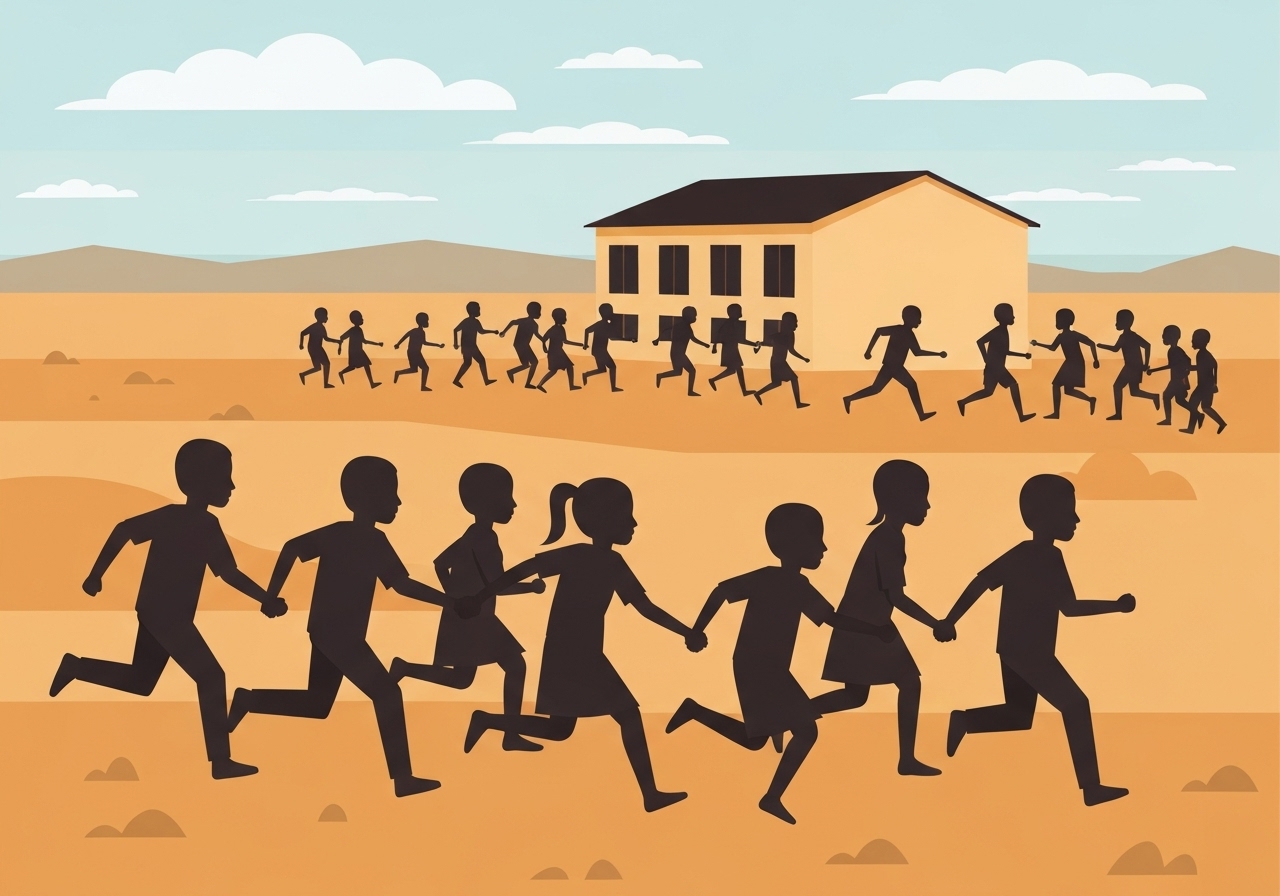
Fifty of the children abducted from St Mary’s boarding school in Papiri, Niger State, have escaped and been reunited with family members, officials say. The breakaway happened after a mass abduction on Friday that left 315 pupils and 12 teachers taken by armed gunmen; 50 are now reported free while a military-led search continues for the remaining 265 children and the teachers. The incident, which authorities say began when attackers stormed the campus around 02:00 local time (01:00 GMT), prompted immediate school closures across five states and international expressions of concern. Families and local officials described relief at the news of escapes amid urgent calls for a swift and coordinated rescue for those still missing.
Key Takeaways
- Fifty pupils have escaped from the group abducted from St Mary’s School in Papiri; those escapees were reported reunited with families by the Christian Association of Nigeria.
- Authorities say 315 children and 12 teachers were taken on Friday, leaving 265 children and 12 teachers still unaccounted for as of the latest reports.
- The attackers reportedly entered the school around 02:00 local time (01:00 GMT); the military, police and local vigilantes are conducting searches in nearby forests and routes.
- State officials ordered closures of schools in Niger, Kebbi, Katsina, Yobe and Kwara after this incident and a separate kidnapping of 20 pupils in Kebbi earlier in the week.
- Niger state governor Mohammed Umaru Bongo warned against politicising the incident and emphasized coordinated security responses.
- Pope Leo XIV expressed “immense sadness” and urged authorities to act quickly; President Bola Tinubu postponed foreign trips, including the G20 summit, to focus on security efforts.
- The number taken in Papiri exceeds the 276 girls abducted in Chibok in 2014, renewing national and international scrutiny of mass school abductions in Nigeria.
Background
Mass abductions from schools have become a recurring security crisis in parts of Nigeria, particularly in the northwest and central regions. Criminal gangs commonly described as “bandits” have carried out kidnappings for ransom and leverage; the government has banned ransom payments to curb the gangs’ financing, but kidnappings have persisted. The most internationally known precedent is the 2014 Chibok abduction of 276 schoolgirls by Boko Haram, which remains a powerful reference point for both public outrage and international diplomatic responses. Local authorities, military units, and civilian vigilante groups have repeatedly been mobilized for search-and-rescue operations, but challenging terrain and fragmented intelligence networks complicate recoveries.
St Mary’s School in Papiri is a Catholic boarding institution in Niger State; reports indicate attackers forced entry at night and removed pupils and staff staying on campus. Authorities have cited conflicting initial tallies—some reports mentioned 303 students and 12 teachers taken—illustrating how numbers can be fluid in the first hours after such attacks. The federal and state security apparatuses face long-standing operational constraints in rural areas, including limits on timely intelligence-sharing and the need to coordinate multiple security agencies. Communities around affected schools often rely on informal local defense groups, which both aid searches and raise concerns about lawfulness and oversight.
Main Event
According to police and local organizations, gunmen stormed St Mary’s School in Papiri around 02:00 local time on Friday, seizing students and staff from boarding quarters. Initial reports varied, but authorities currently describe the total abductions as 315 children and 12 teachers; subsequently, 50 pupils escaped between Friday and Saturday in what involved significant risk, local sources said. The Christian Association of Nigeria reported those escapees have been reunited with their families, while the military, police, and local vigilante groups continued combing forests and remote tracks believed to be routes used by the abductors.
In a related development earlier in the week, about 20 pupils were taken from a boarding school in Kebbi State, prompting wider school closures and heightening concern about a broader pattern of coordinated attacks. State governors in Niger, Kebbi, Katsina, Yobe and Kwara ordered closures of many boarding schools and colleges as precautionary measures and to allow security forces to concentrate on rescue and protection tasks. Niger state governor Mohammed Umaru Bongo urged restraint and warned against politicising the incident while security agencies pursued the attackers.
The military has described the operation as a major search-and-rescue effort involving air and ground assets, though operational details and timelines for a recovery have not been disclosed publicly. Local communities reported heightened patrols and checkpoints, and security forces said they were following leads into forested corridors where the abductors are believed to travel. Authorities also noted that St Mary’s had reportedly been directed previously to suspend boarding facilities after intelligence indicated elevated risk; the school has not issued a public response to that allegation as of the latest reports.
Analysis & Implications
The escape of 50 pupils delivers immediate relief for families, but it also underscores the precariousness of protecting children in boarding schools across affected states. The numbers involved make this abduction one of the largest since Chibok, amplifying domestic pressure on President Bola Tinubu’s administration to demonstrate effective security responses. The postponement of international travel by the president signals the political salience of the incident and a government intent to show control, but the efficacy of that posture will depend on measurable progress in rescue and longer-term prevention.
Operationally, Nigeria faces structural challenges: dispersed, wooded terrain benefits abductors who use local knowledge and mobility, while security forces must coordinate among military, police, and state-level actors. Intelligence gaps and contested local loyalties complicate rapid action. The ban on ransom payments aims to reduce incentives for kidnapping, but enforcement is uneven and community actors sometimes facilitate recoveries through informal negotiations, presenting hard trade-offs between immediate safety and long-term deterrence strategies.
Regionally and internationally, the incident may prompt renewed diplomatic offers of support and scrutiny, as happened after Chibok, including pressure for improved early-warning systems for schools and investment in community-based protection. Domestic debate is likely to revolve around whether to expand military deployments, strengthen civilian protection measures, or invest in socioeconomic interventions that address underlying drivers of banditry. Each option carries political and fiscal costs and varying prospects for reducing kidnappings over time.
Comparison & Data
| Event | Year | Children Taken | Teachers/Staff |
|---|---|---|---|
| St Mary’s, Papiri (Niger State) | 2025 | 315 (50 escaped; 265 remaining) | 12 |
| Kebbi boarding school | 2025 | 20 | — |
| Chibok mass abduction | 2014 | 276 | — |
The table places the Papiri abduction in context: reported totals surpass the 2014 Chibok figure and follow additional smaller incidents this week. These aggregated numbers highlight a troubling pattern of repeated mass kidnappings and emphasize the scale of the response required. Analysts caution that early counts can change and that long-term data tracking should account for escapes, releases, and confirmed fatalities to fully measure tolls.
Reactions & Quotes
Religious and civic leaders called for rapid action and expressed sorrow; the Vatican, local church groups and community organizations urged immediate rescue and support for affected families. International attention has reawakened memories of past mass abductions and intensified calls for comprehensive protective measures for schools.
“I feel immense sadness at this tragedy and call on authorities to act swiftly for the safe release of those still missing.”
Pope Leo XIV (reported)
The statement attributed to the Pope was circulated by church representatives and amplified public calls for urgent, coordinated action. Church groups in Nigeria emphasized pastoral care for reunited families and urged that rescue efforts avoid further endangering children.
“Fifty children have been reunited with their families, but the search goes on for the remainder.”
Christian Association of Nigeria (reported)
The Christian Association framed the escape as both relief and a reminder that many remain in captivity. Local leaders used the statement to press security services for intensified operations and to ask communities to cooperate with investigators.
Unconfirmed
- Exact motive of the attackers: while local reports describe the perpetrators as criminal “bandits,” formal identification and motives have not been independently verified.
- Whether ransom demands have been formally issued in the Papiri case remains unclear from public statements.
- Precise timelines and locations of the 50 escapees’ flight from captors are based on local accounts and have not been fully corroborated by security agencies.
- Allegations that St Mary’s ignored prior orders to close boarding facilities after intelligence warnings are reported by authorities but have not been confirmed by the school.
Bottom Line
The escape of 50 pupils offers immediate relief but leaves a large and urgent search operation underway for 265 children and 12 teachers still held after the Papiri abduction. The event underscores persistent security vulnerabilities around boarding schools in Nigeria and the need for improved preventive measures, timely intelligence, and coordinated rescue capabilities.
How authorities balance short-term rescue operations with longer-term prevention—through security deployments, community protections, and socioeconomic measures—will determine whether similar incidents decline. For families and communities, the immediate priorities are accurate information, safe reunification for all children, and transparent investigations into how the attack occurred and who is responsible.
Sources
- BBC News (media report)