
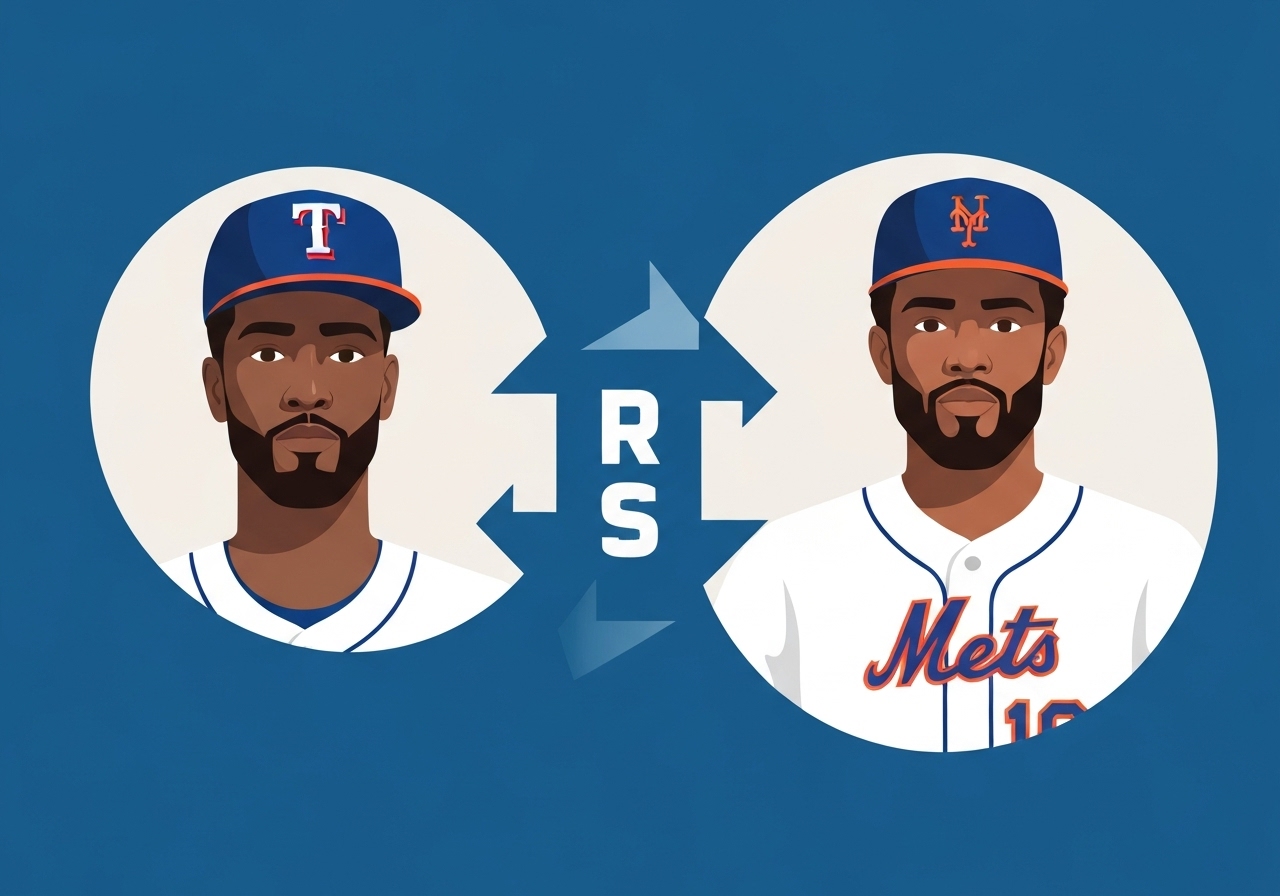
Lead: The Texas Rangers and New York Mets have completed a one-for-one swap that sends second baseman Marcus Semien to Queens and outfielder Brandon Nimmo to Arlington, a deal confirmed on November 2025. The move, reported by multiple outlets and later made official, includes a $5 million cash payment from the Mets to the Rangers to offset salary. The exchange addresses clear roster needs for both clubs while reshaping each team’s luxury-tax picture and infield/outfield alignments. It also pairs two established veterans with multi-year commitments and differing recent performance trends.
Key Takeaways
- The trade was finalized in November 2025: Marcus Semien (to the Mets) for Brandon Nimmo (to the Rangers), with the Mets sending $5 million to Texas (reported by New York Post).
- Semien has $72 million remaining and three seasons left on the seven-year, $175 million contract he signed with Texas in the 2021–22 offseason.
- Nimmo has $101.25 million owed through 2030, having completed three years of an eight-year, $162 million deal signed in December 2022.
- For luxury-tax purposes post-trade, Semien’s remaining tax number is $24 million; Nimmo’s tax number becomes $19.25 million after the $5 million offset from New York.
- On the field, Nimmo hit .262/.324/.436 with 25 homers and a 114 wRC+ across 652 plate appearances in 2025; Semien’s offense slid to a 89 wRC+ in 2025 after a 128 wRC+ season in 2023.
- Semien played 127 games in 2025, limited by a Lisfranc sprain and a small left-foot fracture; Nimmo has been durable recently, playing at least 151 games in each of the last four seasons.
- The swap is described as a need-for-need baseball trade: the Mets gain defensive improvement at second base; the Rangers add a left-field bat and lineup balance.
Background
Both clubs entered the offseason with notable roster questions and payroll calculations in mind. The Rangers had signaled a desire to pivot toward contact-oriented offense and on-base skills while also managing luxury-tax exposure after recent high-spending seasons. Texas had already cleared some projected payroll with non-tenders that removed about $21.1 million from the ledger the prior Friday.
The Mets, meanwhile, faced a shifting infield after Pete Alonso’s free agency and ongoing deliberations about first and third base roles. New York’s front office prioritized run prevention and defensive upgrades, which factored into their pursuit of a premium defender who can help stabilize the keystone.
Main Event
Reports earlier in the afternoon indicated the teams were finalizing a package that would move Semien to New York in exchange for Nimmo. ESPN’s Jeff Passan first reported the clubs were in the finishing stages, with The Athletic noting Nimmo agreed to approve a trade by waiving his no-trade clause to allow the deal to proceed. The New York Post subsequently reported the transaction as official and detailed the $5 million cash offset from the Mets to Texas.
From Texas’s perspective, Nimmo addresses a left-field vacancy after Adolis García was non-tendered, enabling Evan Carter or prospect Wyatt Langford to slide into right field. The Rangers also clear second base as a spot for Josh Smith or Ezequiel Duran in the near term, with top prospect Sebastian Walcott as a potential long-term option depending on Corey Seager’s shortstop status.
In New York, Semien projects to be the defensive upgrade at second base that president of baseball operations David Stearns had indicated the club sought for run prevention. Semien’s presence reshuffles the Mets’ outfield and infield roles—Jeff McNeil is expected to see extended work in left field, and Mark Vientos, Luisangel Acuna or Ronny Mauricio could see their roles reconsidered as the Mets balance youth and veteran contributors.
Analysis & Implications
Financially the swap is nuanced. Although the Mets reduce total dollars owed by taking on Semien instead of Nimmo, luxury-tax calculations change because taxable figures are re-tabulated on remaining commitments after trades. That produces a slightly larger tax hit for New York even as their aggregate payroll obligation declines, while Texas lowers its tax number but increases total future dollars obligated—an important distinction for a franchise sensitive to tax thresholds.
On the field, the trade reflects contrasting evaluations of decline risk and long-term fit. Semien’s offensive metrics have trended downward since his peak 2023 campaign, with a sharp drop in power and an overall wRC+ of 89 in 2025. Age (mid-30s seasons remaining on his deal) and recent foot injuries raise legitimate durability and production concerns. The Mets, however, appear willing to accept those risks in exchange for above-average infield defense and veteran leadership.
For Texas, Nimmo’s walk profile and on-base work (historically strong) fit the Rangers’ stated emphasis on contact and OBP, even though his walk rate dipped to a career-low 7.7% in 2025. His move from center to left field has coincided with improved public defensive metrics, and his multi-year durability through age 31–32 seasons is an asset for a club that wants lineup consistency while younger bats like Wyatt Langford and Sebastian Walcott are phased in.
The trade could ripple through both markets. The Mets now have an opening in the outfield and could pursue center-field upgrades or reshape plans around internal candidates; trade speculation about other impact outfielders will intensify. The Rangers, conversely, may look externally or to free agency to shore up second base long term if they do not commit to in-house options.
Comparison & Data
| Player | Contract Remaining | Luxury-Tax Number | 2025 wRC+ |
|---|---|---|---|
| Marcus Semien | $72M, 3 seasons (of 7-year, $175M) | $24M | 89 |
| Brandon Nimmo | $101.25M through 2030 (3 of 8 years complete) | $19.25M (after $5M offset) | 114 |
The table highlights why the trade is not a simple swap of equal salary burdens: remaining dollars and luxury-tax treatments pull in different directions. Teams often make such moves to balance roster construction goals against tax thresholds; Texas appears to have prioritized short-term tax relief and lineup balance, while New York prioritized infield defense and run prevention.
Reactions & Quotes
“The Mets and Rangers are finalizing a one-for-one trade sending Marcus Semien to the Mets for Brandon Nimmo,”
Jeff Passan (ESPN)
This line from a leading MLB reporter captured the initial report that set the trade conversation in motion. Passan’s coverage was echoed by other national outlets as teams and agents confirmed paperwork and advanced approvals.
“The trade is official,”
Mike Puma (New York Post)
The New York Post announced the transaction as finalized and reported the $5 million cash component. Regional beat reporters on both clubs followed with roster-day context and immediate roster moves that the swap enabled.
Unconfirmed
- Exactly how playing time will be split among Mark Vientos, Luisangel Acuna and Ronny Mauricio with Semien in the infield is not finalized and could change before spring camp.
- Reports that Nimmo formally waived his no-trade clause came from The Athletic; the timing and scope of any waiver approvals were not independently confirmed by team press releases at the moment of reporting.
- Speculation that the Mets will pursue a marquee outfielder (e.g., trade targets like Kyle Tucker or Cody Bellinger) remains conjecture and depends on how New York values budget and roster flexibility after the swap.
Bottom Line
This trade is a classic roster-rebalancing move that mixes financial nuance with clear baseball need. The Mets prioritize immediate defensive upgrades and run prevention at second base at the cost of giving up a reliably durable left fielder and some on-base production. Texas gains a steady presence in left with strong recent availability, while opening second base to younger options or alternative acquisitions.
Longer-term outcomes hinge on health and performance trends: if Semien reclaims an earlier offensive profile, New York looks shrewd; if Nimmo maintains plate discipline and defensive value, Texas will have strengthened both lineup balance and outfield defense. Both front offices accepted tradeoffs—tax math, contract lengths and player aging curves—so the ultimate winner will likely be determined by 2026 production and subsequent roster moves by each club.
Sources
- MLB Trade Rumors (sports journalism)
- ESPN / Jeff Passan (sports journalism — original reporting noted)
- New York Post / Mike Puma & Jon Heyman (regional news / sports reporting)
- The Athletic (subscription sports journalism — reporting on no-trade clause waiver)