
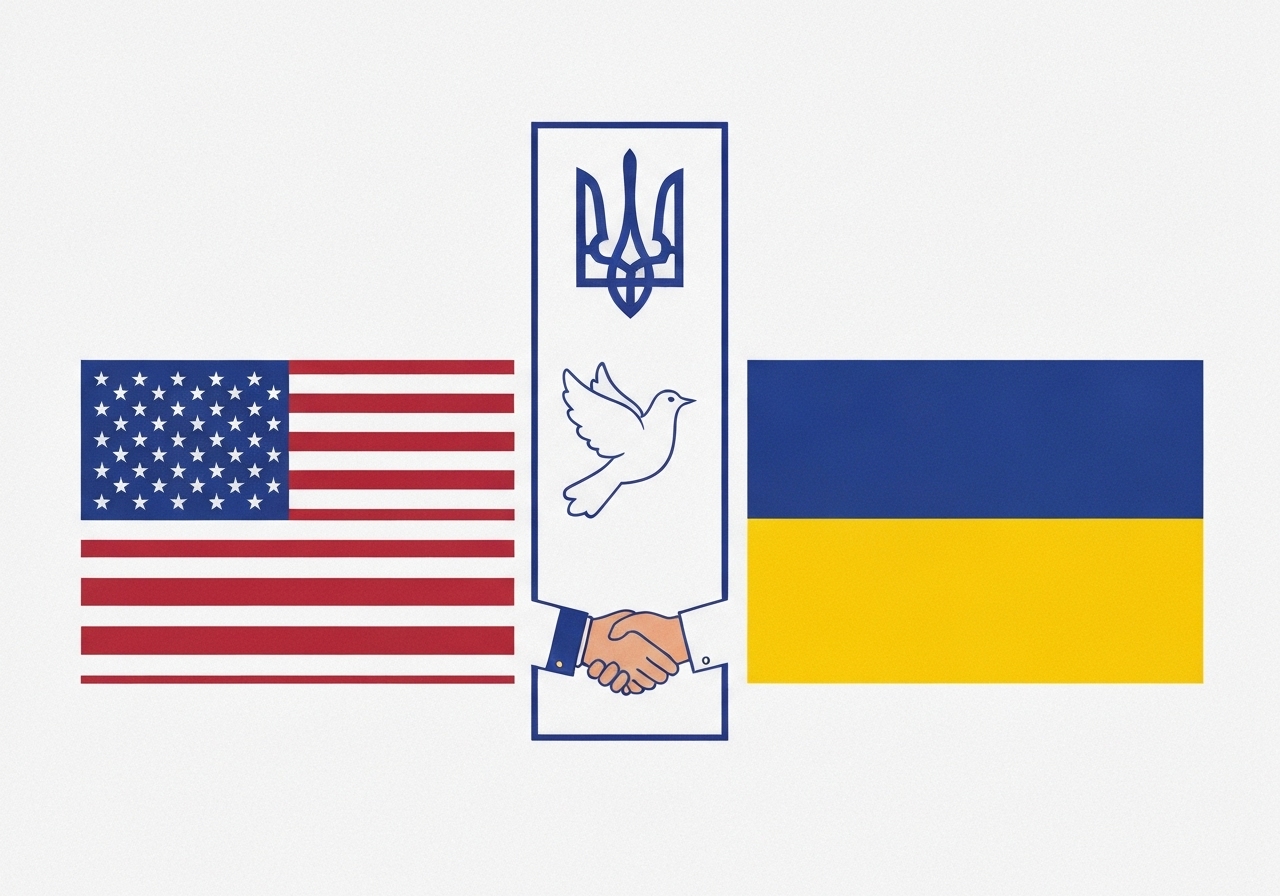
Lead: The Financial Times reports that senior US and Ukrainian officials say they have recently made progress in negotiations over a proposed peace plan intended to end the war in Ukraine. Both parties describe movement on several core elements of the draft, but key details remain under discussion and no final agreement has been announced. The conversations are being watched closely by European capitals and international institutions as negotiators weigh security arrangements, territorial questions and mechanisms for reconstruction and accountability.
Key Takeaways
- Both US and Ukrainian officials told the Financial Times they have made measurable progress in recent talks on a proposed peace plan, though they stopped short of confirming a finalized deal.
- The reported discussions reportedly cover core issues including ceasefire mechanisms, security guarantees and post-conflict reconstruction frameworks.
- No public timetable for a signed agreement has been set; negotiators described talks as continuing and iterative.
- International partners are said to be engaged in supporting technical and diplomatic elements of the process, according to the FT report.
- Officials emphasized the difference between progress in principle and resolution of contentious territorial and legal issues, which remain unresolved.
Background
The war in Ukraine, which escalated after Russia’s 2022 full-scale invasion, has produced repeated diplomatic efforts to outline a political settlement. Previous negotiation attempts, both bilateral and multilateral, have yielded limited results and often stalled over territorial status, security guarantees and accountability for wartime conduct. The current set of talks appears to be one of several parallel tracks—political, military, and technical—aimed at producing a framework that could be translated into implementable steps.
Key stakeholders include the Ukrainian government, senior US officials and a range of European and international actors who have provided diplomatic, economic and military support to Kyiv. Any durable settlement would need to reconcile Ukraine’s sovereignty concerns with security arrangements acceptable to its partners, while also addressing reconstruction funding and oversight. Domestic politics on all sides—particularly in Kyiv and Washington—will constrain negotiators’ flexibility and shape what compromises are politically feasible.
Main Event
The Financial Times report indicates talks have advanced on multiple draft provisions, with negotiators focusing on practical mechanisms for de-escalation and verification rather than immediate headline concessions. Discussions reportedly weighed how to structure a ceasefire monitoring system, define security guarantees and sequence steps toward reconstruction and normalization. Delegations emphasized technical drafting work, legal review and contingency arrangements rather than firm political commitments at this stage.
Ukrainian representatives have repeatedly signaled that any agreement must preserve Ukraine’s internationally recognized borders and sovereignty, while US officials have framed their role as facilitating and supporting a settlement that guarantees Kyiv’s security. Those participants described progress as incremental—advancing language, options and verification concepts—rather than resolving the most sensitive political questions. Observers note that translation of conceptual agreement into binding, verifiable commitments will be the most difficult phase.
Negotiators also discussed institutional frameworks for oversight and enforcement, including potential roles for third-party guarantors, monitoring missions and international financing mechanisms. Many details—such as the composition of monitoring bodies, jurisdictional reach and timelines for phased implementation—remain matters for further negotiation. The presence of multilateral partners in technical roles was presented as essential by participants quoted in the FT piece.
Analysis & Implications
If the talks described by the Financial Times continue to yield definable progress, the diplomatic trajectory could reduce near-term battlefield escalation by clarifying off-ramps and verification steps. However, movement on verification and ceasefire language does not automatically resolve underlying political and territorial disputes, which are the core drivers of instability. Any interim arrangements would require robust monitoring to prevent violations and to build confidence between parties.
A negotiated framework that includes clear security guarantees and transparent reconstruction funding could reshape Ukraine’s medium-term recovery prospects and global economic commitments to reconstruction. For the United States and European partners, successful mediation would present both policy gains—stabilizing a key region—and political challenges, including sustained financial and security commitments over many years. Domestic political pressures in sponsoring countries could complicate long-term support for any deal that appears to require open-ended obligations.
Conversely, if talks falter after initial technical progress, the diplomatic costs could include loss of leverage for Kyiv and reputational risks for mediators. The credibility of monitoring and enforcement mechanisms will be crucial: weak or ambiguous provisions could permit renewed hostilities and undermine international willingness to invest in reconstruction. Analysts caution that progress on paper must be matched by durable, verifiable actions on the ground to change the conflict’s trajectory.
Comparison & Data
| Issue | Previous Talks | Current Reported Progress |
|---|---|---|
| Ceasefire monitoring | Limited or ad hoc mechanisms | Technical drafting of verification options |
| Security guarantees | Unresolved guarantor roles | Discussions on third-party models |
| Reconstruction | Commitments discussed, funding unclear | Framework concepts under review |
The table summarizes qualitative differences between earlier negotiation rounds and the current, FT-reported discussions. It highlights that recent progress is largely procedural and technical rather than conclusive on the major political items. Stakeholders will have to translate draft language into credible mechanisms before the international community can mobilize large-scale reconstruction financing.
Reactions & Quotes
Officials and analysts cited in the Financial Times framed progress as cautious and subject to further ratification and amendment by their respective leadership bodies. Below are succinct, attributed snippets reflecting public and expert reaction as reported.
“We have seen constructive movement in technical talks, but critical political issues remain to be settled.”
Senior US official (paraphrased, as reported by Financial Times)
“Any agreement must protect Ukraine’s sovereignty and provide enforceable security measures.”
Ukrainian official (paraphrased, as reported by Financial Times)
“Progress on paper will need rigorous verification and sustained international backing to be meaningful.”
Independent analyst (paraphrased)
Unconfirmed
- It is not confirmed whether Russia has formally engaged with or accepted the specific draft elements discussed in these talks.
- There is no public confirmation of a timeline for signing any agreement or of the full list of parties who would act as guarantors.
- Precise wording of territorial arrangements and legal guarantees has not been disclosed and remains under negotiation.
Bottom Line
The Financial Times account suggests meaningful, early-stage progress in technical negotiations between US and Ukrainian representatives on components of a proposed peace plan, but it does not indicate a concluded deal. The most difficult questions—territorial settlement, long-term security guarantees and enforceable verification—remain open and will determine whether any framework can be implemented and sustained.
Readers should treat the reported progress as an important diplomatic development but not as evidence of an imminent, comprehensive settlement. Close monitoring of subsequent official statements, the involvement or stance of other principal actors, and the emergence of concrete verification and enforcement mechanisms will be essential to judge whether talks translate into durable peace.
Sources
- Financial Times (media report)