
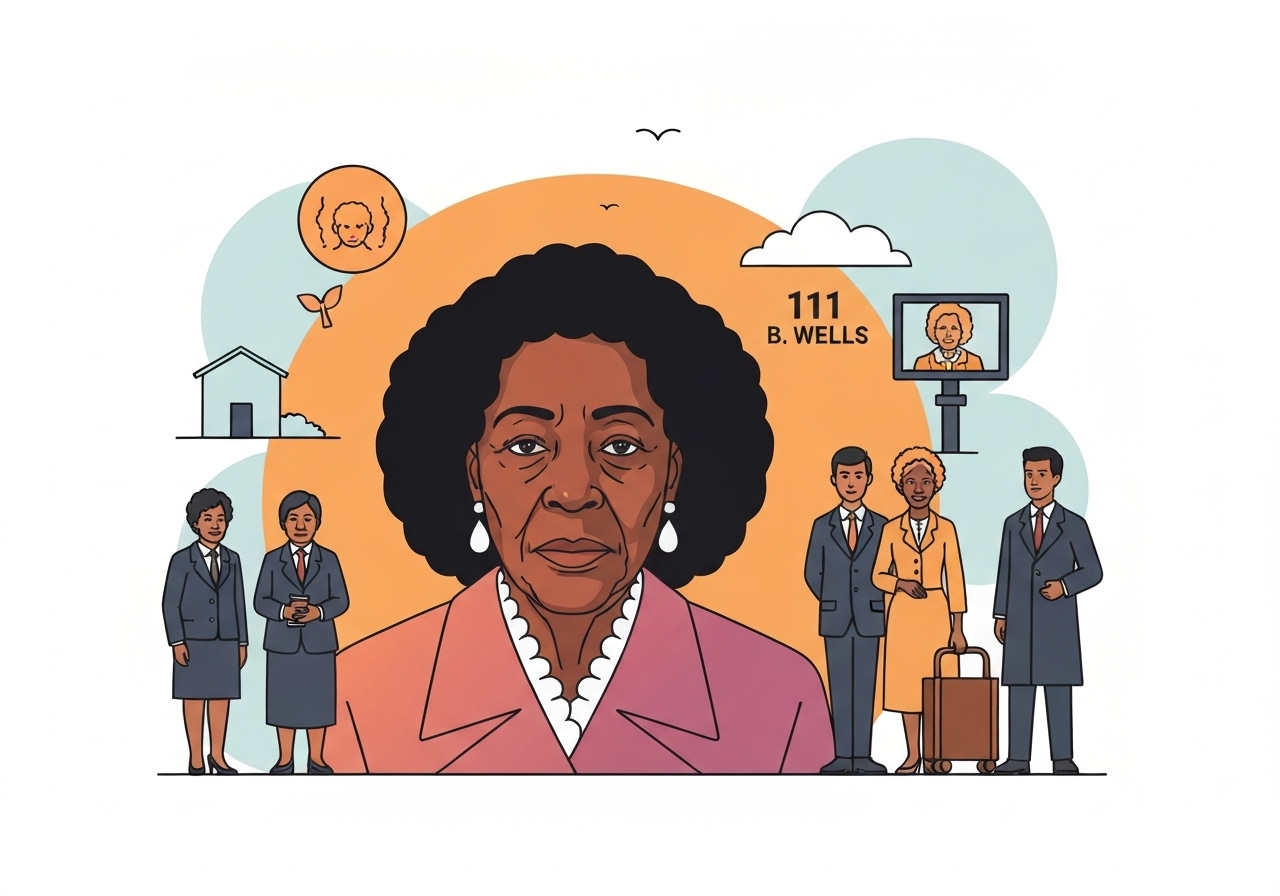
Viola Ford Fletcher, long recognized as the oldest living survivor of the 1921 Tulsa Race Massacre, died Monday, November 24, 2025, her grandson Ike Howard told CNN. Fletcher was 111 and remained publicly engaged in efforts to win recognition and redress for survivors in recent years. She spoke several times with national media as she and other survivors pursued legal claims against the city of Tulsa and related agencies. Family members said she died with a smile and that she “loved life,” a sentiment her grandson highlighted to reporters.
- Viola Ford Fletcher died Monday, November 24, 2025, at age 111, confirmed by her grandson Ike Howard.
- The 1921 attack destroyed roughly 35 city blocks in about 16 hours and led to thousands of arrests, according to contemporaneous and historical records.
- Greenwood Cultural Center records list 1,256 residences and two Black hospitals destroyed in the assault.
- Survivors and descendants have pursued legal claims for more than a decade; an Oklahoma Supreme Court ruling in June 2024 dismissed a key suit seeking municipal compensation.
- Insurance denials after the 1921 attack left losses—by today’s reckoning—measured in the tens of millions of dollars in property claims.
- Fletcher’s brother, Hughes Van Ellis, also a survivor, died October 2023 at age 102.
Background
The Tulsa Race Massacre began on May 30, 1921, after a confrontation involving Dick Rowland, a 19‑year‑old Black shoe shiner, and a young white elevator operator. Rumors of an assault led to Rowland’s arrest and the organization of an armed white lynch mob in downtown Tulsa. Black residents who went to the jail to protect Rowland clashed with armed white groups; contemporary accounts and officials described a rapid escalation after a firearm was discharged.
Within roughly 16 hours the violence devastated the Greenwood district—known as “Black Wall Street”—with eyewitness photos and records showing whole blocks burned and bodies in the streets. Thousands of Black residents were arrested, many homes and businesses were looted or torched, and two Black hospitals were destroyed in the conflagration. Insurance companies denied numerous claims at the time, and those denials have compounded calls for restitution over the ensuing century.
Main Event
Fletcher was a child in Greenwood during the massacre and spent decades recounting the day’s trauma. In multiple interviews over the past five years she described seeing people killed and watching houses, schools, churches and stores burned. She told interviewers the memory never left her and that, despite remaining in Tulsa, she continued to live with fear tied to what she witnessed.
In recent years Fletcher joined other survivors and descendants in legal efforts against the city of Tulsa and connected agencies, alleging municipal responsibility for both the violence and the long‑term harms that followed. Those suits argued city actions and failures—dating from the immediate aftermath through decades of policy—contributed to ongoing economic and social damage in Greenwood.
Those legal avenues suffered a major setback in June 2024 when the Oklahoma Supreme Court dismissed a suit seeking compensation for the remaining survivors. The decision was framed by proponents of the lawsuits as a legal barrier to monetary redress, even as local and federal discussions about memorialization, education and targeted investment continued.
Analysis & Implications
Fletcher’s death removes a firsthand witness whose life spanned the massacre, Jim Crow, the civil‑rights era and a contemporary movement for historical accountability. Firsthand testimony from survivors has been central to keeping public attention on 1921 and shaping debates about reparations and municipal responsibility. With Fletcher’s passing, historians and advocates lose one of the last lived links to Greenwood’s pre‑war prosperity and the violence that destroyed it.
The June 2024 legal decision underscores the limits of litigation as a path to restitution; courts have been reluctant to apply modern liability doctrines to century‑old events. That legal reality shifts pressure to legislative, administrative and philanthropic channels for remedy—options that require sustained political will and funding. Cities and states grappling with similar historical wrongs may look to Tulsa for lessons about the speed and structure of institutional responses.
Economically, the massacre’s effects—compounded by insurers’ denials and decades of disinvestment—help explain the persistent wealth and property gaps between Greenwood and surrounding areas. Policymakers who focus on targeted investment, educational support and cultural preservation are more likely to produce immediate community benefits than protracted legal fights, though both strategies are often pursued in parallel.
| Metric | 1921 (reported) |
|---|---|
| Blocks destroyed | About 35 |
| Residences lost | 1,256 |
| Hospitals destroyed | 2 (Black hospitals) |
The table above summarizes widely cited counts of the physical damage in Greenwood. Those figures are used in historical accounts and reparative claims to quantify loss; translating them into present‑day monetary values is complex but has driven calls for substantial compensation and targeted economic programs.
Reactions & Quotes
Family members and community leaders emphasized Fletcher’s role as both a witness and an advocate. Her grandson described her final days and the way she carried memory into public life.
“She had a beautiful smile on her face. She loved life, she loved people.”
Ike Howard, grandson of Viola Ford Fletcher
Advocates framed Fletcher’s death as a reminder of the urgency to preserve survivor testimony and accelerate non‑judicial forms of redress.
“Her testimony kept the story alive for a century; losing that witness makes the work of truth‑telling even more urgent.”
Local civil‑rights advocate (organization name withheld for privacy)
Legal observers noted that the 2024 Oklahoma Supreme Court decision will influence how future claims tied to historical racial violence are evaluated in courts across the United States.
“The court’s ruling sends a clear signal about the judicial limits of retroactive municipal liability for century‑old events.”
Legal scholar specializing in civil‑rights litigation
Unconfirmed
- Precise totals for deaths in 1921 remain contested; contemporary records vary and some victims were not officially recorded.
- The exact dollar value of denied insurance claims converted to today’s currency is estimated in the tens of millions but lacks a single, universally accepted calculation.
- Details about the internal deliberations of specific insurers and city departments from 1921 are incomplete in the public record.
Bottom Line
Viola Ford Fletcher’s death at 111 closes a direct, living chapter on the Tulsa Race Massacre but it does not erase the questions her testimony helped keep in the public eye. Her public interviews and participation in legal efforts amplified demands for recognition, accountability and reparative action. With Fletcher gone, historians, community leaders and policymakers face greater responsibility to preserve survivor narratives, secure institutional commitments to Greenwood, and translate memory into concrete support.
Legally, the June 2024 Oklahoma Supreme Court ruling demonstrates that courts may be a limited path to compensation for century‑old wrongs; the practical work of redress is likely to rely on legislative, administrative and philanthropic mechanisms. For readers and policymakers, the immediate takeaway is twofold: safeguard survivor testimony while accelerating practical investments to repair historical economic harms in Greenwood and similar communities.
Sources
- CNN — National news report and survivor interviews (journalism)
- Greenwood Cultural Center — Historical counts of residences and institutional losses in Greenwood (cultural organization)
- Oklahoma Supreme Court — Official court information and rulings (official judiciary site)