
Lead
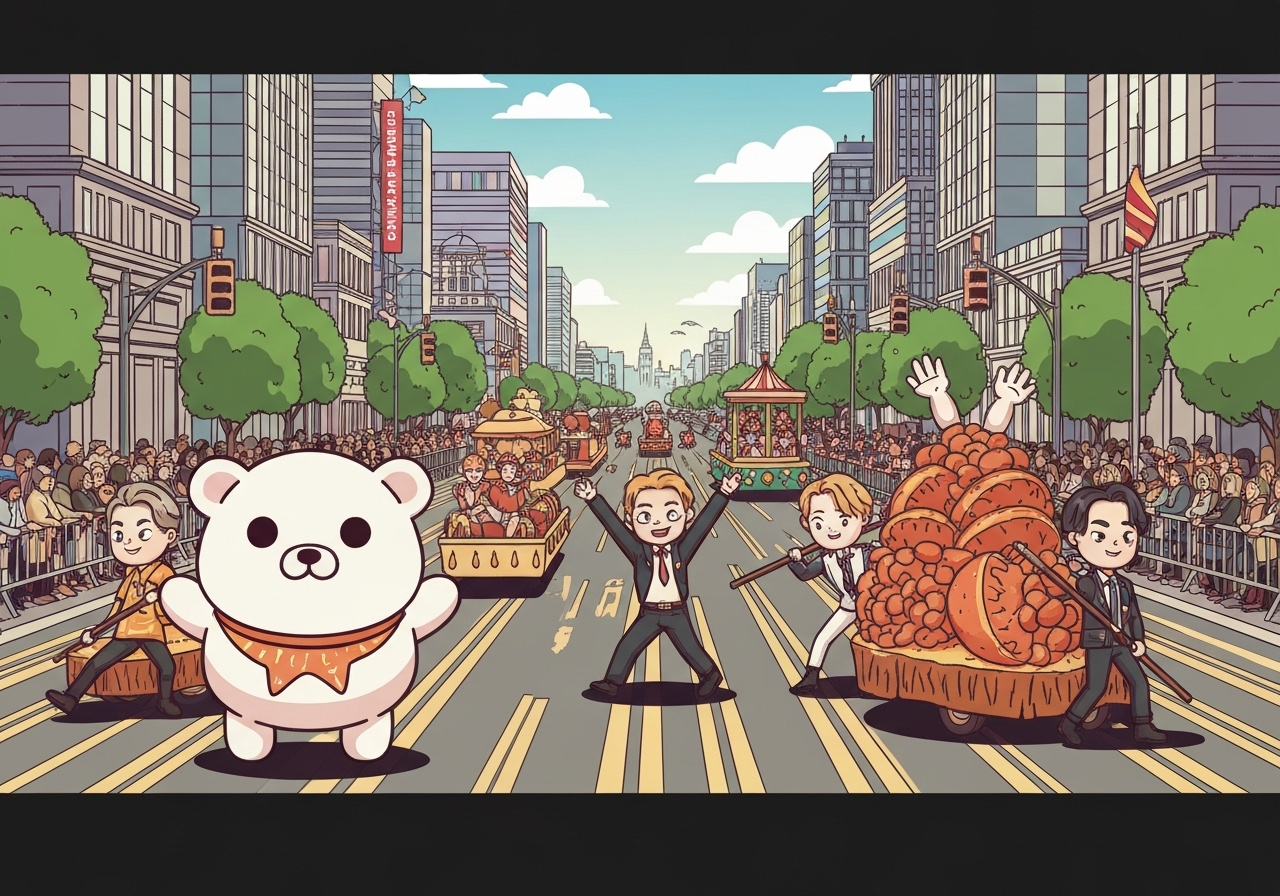
On Nov. 27, 2025, New York City’s 99th Macy’s Thanksgiving Day Parade unfolded along Central Park West and Columbus Avenue, drawing bundled crowds as new, pop-culture–driven attractions replaced some long-standing characters. Giant inflatables and floats this year included a Labubu plush balloon, a Demogorgon from Netflix’s Stranger Things and figures tied to the viral KPop Demon Hunters movie; Popeye, a parade fixture since 1939, was absent and stored at a Macy’s warehouse in New Jersey. Organizers, led by executive producer Will Coss, emphasized modernizing the lineup with brand and fan-oriented elements, while bands, costumed marchers and street vendors sustained the familiar holiday pageantry. The procession mixed tradition and contemporary merchandising amid brisk weather and enthusiastic spectators.
Key Takeaways
- The parade took place on Nov. 27, 2025, marking the 99th annual Macy’s Thanksgiving Day Parade and ran along Central Park West and Columbus Avenue.
- New features included a Labubu balloon based on a collectible plush, a Demogorgon float inspired by Stranger Things, and characters from the KPop Demon Hunters film on Netflix.
- Executive producer Will Coss, who has overseen the parade since 2021, said organizers intentionally added contemporary brands and fan-driven floats this year.
- Popeye—who first appeared in the parade in 1939 and last marched in 1980—was not in the lineup and was kept at a Macy’s warehouse in New Jersey.
- A Northern Arizona University marching band performed a Lady Gaga medley, illustrating the mix of pop-music selections in the program.
- Vendor Tommy Johnson, 66, a retired Connecticut municipal worker from New Haven, arrived at 2:30 a.m. with 100 turkey hats and sold all but four before kickoff.
- Fans packed sidewalks and park ridges for sightlines, and floats this year included a Lego float designed to be replicated in miniature by hobbyists.
Background
The Macy’s Thanksgiving Day Parade is a near-century-old spectacle that traditionally blends marching bands, giant balloons, floats, and a closing appearance by Santa Claus. Over the decades the parade has rotated characters and icons that reflect each era’s cultural touchstones: classic comic-strip figures, television characters and branded mascots have all appeared as large-scale inflatables. Organizers routinely update the roster to attract younger viewers and corporate partners while attempting to preserve seasonal pageantry.
Recent years have accelerated the incorporation of intellectual property and viral brands into the parade lineup, driven by sponsorship, merchandising opportunities and social-media visibility. Netflix franchises and toy lines in particular have become potent sources of attention, prompting new balloon and float commissions that double as promotion for streaming and consumer-goods partners. Parade leadership says such choices aim to keep the event relevant to families and viewers who discover content primarily online.
Main Event
At the appointed hour, the procession departed under a cold sky with Tom Turkey leading the route and a rising swell of cheers from the crowd. Spectators craned their necks to watch balloon Mario and to see autumnal cheerleaders tossing pompoms along the avenue. The Labubu balloon—an oversized version of a popular purse charm—drifted by with handlers steering its line, followed later by the Demogorgon float whose theatrical design featured an opening maw reminiscent of the monster on-screen.
Will Coss coordinated the inclusion of several contemporary floats this year, including a Lego float created so that fans could reproduce a smaller model at home. Organizers framed these additions as deliberate updates rather than replacements, though some longtime fixtures like Popeye were put on hiatus; paperwork and logistics placed the retired figure in a Macy’s New Jersey warehouse for the day. The parade program blended old and new: marchers in traditional costumes walked beside branded floats and licensed characters.
Music was a prominent throughline: a Northern Arizona University marching band performed arrangements including a Lady Gaga medley, demonstrating how contemporary pop songs are woven into the parade soundtrack. Street-level commerce remained active as well—vendors and independent sellers set up early. One vendor, Tommy Johnson, reported arriving from New Haven at 2:30 a.m. with 100 turkey hats and selling nearly all before the event’s start.
Analysis & Implications
The parade’s pivot toward current intellectual properties reflects broader trends in live-event programming: organizers must balance nostalgic continuity with the demand for content that resonates on social media and in commercial channels. Choosing characters like Labubu and references to KPop Demon Hunters signals a strategy to capture younger demographics and to provide shareable visuals for online audiences. That visibility can translate into short-term promotional buzz and merchandise sales tied to the floats’ sponsors.
There are trade-offs. Replacing long-established icons may alienate older viewers who associate the parade with specific childhood memories—Popeye’s absence drew notice because of his deep historical ties to the event since 1939. For Macy’s and production partners, the calculus includes immediate engagement metrics, sponsor commitments and the logistics of balloon and float production. A stored character in a warehouse may be practical, but it also highlights the tension between stewardship of tradition and commercial reinvention.
Economically, the parade remains a platform for retail exposure and tourism. Floats linked to popular properties can drive licensed-product sales and generate promotional partnerships between media companies and Macy’s. Culturally, the lineup offers a snapshot of what franchises and motifs are dominant at a given moment—this year’s choice points to the continuing influence of streaming franchises, collectible plush lines and K-pop–inflected entertainment on U.S. mass culture.
Comparison & Data
| Year/Edition | Notable Element | Context |
|---|---|---|
| 1939 | Popeye first appears | Early expansion of character balloons in the parade |
| 1980 | Popeye last marched | Character appearances rotate with licensing and production needs |
| 2025 (99th) | Labubu, Demogorgon, KPop Demon Hunters | Contemporary IP and merchandising-driven inclusions |
The table highlights three milestones that illustrate how the parade’s roster evolves with cultural and commercial pressures. While historic figures anchored earlier decades, recent editions increasingly showcase franchises linked to contemporary streaming hits and collectible merchandise. This comparison shows a long arc from legacy comic and cartoon figures to present-year licensed properties that aim for instant recognizability online.
Reactions & Quotes
Organizers framed the changes as intentional updates designed to reflect current audience interests. A succinct remark from the parade’s executive producer captured that approach:
“We incorporate brand-new elements that are speaking to the moment.”
Will Coss, Parade Executive Producer
On the ground, participants expressed holiday spirit and vendor hustle underscored the parade’s local economic impact. A marcher in costume called out to passersby as the procession passed, contributing to the communal atmosphere:
“Happy Thanksgiving!”
Costumed marcher
Vendors described long hours and brisk sales tied to the crowds. One longtime seller described his routine and results for the morning:
“I drove in from New Haven at 2:30 a.m. with 100 hats and sold nearly all of them before the parade started.”
Tommy Johnson, vendor from Connecticut
Unconfirmed
- The assertion that Labubu’s popularity will wane by Columbus Circle is speculative and not corroborated by sales figures or audience-tracking data.
- Any specific financial terms between Macy’s and franchise owners for the 2025 floats were not disclosed publicly and remain unverified.
Bottom Line
The 99th Macy’s Thanksgiving Day Parade illustrated a deliberate shift: organizers are integrating contemporary, brand-driven attractions to maintain relevance with younger and online audiences while keeping traditional pageant elements intact. That strategy boosts short-term visibility and merchandising opportunities, but it also raises questions about how to preserve intergenerational traditions that long-time viewers expect.
Looking ahead, parade producers will likely continue to alternate legacy characters with newer franchises as sponsors and audience metrics evolve. Observers should watch for how organizers balance nostalgic anchors with content that drives social sharing and commercial partnerships, particularly as the parade approaches its centennial edition.