
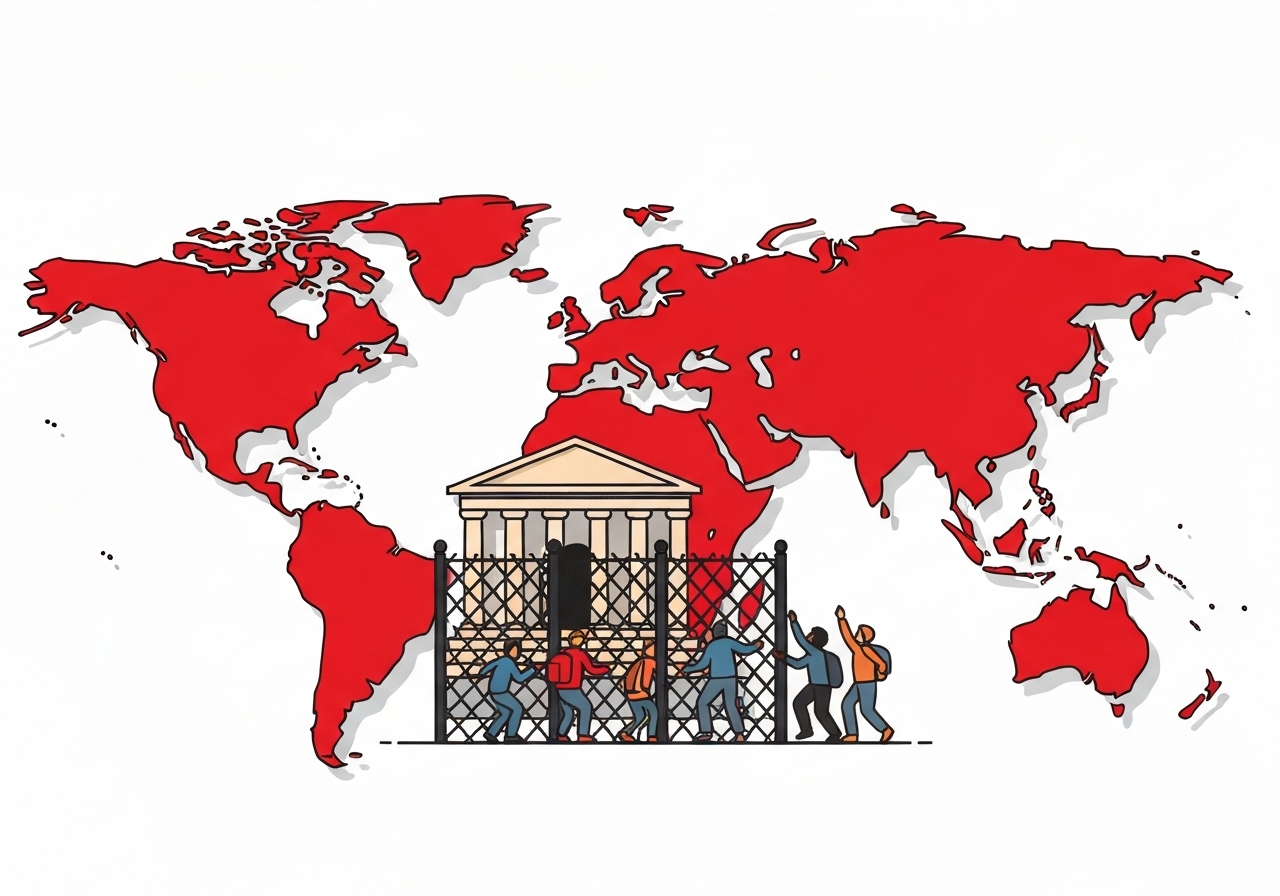
The Biden-to-Trump transition in immigration policy shifted sharply this week after the Washington, D.C., shooting of two National Guard members prompted President Donald Trump to order a comprehensive review of lawful permanent resident status for people from 19 countries designated as “of concern.” On Thursday, Joe Edlow, director of U.S. Citizenship and Immigration Services (USCIS), said he had directed a full-scale reexamination of every green card issued to nationals of those countries. The Department of Homeland Security (DHS) also announced an immediate pause on processing immigration requests for Afghan nationals while broader asylum approvals from the prior administration are reviewed. Officials pointed reporters to a June presidential proclamation that lists the 19 countries under review.
Key Takeaways
- USCIS director Joe Edlow announced on X (formerly Twitter) on Thursday, Nov. 27, 2025, a “full scale, rigorous reexamination” of green cards for nationals from 19 countries specified in a June presidential proclamation.
- The 19 countries named include Afghanistan, Burma, Chad, Republic of the Congo, Equatorial Guinea, Eritrea, Haiti, Iran, Libya, Somalia, Sudan, Yemen, Burundi, Cuba, Laos, Sierra Leone, Togo, Turkmenistan and Venezuela.
- DHS said it has stopped processing all immigration requests for Afghan nationals “effective immediately,” citing a review of security and vetting protocols after the shooting suspect was identified as an Afghan national.
- The alleged shooter was identified by officials as Rahmanullah Lakanwal, an Afghan national who arrived in 2021 under Operation Allies Welcome, applied for asylum in 2024 and was granted asylum in April 2025.
- Since the U.S. military withdrawal in August 2021, more than 190,000 Afghans have resettled in the United States, according to the State Department.
- Officials say the review follows guidance from President Trump, who publicly criticized the prior administration’s immigration policies in remarks from Mar-a-Lago.
Background
The announcement comes amid heightened political pressure and a broader shift in federal immigration enforcement under the Trump administration. President Trump has repeatedly framed migration policies during the previous administration as a security risk and has used executive actions and proclamations to narrow pathways for refugees, asylum seekers and other arrivals. In June, a presidential proclamation identified 19 countries as “of concern,” creating a legal and administrative basis for intensified scrutiny.
Operation Allies Welcome in 2021 brought tens of thousands of Afghans to the United States after the U.S. military withdrawal; many later sought asylum or other immigration relief. The refugee and asylum systems are legally distinct from lawful permanent residency, but refugees are generally eligible to apply for green cards after one year in the country. The new review targets green-card holders and pending immigration requests tied to those 19 countries.
Main Event
On Nov. 27, 2025, USCIS director Joe Edlow said he had ordered a comprehensive reexamination of all green cards issued to nationals of the 19 named countries at President Trump’s direction. USCIS officials told reporters that the agency is relying on the country list spelled out in the June proclamation rather than issuing a new public list in the announcement. The move applies to all permanent-resident documents—commonly called green cards—issued to nationals of those countries.
Separately, DHS Assistant Secretary Tricia McLaughlin informed media that processing of immigration requests relating to Afghan nationals had been halted pending further review of vetting procedures. DHS also indicated it would review asylum approvals made during the prior administration, a step that could affect recent asylum recipients and pending cases whose approvals were issued under previous policies.
The developments followed the identification of the alleged shooter in the Washington, D.C., attack as Rahmanullah Lakanwal, an Afghan national who entered the U.S. during the 2021 evacuations and later applied for asylum. According to public reporting, Lakanwal worked with U.S. government entities, including assignments that involved intelligence components. The administration framed the measures as necessary to reassess security protocols tied to immigration adjudications.
Analysis & Implications
A nationwide reexamination of issued green cards presents immediate logistical and legal challenges. USCIS holds records on millions of lawful permanent residents; systematically reviewing documents tied to specific nationalities will require new staffing, additional vetting criteria and a process for handling determinations. That administrative burden may extend adjudication times across other immigration lanes and could spawn additional appeals or litigation over due process protections.
Legally, revoking a green card is a distinct and strictly regulated process. Permanent residents have statutory rights, including avenues to appeal adverse decisions. Any effort to rescind lawful permanent residency en masse or on nationality grounds will almost certainly trigger legal challenges alleging violations of immigration law, equal protection, or administrative procedure rules. Courts will be asked to weigh national security claims against statutory protections for residents.
Diplomatically, singling out 19 countries could strain relations with governments whose nationals are affected, particularly if revocations occur or family unification is disrupted. The policy also risks broader chilling effects: immigrants and refugees who assisted the U.S. overseas—as many Afghan evacuees did—may view relocation or cooperation with U.S. agencies as less secure, complicating foreign partnerships and future evacuations.
Comparison & Data
| Metric | Figure |
|---|---|
| Countries under review | 19 |
| Afghans resettled in U.S. since Aug 2021 | More than 190,000 |
The table summarizes the most concrete figures released publicly: the 19-country list and the State Department’s total for Afghan arrivals since August 2021. Those numbers illustrate scale—19 countries but a concentrated population from Afghanistan—and point to why the administration prioritized Afghan processing first. Any additional data the government releases—such as counts of green cards under review or numbers of asylum approvals being reexamined—will clarify the operational scope.
Reactions & Quotes
“At the direction of @POTUS, I have directed a full scale, rigorous reexamination of every Green Card for every alien from every country of concern.”
Joe Edlow, USCIS director (social post)
Edlow’s public post framed the action as an executive priority; USCIS followed by pointing reporters to the June proclamation that lists the affected countries. The brief social-post format left many operational details unspecified, prompting immediate questions from immigration advocates and legal experts.
“Effective immediately, processing of all immigration requests relating to Afghan nationals is stopped indefinitely pending further review of security and vetting protocols.”
Tricia McLaughlin, DHS Assistant Secretary (official statement)
DHS’s statement emphasized a pause for Afghan-related processing; officials characterized the step as temporary while procedures are reassessed. Advocates warned that an open-ended pause could disrupt resettlement and family reunification timelines.
“We must now reexamine every single alien who’s entered our country from Afghanistan under Biden,”
President Donald Trump (video address)
The president framed the move as a security response to the D.C. shooting and criticized prior administration policies. His public rhetoric underscores the political drivers behind the review and suggests further immigration-tightening measures may follow.
Unconfirmed
- Whether the review will lead to mass revocations of existing green cards remains unclear; officials have not provided criteria for revocation or the expected number of cases affected.
- It is not yet confirmed how long the pause on Afghan processing will last or whether DHS will apply a similar immediate pause to nationals of other countries on the list.
Bottom Line
The administration’s directive to reexamine green cards tied to 19 countries represents a significant shift in immigration enforcement that blends national security rhetoric with broad administrative action. In practical terms, the review will create immediate workload pressures for agencies and legal uncertainty for affected residents and asylum recipients.
Key near-term items to watch are the criteria USCIS uses for reexamination, the timeline for DHS’s paused Afghan processing, and any legal challenges that emerge. How agencies document and defend the process will determine whether courts, foreign governments and immigrant communities accept the policy as a legitimate security measure or see it as an overbroad action that risks unjust disruption of lawful residency.