
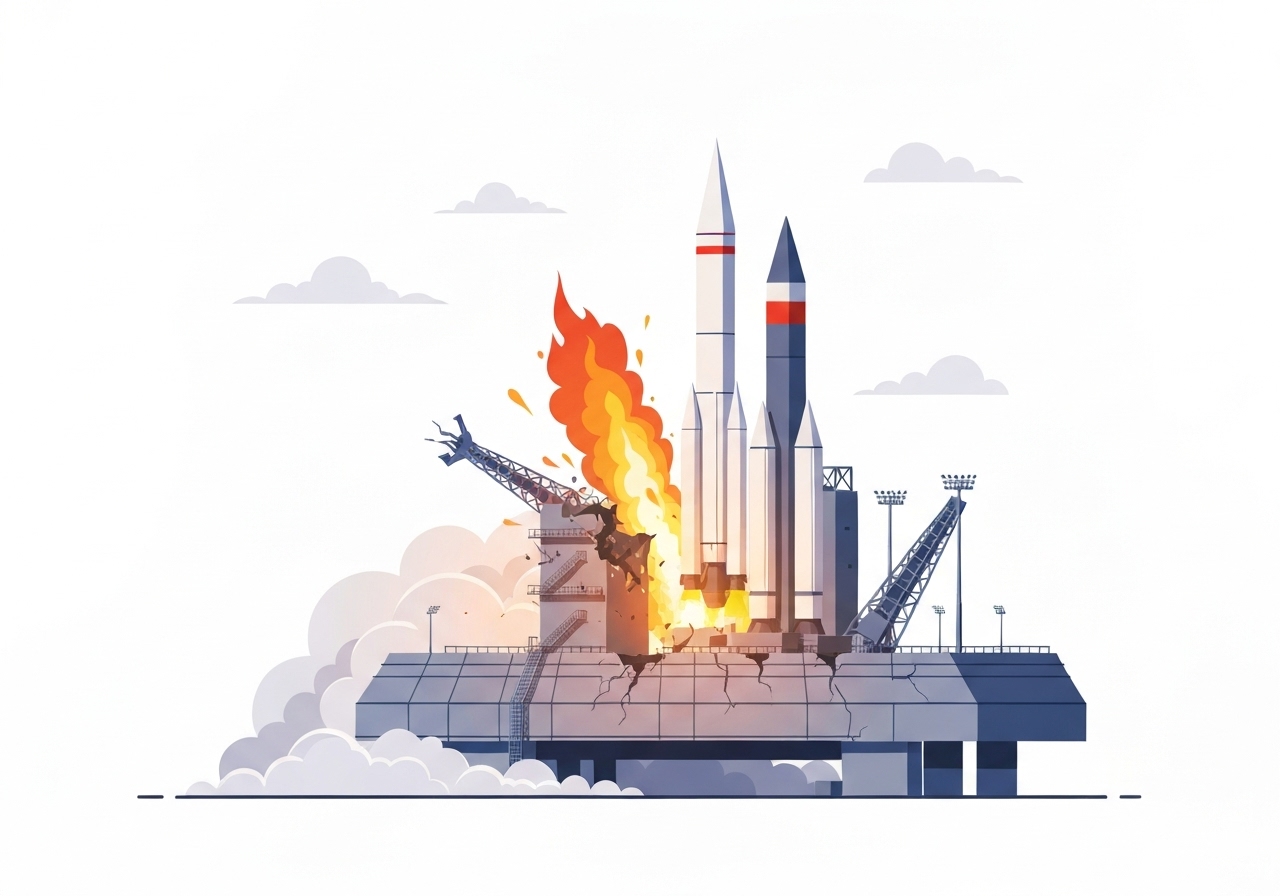
, a Soyuz MS-28 rocket lifted off from the Baikonur Cosmodrome and delivered three astronauts safely to the International Space Station, but the facility’s only operational crewed launchpad, Site 31/6, sustained significant blast damage during liftoff. Post-launch footage released by Roscosmos shows large structural elements displaced into the pad’s flame trench and charred debris at the scene. Roscosmos told state media the complex is being assessed and that spare components exist to restore the site, while no crew harm was reported.
- Launch outcome: Soyuz MS-28 successfully reached the International Space Station on Nov. 28, 2025; all three crew members, including NASA astronaut Chris Williams, arrived safely.
- Damage observed: Roscosmos footage shows what appears to be a service-bay assembly displaced into the pad’s exhaust trench with visible charring on structural pieces.
- Site affected: The impact was at Site 31/6, Baikonur — Russia’s only currently active pad for crewed Soyuz launches.
- Immediate response: Roscosmos told state media the launch complex is under assessment and that backup parts are available to restore the facility.
- Operational risk: With Site 31/6 impaired and Gagarin’s Start (Site 1) out of crewed use since 2019, Russia lacks an established alternate within Baikonur for routine crewed Soyuz departures.
- Historical context: Site 31/6 dates to the 1960s; Baikonur remains leased from Kazakhstan while Russia develops Vostochny, which is not yet equipped for crewed missions.
Background
Baikonur Cosmodrome, located in Kazakhstan and operated under long-term lease by Russia, contains several historic pads dating to the Soviet era. Site 31/6 was built in the 1960s and has been used in recent years as the primary pad for Soyuz crewed missions after Site 1 (Gagarin’s Start) ceased routine crewed operations in 2019. Russian authorities have discussed preserving Gagarin’s Start as a cultural site rather than returning it to full flight duty.
Russia has been expanding domestic launch infrastructure with the Vostochny Cosmodrome, but Vostochny has not completed the hardware and procedural certification needed for regular crewed flights. That leaves Baikonur — and in practice Site 31/6 — as the near-term route for Soyuz transport to the International Space Station. Modernization proposals for older pads, including previous international interest, have not produced a ready alternate.
Main Event
During the Soyuz MS-28 liftoff on Nov. 28, visual material distributed by Roscosmos captured plume behavior and later aerial shots of the launcher area. Video from immediately after the ascent shows debris and a large, charred object lying in the pad’s exhaust trench that was not present in prelaunch footage. The imagery suggests part of the launch infrastructure — identified in industry terms as the service bay assembly — became dislodged as booster engines fired.
State-controlled media published the agency’s preliminary assessment, noting the launch itself proceeded nominally and the crew were unharmed. Roscosmos said teams are inspecting the launch complex and that necessary backup components are available to restore the pad. The agency did not provide a detailed technical diagnosis or a timeline for repairs in its initial comments to state outlets.
Observers noted that footage of the trench immediately before liftoff showed an empty flame trench, meaning the displaced structure likely came from below the pad during engine ignition. The visible charring and the placement of debris in the trench are consistent with either a structural collapse under engine loads or a secondary blast/overpressure event, though cause remains under investigation.
Analysis & Implications
Operationally, damage to Site 31/6 complicates Russia’s short-term ability to send crews to orbit from Baikonur. With Site 1 out of routine service since 2019 and Vostochny not yet certified for crewed missions, there is limited immediate redundancy for Soyuz departures. Depending on the full extent of damage and the length of repairs, crew rotation schedules and cargo flights could face delays or require alternative arrangements with international partners.
Technically, the most likely direct impact is to pad turnaround time. Replacing a service bay and repairing structural elements beneath a launcher deck typically requires careful engineering assessment, removal of compromised components, and installation of replacement systems — work that can take weeks to months depending on supply, skilled labor availability, and whether foundations were undermined by heat or blast forces.
Strategically, the incident highlights Russia’s reliance on legacy infrastructure outside its borders and the vulnerability this creates. The Baikonur lease remains a geopolitical and operational constraint; until Vostochny reaches maturity for crewed flights, any prolonged outage at Site 31/6 would force Moscow to seek contingency plans that could include accelerated upgrades at Vostochny, limited use of robotic launches only, or emergency international arrangements.
Financially and programmatically, repair costs and schedule disruption could influence Soyuz cadence and budget priorities. If major components need replacement or if investigations identify systemic design or maintenance issues, Roscosmos may face additional scrutiny over safety procedures and infrastructure investment plans.
| Launch Pad | Era Built | Current status (2025) |
|---|---|---|
| Site 31/6 (Baikonur) | 1960s | Active for crewed Soyuz launches; damage reported Nov. 28, 2025 |
| Site 1 / Gagarin’s Start (Baikonur) | 1950s | Out of routine crewed service since 2019; slated for museum/heritage use |
| Vostochny Cosmodrome (Russia) | 2010s–2020s | Under development; not yet certified for regular crewed launches |
Context: the table shows why losing Site 31/6 would reduce immediate redundancy for crewed missions. Repair timelines will determine whether schedule impacts are measured in weeks or months.
Reactions & Quotes
“The launch complex’s condition is currently being assessed,”
Roscosmos (statement to state media)
“All necessary backup components are available for restoration, and the damage will be repaired soon,”
Roscosmos (statement to state media)
“If a service-bay assembly has been expelled or destroyed, inspections and component replacement could extend pad downtime by weeks or months,”
space industry consultant (comment to press)
Each quote was released as part of preliminary statements or commentary while formal engineering inspections continue. Roscosmos emphasized crew safety and restoration capacity; independent analysts flagged the potential for meaningful schedule impacts depending on inspection results.
Unconfirmed
- The exact mechanical cause of the service-bay displacement — whether structural collapse, overpressure, or a localized explosion — has not been publicly confirmed.
- Roscosmos has not released a technical timeline for inspections and repairs; the length of pad downtime remains uncertain.
- The long-term programmatic impact on upcoming crew rotations and commercial payload schedules has not been disclosed and depends on repair duration and resource allocation.
Bottom Line
The Nov. 28, 2025 Soyuz MS-28 launch successfully carried three crew members to the ISS, but visible damage to Site 31/6’s subsurface service bay has introduced operational risk for Russia’s immediate crewed launch cadence. With Site 1 offline for routine launches and Vostochny not fully prepared for crewed operations, Baikonur’s remaining active pad is a critical single point of failure until repairs are completed or alternatives are certified.
Authorities have signaled that restoration is possible using spare components, but independent analysts caution that full structural inspections and replacements can be time-consuming. The coming days and weeks of Roscosmos technical reporting will determine whether effects are limited and short-term or whether they prompt broader schedule and policy responses from Russia and partner agencies.
Sources
- Business Insider — news report summarizing Roscosmos footage and state-media statements
- Roscosmos — Russian federal space agency official releases and footage (official)