
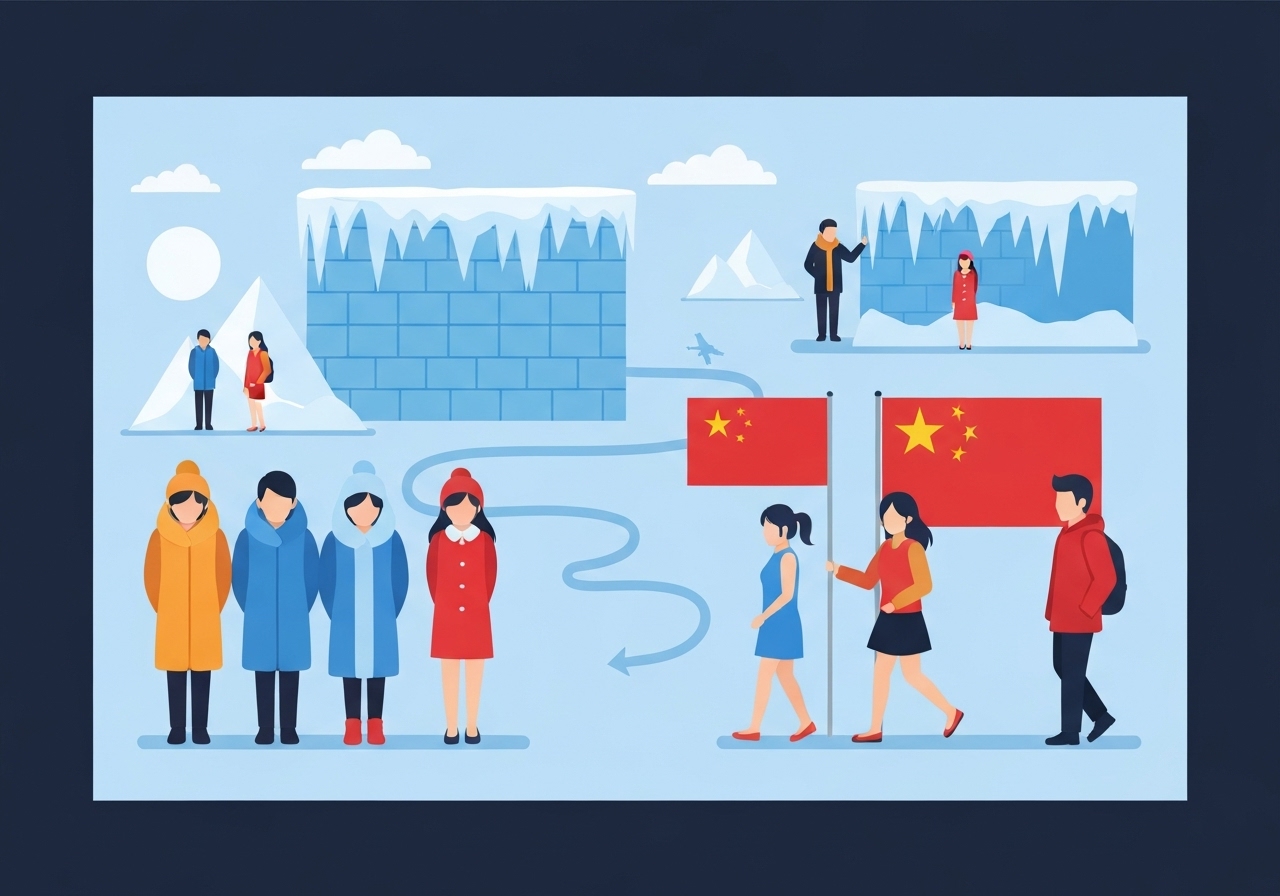
Lead: China has suspended youth exchange programmes with Japan after Tokyo’s Prime Minister Sanae Takaichi made comments on Taiwan on November 7, a diplomatic source told reporters. The cancellations—normally concentrated in November and December—were communicated after Beijing enacted retaliatory measures earlier this month. Authorities in Beijing have also advised citizens against travel to Japan and urged students to reconsider study plans, raising concerns about long-term people-to-people ties. Tokyo has declined to compel Takaichi to retract her remarks, deepening the bilateral standoff.
Key Takeaways
- A diplomatic source reported that Beijing has frozen youth exchange programmes with Japan following Prime Minister Sanae Takaichi’s November 7 remarks on Taiwan.
- The cancellations affect exchanges usually scheduled in November and December, with organisers told the events are called off for the season.
- China has taken wider retaliatory steps earlier this month, including public advisories asking citizens to avoid travel to Japan and urging students to reconsider study plans there.
- Tokyo has not forced Takaichi to retract her comments; the prime minister’s office has maintained its position amid the dispute.
- Officials warn the measures risk damaging people-to-people links—particularly youth, students and tourists—between the two countries.
- The diplomatic source described the move as part of a broader toolkit of diplomatic and economic pressure, rather than a solely cultural policy decision.
Background
Tensions between Beijing and Tokyo often flare around issues tied to Taiwan, defence policy and national politics. Japan’s domestic debates on defence and Japan–US security ties have become more prominent as regional tensions around the Taiwan Strait have increased. Senior Japanese politicians’ remarks about possible responses to cross-strait contingencies draw close attention in Beijing, where officials view such statements through a security lens.
People-to-people programmes, including youth exchanges, study visits and cultural exchanges, are a long-standing channel that mitigates broader diplomatic friction. November and December are typically busy months for exchanges and short-term academic programmes, making the timing of cancellations notable. China and Japan also depend on cross-border tourism and student mobility, which sustain local economies and institutional partnerships.
Main Event
The diplomatic source said Chinese organisers informed Japanese counterparts this month that scheduled youth exchange activities were being cancelled. The source indicated the cancellations followed China’s initiation of retaliatory measures after remarks by Prime Minister Sanae Takaichi on November 7 suggesting Japan could deploy forces in the event of a conflict in the Taiwan Strait. Beijing requested the comments be retracted; Takaichi has not complied.
Officials in Beijing supplemented the programme suspensions with public guidance: travel advisories urging Chinese travellers to avoid Japan and communications advising students to reassess study plans there, citing safety concerns. Organisers in Japan and third-party cultural institutions reported abrupt notifications and clarification requests, reflecting confusion about the scope and duration of the freeze.
Japanese authorities are monitoring the cancellations and have engaged in diplomatic exchanges seeking clarification. Institutional partners—universities, youth groups and non-governmental cultural programmes—are assessing disruptions to participants, funding timelines and visa arrangements. The diplomatic source described the move as targeted at halting interpersonal engagement in the near term rather than an indefinite severance of ties.
Analysis & Implications
Short-term: The immediate effect is a halt to scheduled exchanges that provide language immersion, internships and cross-cultural contact. For participants, cancelled autumn programmes can mean lost scholarships, altered academic plans and disrupted career or volunteer placements. Organisers face logistical and financial strain from abrupt cancellations and refund or rescheduling obligations.
Medium-term: Repeated freezes undermine institutional trust. Universities and youth organisations may delay forming new partnerships, and students could adjust destination preferences. Reduced student mobility and tourism would have local economic impacts, particularly in municipalities that host large numbers of Chinese visitors and exchange cohorts.
Strategic implications: Beijing’s use of people-to-people measures signals a willingness to leverage non-trade tools to exert pressure. If such tactics become more common, they could narrow informal channels that historically diffused tensions, making crises harder to de-escalate through civil society and academic ties. For Tokyo, balancing domestic political currents with the goal of preserving long-term engagement will be a key policy challenge.
International ripple effects: Other regional partners and academic institutions may re-evaluate risk assessments for programmes involving China and Japan. Multilateral education and cultural bodies could be asked to mediate or provide contingency frameworks to protect exchange continuity during bilateral disputes.
Comparison & Data
| Period | Typical Activity | Current Status |
|---|---|---|
| November–December | Peak season for youth exchanges and short-term study visits | Widespread cancellations reported |
| Annual student/tour flows | High numbers of Chinese students and tourists in Japan (pre-disruption) | Advisories and reduced arrivals expected if guidance persists |
The table contrasts normal seasonal patterns with the present disruption. While firm national statistics on cancelled events are not publicly available, organisers and a diplomatic source confirm a significant withdrawal of scheduled activities for the season. Monitoring official visa and travel data in the coming months will reveal the full scale of disruption.
Reactions & Quotes
“Usually, November and December are the season for youth exchanges, but now they have all been called off,”
Diplomatic source
The diplomatic source framed the suspensions as a coordinated response following retaliatory measures. Japanese institutions contacted by reporters said they had received notifications and were seeking clarification.
“Chinese citizens have been advised to avoid travel to Japan and students to reconsider study plans,”
Chinese advisory (reported)
Beijing’s public guidance—reported in media accounts—has been interpreted as part of a broader pressure campaign. Japanese officials said they are closely following the advisories’ practical effects on arrivals and programme continuity.
Unconfirmed
- Whether the freeze extends to all bilateral youth and academic programmes nationwide remains unverified; reports currently indicate widespread but not necessarily universal cancellations.
- The duration of the suspension and whether it will become a recurring tool in future disputes is unclear and depends on diplomatic developments.
- Precise counts of cancelled participants, financial losses for institutions, and the number of students who will alter study plans have not been released publicly.
Bottom Line
The suspension of youth exchanges marks a notable narrowing of Japan–China people-to-people ties and is a tangible consequence of remarks by Prime Minister Sanae Takaichi on November 7. While framed as a response to specific political statements, the measures risk creating longer-term frictions that affect education, tourism and municipal economies.
Observers should watch three indicators: official clarification from Beijing on the scope and duration of the freeze; Japanese diplomatic or policy responses aimed at preserving exchanges; and near-term visa and arrival statistics for students and tourists. Restoring routine youth programmes will likely require both political de-escalation at the leadership level and confidence-building measures between institutions.
Sources
- South China Morning Post — news report summarising diplomatic source and developments.
- Ministry of Foreign Affairs, Japan — official government site for Japanese diplomatic statements and travel-related information (official).
- Embassy of the People’s Republic of China in Japan — official diplomatic representation and travel advisories (official).