
Lead
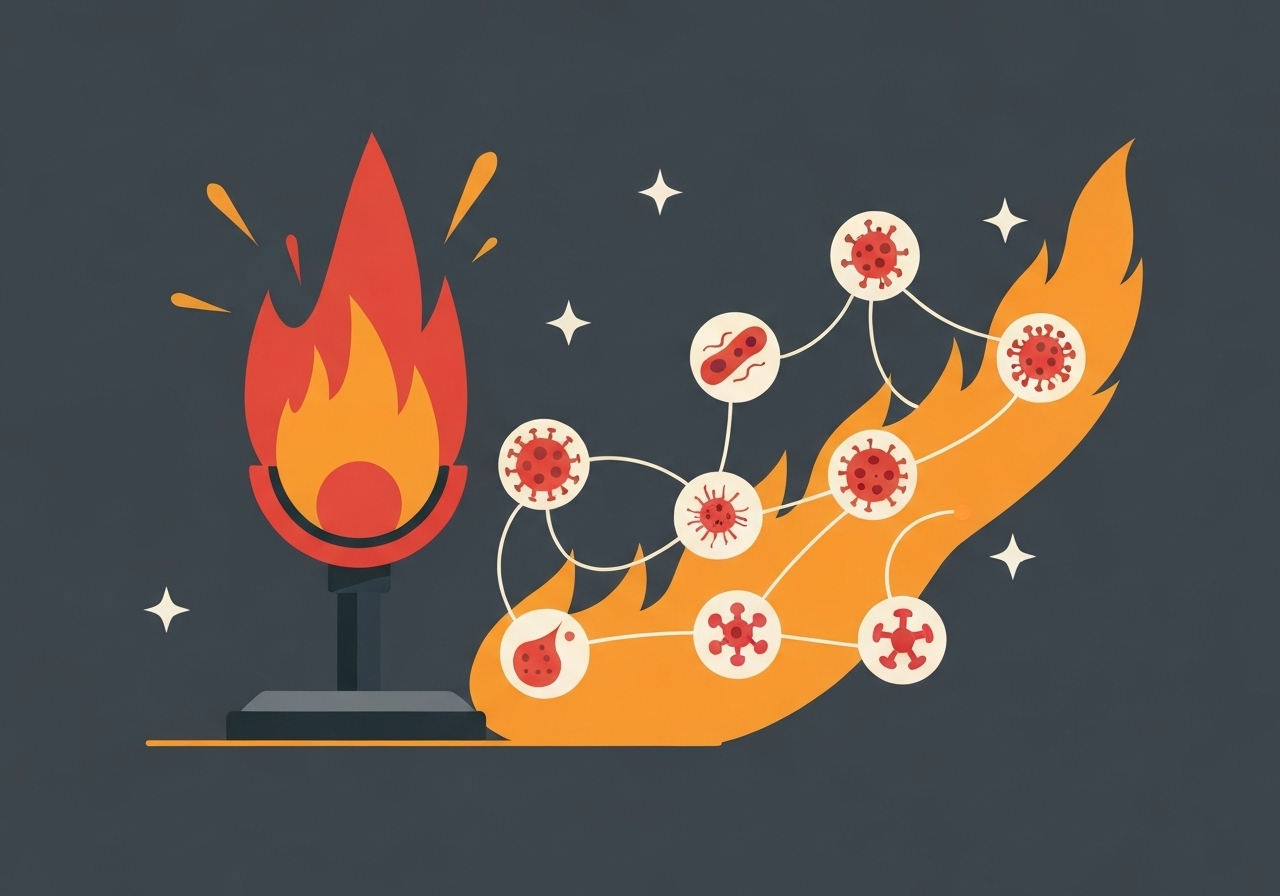
The World Health Organization warned this week that a sharp rise in measles cases worldwide is acting like a ‘fire alarm’ — an early signal that other vaccine-preventable diseases could follow. WHO officials and national health authorities reported renewed outbreaks in 2024 and 2025 across multiple countries, including clusters in the United States. Rapid transmission and falling routine vaccination coverage have amplified the risk that illnesses such as whooping cough, diphtheria and even poliovirus could resurge. The immediate result has been expanding clusters, several deaths, and renewed scrutiny of immunization programs.
Key Takeaways
- WHO estimates about 11 million measles infections occurred in 2024, roughly 800,000 more than in 2019, per its report.
- In 2024, 59 countries reported large measles outbreaks; 81 countries retained measles elimination status that year.
- As of mid-2025, the United States recorded 1,798 confirmed measles cases across 42 states, with three deaths reported.
- State clusters include 153 cases reported in Arizona (mostly Mohave County), 102 in Utah, and 58 in South Carolina (mostly Spartanburg County).
- More than 20,000 pertussis (whooping cough) cases have been reported in the United States so far in 2025, on track for the highest decade tally.
- Most early U.S. measles samples were identified as genotype D8; additional sequencing is underway to map links between clusters.
- An NBC News analysis found 77% of U.S. counties and jurisdictions reported declines in routine childhood vaccination uptake since 2019.
Background
Measles is one of the most contagious human viruses, so small declines in vaccine coverage can allow outbreaks to ignite. Public health agencies use the term elimination to mean sustained absence of endemic measles transmission in a defined area; eradication, by contrast, is global and has been achieved only for smallpox. Canada declared measles eliminated in 1998 and the United States followed in 2000, signaling strong immunization systems rather than permanent immunity to importations.
Elimination status requires systems that stop onward spread when cases are imported; if the same viral strain circulates for 12 continuous months, a country may lose that status. The WHO report and national surveillance data show a recent erosion in those defenses in many places, driven by gaps in routine vaccination, logistical challenges, and pockets of hesitancy or access barriers. Where routine coverage falls below the threshold needed for herd protection — generally about 95% for measles — outbreaks become more likely and harder to contain.
Main Event
Global surveillance compiled by WHO and national agencies documented increasing measles activity through 2024 and into 2025. The WHO released its Progress Toward Measles Elimination report in its Weekly Epidemiological Record, highlighting a rise in cases and in the number of countries experiencing large outbreaks. Several nations that previously maintained elimination status reported imported cases that spread within communities.
In the United States, surveillance in 2025 has identified multiple clusters. A Texas outbreak that began in January produced early samples predominantly identified as genotype D8. Similar D8 detections were reported from a South Carolina cluster and other states, prompting genomic sequencing to determine whether disparate clusters share the same transmission chain. Health departments in Arizona and Utah documented a growing border cluster around Mohave County and adjacent Utah communities.
Public health teams have responded with testing, contact tracing and targeted vaccination drives, but sequencing and epidemiologic links remain incomplete. Officials in several states warned that continuing transmission beyond a year would jeopardize national elimination status. Meanwhile, three deaths linked to measles were reported in the U.S. in 2025, underscoring that severe outcomes persist despite overall rarity in recent decades.
Analysis & Implications
Measles acts as an indicator pathogen: because it spreads so efficiently, its reappearance often signals broader weaknesses in immunization programs. When measles cases climb, other vaccine-preventable illnesses that circulate less visibly can find susceptible populations more easily, raising the chance of simultaneous outbreaks. The concurrent rise in pertussis in the United States illustrates how multiple vaccine-preventable threats can resurface together.
Loss of elimination status has practical consequences. It can divert public health resources to outbreak responses, undermine public confidence in control programs, and require costly catch-up campaigns. For countries with fragile health systems, measles surges can overwhelm routine services, reduce vaccine program momentum, and increase child morbidity and mortality from preventable causes.
Genomic sequencing and thorough epidemiologic investigation are essential to identify transmission chains and to guide targeted interventions. Where the D8 genotype is found, linking clusters genetically can confirm sustained transmission versus repeated importations, which changes the classification and the public health response. Rapidly restoring and maintaining high two-dose measles-mumps-rubella coverage remains the most effective prevention.
Comparison & Data
| Indicator | Value |
|---|---|
| Estimated measles infections (2024) | 11,000,000 |
| Increase vs 2019 | ~800,000 |
| Countries with large outbreaks (2024) | 59 |
| Countries with elimination status (2024) | 81 |
| U.S. confirmed cases (2025, to date) | 1,798 in 42 states |
| U.S. pertussis cases (2025) | >20,000 |
| Reported U.S. deaths (measles, 2025) | 3 |
The table places current figures alongside recent baselines to show both scale and trend. The 2024 global estimate substantially exceeds 2019 levels, reversing earlier progress, while national case loads and clusters in 2025 show how importations can seed broader transmission when coverage gaps exist. These data combine reported case counts with modeled estimates; interpreting trends requires attention to surveillance completeness and reporting lags.
Reactions & Quotes
Measles is an early warning sign because of how easily it spreads; small declines in coverage can trigger outbreaks.
Dr. Kate O’Brien, WHO Department of Immunization
WHO leaders used the metaphor of a fire alarm to emphasize measles as a first-detected threat, urging rapid corrective action to prevent other vaccine-preventable diseases from gaining traction.
Preliminary sequencing shows the same genotype in multiple settings, but more tests are needed to confirm transmission links.
Dr. Linda Bell, South Carolina Department of Public Health
State officials described the sequencing process as a key step to determine whether separate clusters are connected and thus whether local transmission is continuing over many months.
Case counts and deaths remind us that preventable infectious diseases can still cause severe outcomes if immunity gaps widen.
State public health official (summary of briefings)
Public health briefings across affected states have emphasized both the clinical severity in vulnerable people and the importance of timely vaccination.
Unconfirmed
- Whether the Texas outbreak that began in January is definitively the source for clusters in South Carolina, Utah and Arizona remains unconfirmed pending further genetic sequencing.
- Loss of U.S. measles elimination status is conditional and would depend on demonstration of 12 months of continuous endemic transmission of the same strain.
- Global infection totals combine reported cases with model estimates; the precise 2024 figure of 11 million is an estimate subject to revision as surveillance data are updated.
Bottom Line
Rising measles cases are a practical indicator that immunization systems are strained and that other vaccine-preventable diseases may exploit the same gaps. Policymakers should treat measles spikes as a call to accelerate routine childhood vaccination, invest in catch-up campaigns where coverage lags, and expand genomic surveillance to clarify transmission pathways.
For the public, the clearest immediate action is ensuring children and eligible adults are up to date with recommended MMR doses and that health systems maintain rapid outbreak response capacity. Without such steps, countries risk not only localized outbreaks but also the erosion of elimination achievements and greater pressure on health services.
Sources
- NBC News — news report summarizing WHO briefing and U.S. state data (news)
- World Health Organization — measles facts and Weekly Epidemiological Record report (official international health agency)
- U.S. Centers for Disease Control and Prevention — case counts and surveillance updates (national public health agency)
- South Carolina Department of Health and Environmental Control — state health updates and briefings (state public health agency)
- Arizona Department of Health Services — state case reports and notices (state public health agency)