
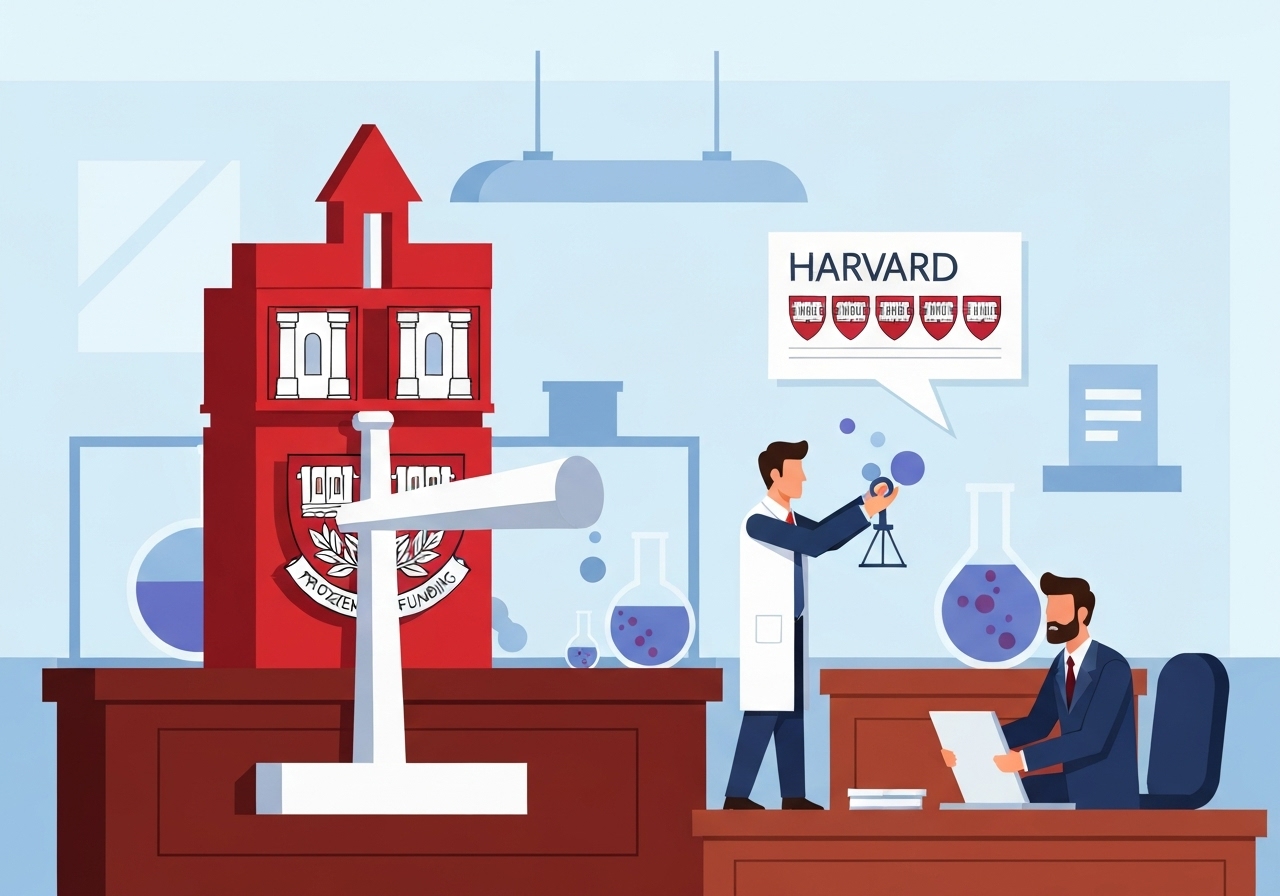
On Sept. 3, 2025, a federal judge in Boston found that the Trump administration unlawfully froze billions of dollars in Harvard research grants, delivering a temporary legal victory for the university and strengthening its position in ongoing settlement talks.
Key Takeaways
- Judge Allison D. Burroughs ruled that the government violated legal protections when it blocked federal research funds to Harvard.
- The dispute began after a government letter on April 11, 2025, and Harvard’s refusal to comply on April 14, 2025.
- The ruling prevents new funding blockades tied to retaliation for protected speech or without Title VI compliance.
- The Justice Department argued federal grants are conditional contracts and can be terminated; the court rejected broad executive authority.
- The decision may strengthen Harvard’s leverage in parallel settlement talks, where a $500 million figure has been discussed.
Verified Facts
Harvard filed suit in April 2025 after the administration sought to condition federal research funding on implementing a range of institutional changes, including audits, shifts to “merit-based” admissions and hiring, and cuts to diversity and inclusion programs. The government announced cuts hours after Harvard declined to accept those conditions.
Judge Allison D. Burroughs of the U.S. District Court in Boston issued an 84-page opinion finding that the administration’s actions were procedurally flawed and at times served as a pretext for a politically driven campaign against elite universities. The judge barred further funding blockades that would retaliate against the university’s exercise of First Amendment rights or that would proceed without complying with Title VI requirements.
The Justice Department framed the matter as contract law, asserting grants contain explicit conditions and may be cancelled if conditions are unmet. The government also argued the case belonged before a specialized court under an 1887 statute; Judge Burroughs rejected that jurisdictional maneuver.
Harvard assembled a bipartisan legal team and pressed its constitutional claims, including free speech and due process protections. The university began parallel settlement discussions with the administration; media reporting in July indicated a possible $500 million figure was on the table, a number President Trump publicly referenced when urging hard bargaining.
Context & Impact
The ruling speaks to broader tensions over federal oversight of higher education, the limits of executive authority over grant-making, and the balance between combating campus antisemitism and protecting academic freedom. Courts will likely play a central role in resolving how far the executive branch can condition research funding on institutional policy changes.
Practically, the decision gives Harvard leverage in negotiations by reducing the administration’s ability to impose immediate funding cutoffs as leverage. But the ruling is not necessarily final: the government has signaled it will appeal, and litigation could continue through higher courts.
For other universities, the opinion may serve as a cautionary precedent against abrupt federal interventions that lack clear procedural justification. At the same time, agencies may seek alternative legal routes to press universities on civil-rights compliance.
Official Statements
“We must fight against antisemitism, but we equally need to protect our rights, including our right to free speech.”
Judge Allison D. Burroughs
No immediate public comment was recorded from Harvard or the White House at the time of the ruling.
Unconfirmed
- The exact timetable and scope for restoring any funds remain unclear.
- The reported $500 million settlement figure has been reported by media but not confirmed in court filings.
- How quickly the administration may appeal and whether it will seek emergency relief is not yet confirmed.
Bottom Line
Wednesday’s decision is a significant procedural victory for Harvard that curtails immediate executive levers to cut research funds as political pressure. While it strengthens the university’s bargaining position, further appeals or negotiations are likely, and the long-term outcome remains uncertain.