
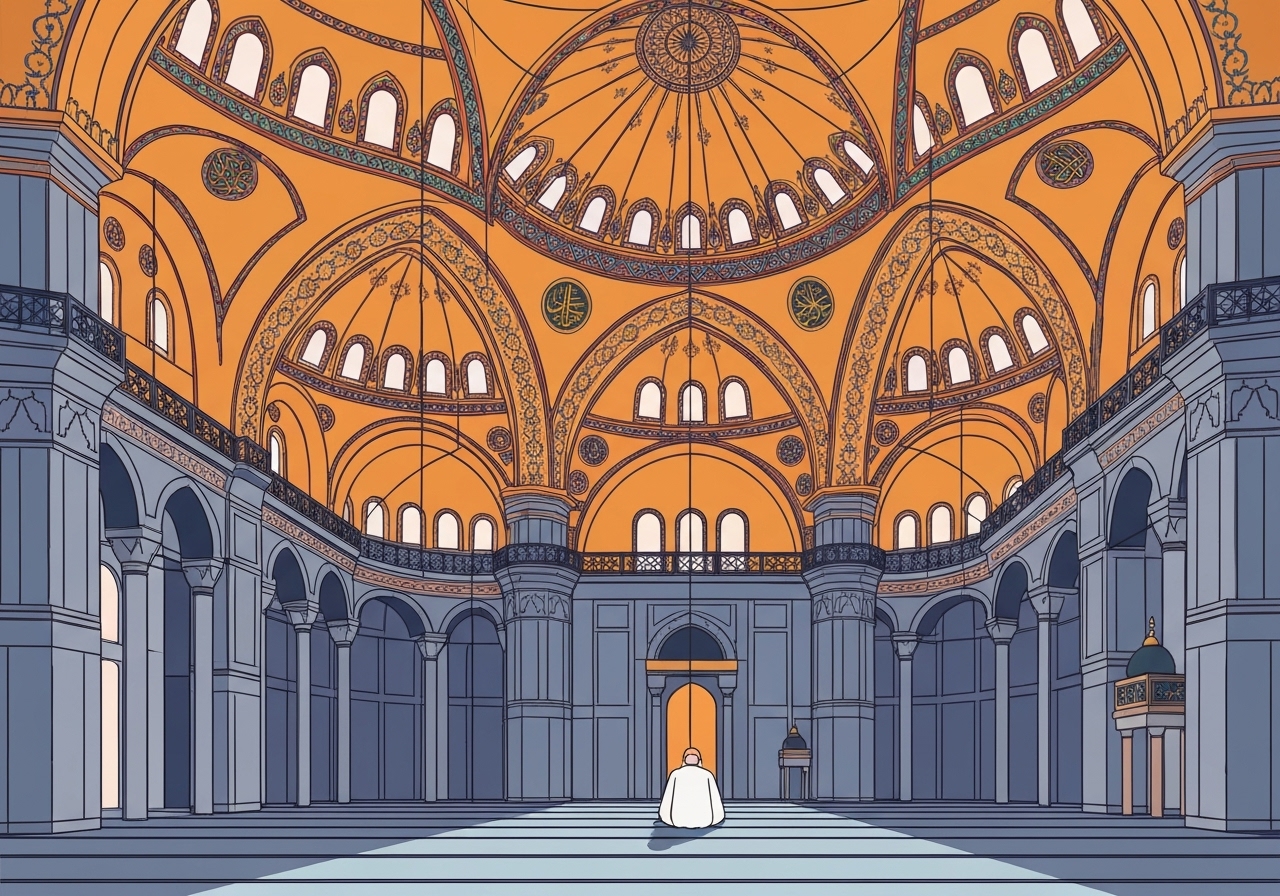
Lead: On Nov. 29, 2025, Pope Leo XIV visited the Sultan Ahmed Mosque, the 17th‑century Blue Mosque in Istanbul, as part of his first international trip. Observers had expected a visible act of prayer alongside Muslim clerics, following practices by his immediate predecessors, but the pope did not appear to pray publicly during the visit. Asgin Musa Tunca, the mosque’s muezzin, said he had invited the pope and that the pontiff declined, though Tunca would not rule out a private, silent prayer. The visit nevertheless continued the pope’s broader mission of outreach to Muslim communities as he prepares to travel onward to Lebanon.
Key Takeaways
- Pope Leo XIV visited the Sultan Ahmed Mosque (Blue Mosque) in Istanbul on Nov. 29, 2025; the trip is the first international journey of his papacy.
- The pope did not give a visible public prayer at the mosque; mosque muezzin Asgin Musa Tunca said the pontiff declined an invitation to pray there.
- Tunca reported the pope said, “That’s OK,” and added he could not exclude the possibility of a silent private prayer.
- Leo XIV is the first pope from the United States and is en route from Turkey to Lebanon to promote peace and interreligious outreach.
- The lack of a visible prayer contrasts with the two immediate predecessors, who did participate in visible interfaith prayer gestures at similar visits.
- Mosque officials described the visit as positive and emphasized a desire for continued meetings and mutual acquaintance between communities.
Background
The Sultan Ahmed Mosque, commonly called the Blue Mosque, is a central religious and tourist site in Istanbul built in the early 17th century. Visits by foreign religious leaders to major houses of worship are often symbolic moments in interfaith diplomacy, conveying messages about respect, recognition and coexistence. In recent decades, several popes have used visits to Muslim sites to signal outreach to Islam and to underscore the Catholic Church’s commitment to interreligious dialogue.
Pope Leo XIV’s itinerary — beginning in Turkey and continuing to Lebanon — places him amid a region where religious pluralism and political tensions intersect. Turkey hosts a majority Muslim population while maintaining institutions that engage with Christian communities; Lebanon is home to a delicate balance among Christian and Muslim groups. The Vatican has framed this trip as both pastoral and diplomatic, with the pope aiming to address intra‑Christian solidarity and bridgebuilding with Muslim communities.
Main Event
On Nov. 29, 2025, the pope entered the Sultan Ahmed Mosque accompanied by local officials and guides. Visitors and journalists watched closely for any sign that he would join Muslim clerics in a public prayer, a gesture that his two immediate predecessors had made at similar encounters. According to Asgin Musa Tunca, the mosque’s muezzin, he extended an invitation for the pope to pray inside the mosque; Tunca said he was told the pope declined, responding, “That’s OK.”
Tunca said the pontiff told him he had come to see the mosque, and Tunca described himself as “happy” about the visit and hopeful for future meetings. Journalists at the scene reported no visible act of prayer from the pope before he departed the mosque grounds. The Vatican did not provide an immediate, detailed explanation about whether the pope offered a private prayer during the visit.
Witnesses said the encounter was brief and cordial, oriented toward mutual respect rather than a liturgical exchange. The pope’s aides emphasized the pastoral intent of the stop, characterizing it as part of a broader program of meetings and gestures during the Turkey stage of his trip. After Istanbul, Leo XIV departed for Lebanon to continue a schedule focused on Christian communities and regional reconciliation efforts.
Analysis & Implications
The absence of a visible prayer has symbolic weight in interfaith diplomacy. A public prayer alongside Muslim clerics is a clear, easily interpreted signal of interreligious solidarity; its omission leaves more room for interpretation by domestic and international audiences. For supporters of visible gestures, the lack of a public prayer may be read as a missed opportunity to reinforce a narrative of active rapprochement between Rome and Muslim communities.
Conversely, a private or silent prayer — if it occurred — could reflect a deliberate sensitivity to differing liturgical norms and to domestic constituencies that interpret public religious acts through theological lenses. Vatican protocol often balances pastoral outreach with doctrinal clarity; decisions about visible participation in non‑Christian rites are shaped by longstanding guidelines and by the pastoral judgment of a pope and his advisers.
For regional politics, the visit advances the pope’s objective of presenting the Vatican as a mediator and moral interlocutor in a volatile neighborhood. Even without a visible prayer, the papal presence in Istanbul and the planned trip to Lebanon reinforce Rome’s diplomatic ties and can help sustain dialogue on humanitarian and sectarian concerns. International observers will watch how Lebanon’s leaders and local Christian communities receive the pope and whether subsequent meetings produce concrete collaborative initiatives.
Comparison & Data
| Visitor | Visible Prayer at Mosque |
|---|---|
| Pope Leo XIV (Nov. 29, 2025) | No (not visibly) |
| Two immediate predecessors | Yes (participated in visible interfaith prayer gestures) |
This comparison underscores the difference in public optics between Leo XIV and his immediate predecessors. The table is high level by design: precise location, wording, and context of prior gestures vary, and each pope’s pastoral approach has been shaped by unique political and ecclesial circumstances.
Reactions & Quotes
Mosque officials framed the encounter positively despite the lack of a public prayer, stressing openness to future exchanges. The Vatican issued routine travel briefs but at the time of reporting offered no extended comment about the decision not to pray visibly.
“He told me, ‘That’s OK.'”
Asgin Musa Tunca, muezzin, Sultan Ahmed Mosque
“We should meet. We should get to know each other.”
Asgin Musa Tunca, muezzin, Sultan Ahmed Mosque
“I am happy that he visited.”
Asgin Musa Tunca, muezzin, Sultan Ahmed Mosque
Unconfirmed
- Whether Pope Leo XIV offered a private, silent prayer inside the mosque is unconfirmed by independent sources beyond the muezzin’s account.
- Any internal Vatican discussion or protocol that prompted the decision not to pray visibly has not been publicly disclosed.
- How the absence of a visible prayer will affect long‑term interfaith relations in Turkey and Lebanon remains uncertain and will depend on follow‑up engagements.
Bottom Line
Pope Leo XIV’s November 29, 2025, visit to Istanbul’s Blue Mosque was a carefully staged pastoral gesture that stopped short of a visible interfaith prayer. The encounter maintained the pope’s outreach narrative while avoiding a highly symbolic public act that might have drawn immediate political or theological scrutiny. Observers should monitor the pope’s subsequent meetings in Lebanon and any Vatican statements clarifying the intent behind the mosque visit.
Regardless of whether a private prayer occurred, the trip underscores the ongoing challenge for religious diplomacy: to perform gestures that are both sincerely pastoral and sensitive to doctrinal boundaries. The real test of this visit’s impact will be the follow‑up — concrete meetings, cooperative initiatives and public messaging in the days and weeks ahead.
Sources
- The New York Times — Media (news report on the mosque visit, Nov. 29, 2025)