
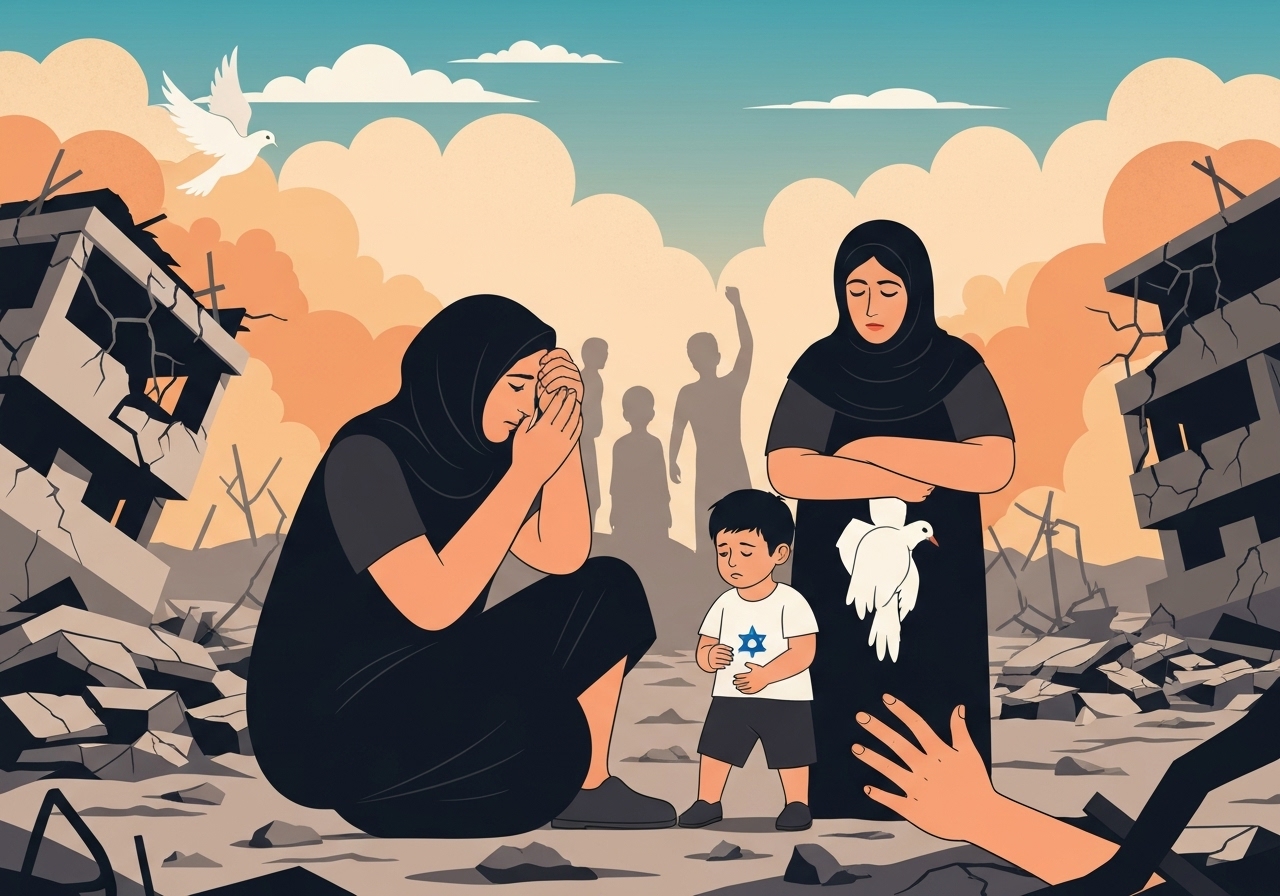
On Nov. 29, 2025, two boys from Khan Younis were killed in a strike in Bani Suheila, eastern Khan Younis, according to their family and medical staff at Nasser Hospital. The victims were identified by relatives as brothers Fadi and Juma Abu Assi, the elder of whom was 10 years old. Family members say the children had left their home to collect firewood when they were struck; Israeli military officials described the targets as ‘suspects’ who crossed cease-fire lines and posed a danger to soldiers. The incident occurred amid an ongoing cease-fire and reports of continued, localized violence across southern Gaza.
- Two children killed on Nov. 29, 2025: brothers Fadi and Juma Abu Assi; the older boy was 10 years old, according to family identification and hospital staff.
- Location: Bani Suheila, an eastern neighborhood of Khan Younis near the so-called ‘yellow line’ to which Israeli forces had withdrawn under the cease-fire.
- Circumstances reported by family: the boys went out to gather wood from the outskirts of Khan Younis before being struck.
- Israeli military statement: forces ‘identified two suspects’ who crossed cease-fire lines, conducted ‘suspicious activities’ and were ‘eliminated’ by air force action directed by ground forces.
- Medical handling: Ahmed al-Farra, an official at Nasser Hospital in Khan Younis, said the hospital received the bodies; further forensic or independent verification was not reported at the time.
- Cease-fire context: the strike happened despite a cease-fire that included Israeli withdrawal to a yellow line in parts of southern Gaza, signalling ongoing localized confrontations.
- Accountability status: inquiries and independent confirmation of the military’s characterization of the targets remain outstanding.
The killing of the two boys adds to a series of incidents that communities and aid groups say continue to imperil civilians near front lines and former lines of contact. Local residents describe constrained movement for fuel, food and wood, forcing children and adults to take risks to meet basic needs. Hospital officials and family members are the primary sources for the identification and timeline of the deaths; the Israeli military issued a separate operational statement describing a security rationale.
Background
Since the cease-fire took effect, portions of southern Gaza have been punctuated by small-scale clashes, patrols and localized strikes. Under the cease-fire arrangements, Israeli forces withdrew to designated buffer lines — often referred to locally as a ‘yellow line’ — while some operations and surveillance continued near those zones. The humanitarian situation in Khan Younis and surrounding areas has been precarious, with displaced families concentrated in makeshift camps and limited access to fuel and cooking materials; gathering wood is a common necessity for many households.
Previous incidents in the conflict have seen disputed accounts between military authorities and local witnesses, particularly where strikes occur near civilian areas or buffer lines. Humanitarian organizations have repeatedly warned about the elevated risk to children in both displacement sites and perimeter neighborhoods. Hospitals such as Nasser Hospital have been focal points for casualty reporting, receiving bodies and treating the wounded while documenting civilian harm amid constrained resources.
Main Event
Family members told hospital staff and reporters that the two brothers left their home on the outskirts of Khan Younis on Nov. 29 to collect wood. According to those accounts, they were struck in Bani Suheila, an eastern neighborhood close to the widely referenced ‘yellow line’ that marked Israeli withdrawal points under the cease-fire. Ahmed al-Farra, an official at Nasser Hospital, confirmed receiving the bodies; hospital staff have been among the first local sources to provide casualty details in recent incidents.
The Israeli military issued a statement saying forces had ‘identified two suspects’ who crossed cease-fire lines, carried out what the military described as ‘suspicious activities on the ground,’ and posed a threat to nearby soldiers. The statement added that, after identification, the air force — directed by ground forces — ‘eliminated the suspects in order to remove the threat.’ The military did not address media reports identifying the victims as children.
Independent verification from third-party monitors or neutral observers was not reported at the time these accounts emerged. Local journalists and families provided names and ages for the victims, and hospital personnel released basic information about the bodies received. Access constraints, security concerns and competing narratives from the parties involved complicate immediate, independent corroboration.
Analysis & Implications
The killing of two children near a cease-fire line underlines the porous nature of localized security arrangements and the risks inherent when civilians remain close to areas of military significance. Even when large-scale hostilities pause, active patrols, identification routines and quick-lapse targeting can lead to lethal mistakes, especially where identification occurs at a distance or under time pressure. For families who must venture out for fuel or food, the calculus of risk is daily and acute.
Politically, such incidents can inflame tensions and erode fragile trust in cease-fire mechanisms, complicating diplomatic efforts to stabilize the truce. Each civilian death — and particularly every child casualty — becomes a rallying point in local and international advocacy, potentially prompting renewed calls for stronger safeguards and independent investigations. For militaries, the operational challenge is balancing force protection for personnel with proportionality and verification when individuals are observed near contested lines.
Humanitarian consequences are immediate: bereaved families face grief amid limited avenues for recourse, and communities perceive an unpredictable security environment. In the medium term, repeated occurrences of civilian harm risk further displacement, shrinkage of safe movement areas, and additional strain on medical facilities already operating with limited supplies. International actors monitoring the cease-fire will likely press for clearer de-escalation steps and more transparent incident reporting.
Comparison & Data
| Victim | Age | Location | Date |
|---|---|---|---|
| Fadi Abu Assi | Unknown (one of the brothers; elder was 10) | Bani Suheila, Khan Younis | Nov. 29, 2025 |
| Juma Abu Assi | Unknown | Bani Suheila, Khan Younis | Nov. 29, 2025 |
The table above compiles core, reportable facts from family identification and hospital reporting. Detailed forensic data, precise ages for both brothers beyond the elder being 10, and independent incident mapping were not published at the time of reporting. This limited dataset highlights the difficulties in producing comprehensive casualty statistics in a fast-moving, access-constrained environment.
Reactions & Quotes
‘The hospital received two bodies from Bani Suheila,’
Ahmed al-Farra, Nasser Hospital official
This comment from a hospital official served as the primary confirmation that the two children had been received by medical staff; hospitals are often the earliest local confirmers of fatalities in the area.
‘Forces identified two suspects who crossed the cease-fire lines and eliminated the threat,’
Israeli military statement
The military framed the action as an operational response to a perceived threat; it did not address family claims about the victims’ ages. Military statements like this are standard practice when describing targeted engagements near buffer lines.
‘They went out to gather wood,’
Family members of the victims (reported)
The family account highlights the humanitarian drivers of movement near front lines — basic tasks such as collecting fuel or wood — that can place civilians in harm’s way.
Unconfirmed
- The military’s claim that the struck individuals were combatant ‘suspects’ has not been independently verified by neutral monitors.
- Precise ages for both brothers beyond the elder being reported as 10 are not publicly documented in the initial reporting.
- Whether the boys were intentionally close to military positions or inadvertently crossed a line remains unclear from available evidence.
Bottom Line
The deaths of Fadi and Juma Abu Assi on Nov. 29, 2025, illustrate how cease-fires can leave dangerous seams where civilians continue to suffer. Even when broad hostilities subside, localized enforcement, identification procedures and constrained humanitarian access can produce deadly outcomes, especially for those forced by need to move near contested lines.
Immediate priorities are independent, transparent inquiry into the incident and measures to reduce civilian exposure near buffer zones — including clearer communication about safe movement and reinforced safeguards for children. Without strengthened protections and impartial verification, similar incidents risk undermining the cease-fire and exacerbating humanitarian distress in southern Gaza.
Sources
- The New York Times (news report) — initial reporting on the incident, family identification and military statement.
- Israeli Defense Forces (official) — official military statements and operational briefings related to actions near Gaza.
- Associated Press (news agency) — photographic coverage and regional reporting on humanitarian conditions in Gaza.