
Lead
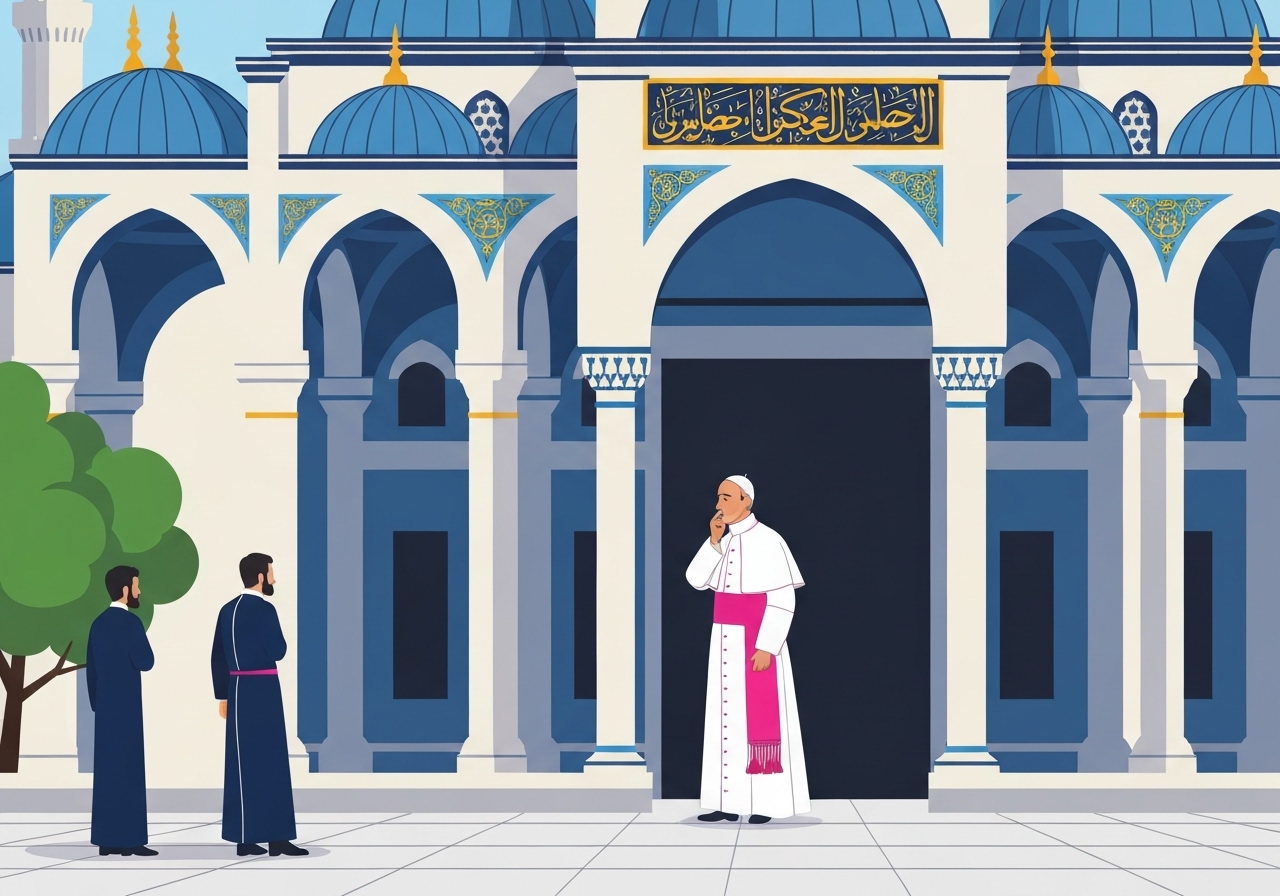
On 29 November 2025, Pope Leo XIV made a brief visit to Istanbul’s Sultan Ahmed Mosque, widely known as the Blue Mosque, during the third day of his first overseas trip as pontiff. The U.S.-born pope bowed slightly on entry, was guided through the complex by mosque officials, and spent roughly 20 minutes inside the 10,000-capacity prayer site in a visit described by the Vatican as one of reflection and listening. He did not perform a formal prayer there and plans to continue the trip through Sunday with a scheduled stop in Lebanon. The visit was framed as a symbolic act of interfaith outreach early in Leo’s papacy.
Key Takeaways
- Pope Leo XIV visited the Blue Mosque in Istanbul on 29 November 2025 during his first foreign trip as pope; the stop lasted about 20 minutes.
- The mosque, built under Sultan Ahmed I (reigned 1603–1617), can hold approximately 10,000 worshippers and is famed for thousands of blue ceramic tiles.
- The pope, the first U.S.-born pontiff, was led on the tour by the mosque’s imam and the mufti of Istanbul and met the lead muezzin, Askin Tunca.
- The Vatican said the pope’s tour was conducted “in a spirit of reflection and listening,” emphasizing respect for those who gather there in prayer.
- Leo did not enter Hagia Sophia, which was reconverted to a mosque in 2020; that decision has previously drawn international comment from Church leaders.
- Observers view the visit as a diplomatic gesture toward Muslim communities and an early test of Leo’s approach to interreligious relations.
Background
Pope Leo XIV, elected in May 2025 and relatively little-known internationally before his elevation, is undertaking his first overseas journey as leader of the Catholic Church. The short tour includes Turkiye and a planned visit to Lebanon, and it has been watched closely as a signal of his diplomatic priorities and tone. Visits to places of worship outside the Catholic tradition by a reigning pope carry symbolic weight; past popes have used such moments to stress interfaith dialogue and reconciliation.
The Sultan Ahmed Mosque, commonly called the Blue Mosque, dates to the early 17th century under Sultan Ahmed I and is part of Istanbul’s historic core. It sits near Hagia Sophia, the sixth-century basilica that was converted into a mosque under the Ottomans, later designated a museum by the Turkish republic, and reconverted to a mosque in 2020—a move that drew international criticism and remains politically sensitive. In that context, a papal visit to any prominent Turkish religious site is inherently layered with cultural and diplomatic meaning.
Main Event
Early on Saturday, Leo arrived at the Blue Mosque and entered after a slight bow, a gesture noted by observers as respectful but non-liturgical. Mosque officials led the pope through the main prayer hall and adjoining courtyards; among those accompanying him were the mosque’s imam and Istanbul’s mufti. The visit lasted roughly 20 minutes, during which photographers recorded brief exchanges between the pope and the mosque’s lead muezzin, Askin Tunca.
Attired in his white papal cassock and, notably, white socks, Leo moved through the complex without performing a formal Muslim prayer. Tunca told reporters the pope had asked to see and feel the mosque’s atmosphere; when offered the chance to pray, the pope declined and chose to continue the tour. As the group left, a lighthearted exchange took place when the pope noticed a sign reading “No exit” and quipped about it, prompting laughter from his guides.
The Vatican issued a concise statement after the visit saying Leo’s tour was carried out in a spirit of reflection and listening and stressed the pope’s respect for the faith of those who gather there. Officials framed the stop not as a theological act but as a gesture of mutual respect and encounter between faith communities during an early foreign trip that also includes Lebanon.
Analysis & Implications
The visit is first and foremost symbolic: a visible outreach from a new pope to a Muslim-majority country at a time of heightened attention to interreligious relations. For Leo, who comes from the United States and was relatively unknown globally before his election, public gestures like this help define his diplomatic persona and set expectations about his approach to pluralism and dialogue. The restrained nature of the stop—no prayers performed, a short tour and public smiles—appears calibrated to show respect while avoiding acts that could be construed as liturgical or proselytizing.
Domestically in Turkiye, the stop feeds into broader debates over religion, national identity and cultural heritage. The nearby Hagia Sophia’s 2020 reconversion from museum to mosque remains a touchpoint in diplomatic and cultural discourse; by not visiting Hagia Sophia, Leo avoided an overt statement on that contentious decision while still engaging with a major Islamic shrine. Internationally, the visit may soften tensions with Muslim communities and reassure Catholic constituencies that the Vatican seeks respectful contact rather than confrontation.
Politically, the encounter gives both Ankara and the Vatican a public relations moment. For Turkiye, hosting a papal visit to a major mosque affirms its role as a crossroads of civilizations; for the Vatican, it is an opportunity to underscore themes of listening, coexistence and concern for global issues that Leo has said will feature in his papacy. Analysts will watch whether follow-up meetings or statements emerge that translate symbolism into policy cooperation on humanitarian, refugee or interfaith education initiatives.
Comparison & Data
| Site | Era | Capacity / Status |
|---|---|---|
| Sultan Ahmed Mosque (Blue Mosque) | Early 17th century (Sultan Ahmed I, 1603–1617) | ~10,000 capacity; active mosque |
| Hagia Sophia | 6th century (Byzantine) | Reconverted to mosque in 2020; UNESCO World Heritage site |
The table above places the pope’s stop in architectural and historical context: the Blue Mosque is a functioning Ottoman-era mosque known for its blue tiles and large congregational capacity, while Hagia Sophia originates in the Byzantine period and carries a layered history that continues to produce international debate. These contrasts help explain why a papal visit to a Turkish mosque is both symbolically potent and diplomatically delicate.
Reactions & Quotes
“He wanted to see the mosque, he wanted to feel the atmosphere of the mosque, and he was very pleased.”
Askin Tunca, Blue Mosque lead muezzin (reported to media)
Context: Tunca’s brief comment to reporters framed the pope’s motive as curiosity and respect rather than liturgical participation. His remarks were the clearest immediate account of the pope’s comportment inside the complex.
“The visit was made in a spirit of reflection and listening, with deep respect for the place and for the faith of those who gather there in prayer.”
Vatican statement (official)
Context: The Vatican emphasized restraint and mutual respect, signaling that the stop was diplomatic and pastoral rather than doctrinal or ceremonial.
“It says no exit.”
Pope Leo XIV (at the mosque, reported)
Context: The pope’s light remark about a “No exit” sign was widely circulated as a humanizing moment during a carefully managed visit.
Unconfirmed
- Any private conversations held between Pope Leo and Turkish officials or clerics during the visit have not been fully disclosed by either side.
- There is no independent confirmation that the pope’s team discussed specific policy or humanitarian collaborations with Turkish authorities during the mosque stop.
- Reports that the pope chose not to visit Hagia Sophia for political reasons have not been confirmed by the Vatican and remain interpretive.
Bottom Line
Pope Leo XIV’s short visit to the Blue Mosque on 29 November 2025 was a carefully managed, symbolic act of outreach that emphasized respect and listening while avoiding liturgical participation. As a first foreign stop for a pope born in the United States, the encounter serves to define the tone of his early diplomacy and signals a willingness to engage with Muslim-majority societies in restrained, respectful ways.
Looking ahead, real impact will depend on follow-up: whether the Vatican and Turkish authorities translate symbolism into cooperative initiatives on humanitarian issues, interfaith education or cultural preservation. For now, the visit delivers a public image of conciliation and curiosity, and it will be judged by observers both for what was said and for what formal engagements follow during the remainder of the trip, including the scheduled visit to Lebanon.