
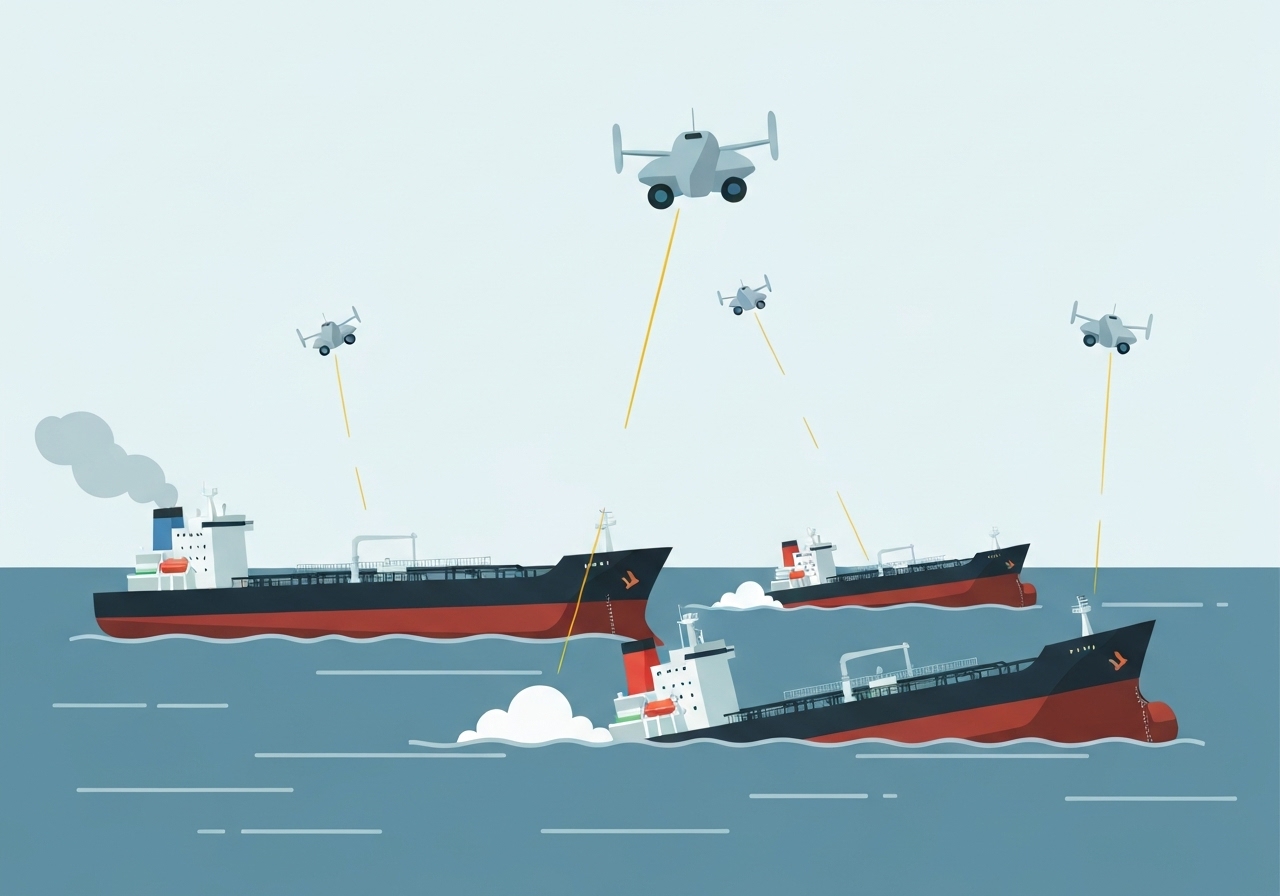
Lead: Ukrainian naval unmanned vessels struck two sanctioned oil tankers, the Kairos and the Virat, in the Black Sea as they sailed toward Novorossiysk, Ukrainian security officials said. Video shared by Kyiv showed explosions and fires aboard both ships, which were reportedly empty and bound to load oil for export. Turkey said the strikes occurred in its exclusive economic zone and raised safety and escalation concerns. The attacks come amid an intensified Ukrainian campaign targeting Russian oil logistics to press economic pressure on Moscow.
Key takeaways
- Two tankers identified as the Kairos and the Virat were struck while en route to Novorossiysk; both are listed as subject to sanctions under LSEG data.
- The 274-metre Kairos caught fire after an explosion while sailing from Egypt to Russia; crew were evacuated and firefighting was underway, Turkish authorities said.
- The Virat was first struck about 35 nautical miles offshore and reportedly hit again, sustaining minor above-waterline damage and remaining seaworthy, Turkish officials added.
- Ukrainian naval drones—uncrewed explosive speedboats—were shown in video accelerating toward the vessels before detonations, according to a Ukrainian security service statement.
- The Caspian Pipeline Consortium (CPC) halted exports after a mooring at its Black Sea terminal was damaged; CPC handles more than 1% of global oil flows, according to the company.
- Turkey described the incidents as occurring in its exclusive economic zone and said they posed serious safety risks, calling for measures to prevent spillover in the Black Sea.
Background
Since the full‑scale invasion in 2022, Russia has used a complex network of vessels—often called a “shadow fleet”—to reroute oil exports around western sanctions. Kyiv has repeatedly urged more robust western action against that fleet, arguing it helps finance Moscow’s war effort. Ukraine has also mounted strikes on refineries and logistics nodes using long‑range aerial drones and, increasingly, naval unmanned systems to target transport and export infrastructure.
The shadow fleet consists of hundreds of aging, loosely regulated tankers and brokers that transfer cargoes and obscure ownership or end destinations. Western sanctions have aimed to curtail Russia’s oil revenue, but intermediaries and ship-to-ship transfers have allowed sizable flows to continue. Major stakeholders affected include Russian shippers, Kazakhstan producers who use Black Sea routes, and terminal operators such as the CPC.
Main event
Ukrainian security service officials provided video showing small, high‑speed unmanned surface vessels racing toward two large tankers before explosions and fires erupted aboard both ships. The official statement said the vessels were effectively taken out of service and called the strikes a significant blow to Russian oil transportation, though Kyiv did not specify the exact timing of the operations.
Turkey’s transport ministry reported the Kairos suffered an explosion and caught fire while en route from Egypt to Russia; rescue boats evacuated the crew and firefighting continued. The Kairos is reported to be 274 metres long. Separately, Turkish authorities said the Virat was struck roughly 35 nautical miles offshore and was subsequently attacked again, leaving only minor damage above the waterline and the crew in stable condition.
The Ukrainian official characterized the operation as aimed at tankers that move oil destined for foreign markets, saying both ships were on sanctions lists. Independent verification of the footage, vessel identities and precise locations by international open sources was not available at the time of reporting. Russia did not issue a public comment immediately following the reports.
Analysis & implications
Targeting tankers represents a strategic shift from attacks on shore refineries and pipelines to striking the maritime links that move Russian crude to markets. Disrupting transport capacity narrows options for Moscow to monetize crude, especially when intermediaries and ship-to-ship transfers have sustained flows despite sanctions. If such maritime strikes continue, insurance costs, rerouting and port congestion could raise logistics expenses for Russian exports.
For Kazakhstan and other producers that rely on Black Sea routes, attacks that damage terminal infrastructure or force temporary halts—such as the CPC suspension after mooring damage—pose an immediate commercial risk. The CPC handles more than 1% of global oil flows; even short interruptions can ripple through regional logistics and delay shipments. Market responses will depend on the scale and persistence of the disruptions.
Diplomatically, strikes inside or near Turkish waters complicate Ankara’s balancing act. Turkey has signaled concern and emphasized steps to prevent escalation in the Black Sea. Continued naval operations by Ukraine risk drawing broader regional attention and increase the pressure on NATO and partner states to clarify maritime safety and freedom‑of‑navigation responses in the area.
Comparison & data
| Vessel | Reported length | Status after strikes | Sanctions list |
|---|---|---|---|
| Kairos | 274 metres | Explosion and fire; crew evacuated | Listed (LSEG) |
| Virat | — | Struck ~35 nm offshore; minor above‑waterline damage | Listed (LSEG) |
| Caspian Pipeline Consortium terminal | — | Mooring damaged; exports halted | Handles >1% global oil |
The table summarizes publicly reported technical and operational consequences. Exact commercial volumes affected will depend on repair timelines, insurance decisions and whether alternative ship-to-ship arrangements can be deployed.
Reactions & quotes
Turkish officials immediately flagged the incidents as serious because they occurred in or near Turkey’s exclusive economic zone and posed hazards to navigation and regional stability. Ankara said it was in contact with relevant parties to prevent escalation and to safeguard economic interests in the Black Sea region.
“The incidents took place in our exclusive economic zone and posed serious safety risks.”
Öncü Keçeli, Turkish foreign ministry spokesperson (official statement)
Ukraine’s security service framed the strikes as an effort to undermine Russian oil transportation and to hit vessels linked to sanctions‑circumventing exports. Kyiv has been publicizing attacks on maritime targets as part of a broader campaign to choke revenue streams it says fund the war.
“Both tankers sustained critical damage and were effectively taken out of service.”
Ukrainian security service official (written statement)
The Caspian Pipeline Consortium confirmed operations were halted after damage to terminal moorings; the company emphasized the commercial impact and the need to assess repairs. Kazakhstan officially called the attack unacceptable, reflecting concerns that regional export infrastructure and neutral producers could be affected.
“CPC exports have been halted following significant damage to a mooring at our Black Sea terminal.”
Caspian Pipeline Consortium (company statement)
Unconfirmed
- Precise timing of the Ukrainian strikes was not specified by the Ukrainian official and has not been independently verified.
- Independent confirmation of the tankers’ identities, the exact locations of the video footage, and whether both incidents occurred on the same day remains pending.
- Public comment from Russian authorities about these specific incidents was not available at the time of reporting.
Bottom line
The reported strikes on the Kairos and Virat mark an escalation in Ukraine’s targeting of maritime links that sustain Russian oil exports and could complicate already strained Black Sea maritime operations. Damage to terminals and sanctioned vessels raises insurance, routing and diplomatic questions that may increase costs for parties still trading Russian crude.
How states and commercial actors respond—through enhanced maritime security, insurance adjustments, or political measures—will determine whether this remains a discrete operation or becomes a sustained campaign that meaningfully reduces Russia’s ability to sell oil abroad. For now, key uncertainties about timing, independent verification and Moscow’s response leave the broader impact unclear.
Sources
- The Guardian (news report summarizing official statements and footage)