
Lead
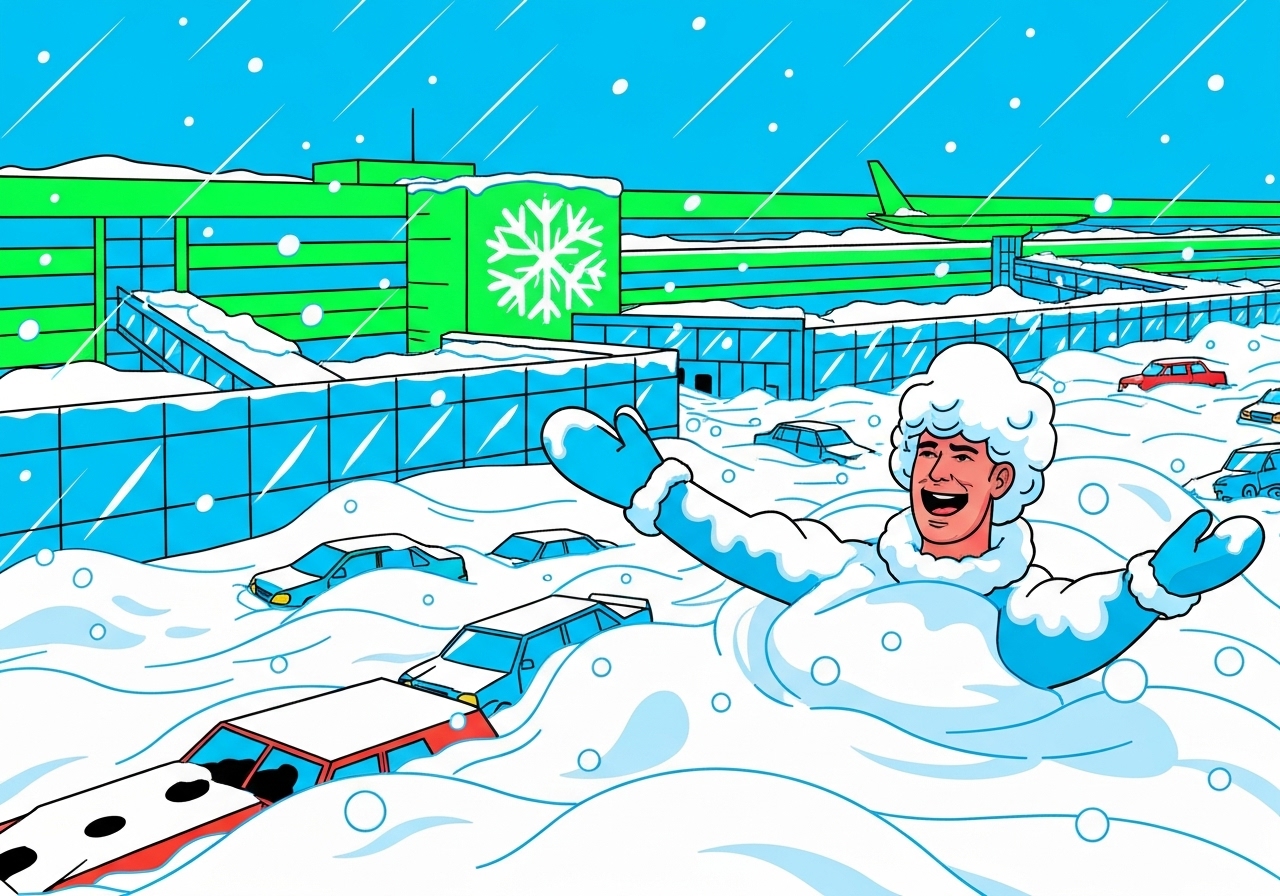
On Nov. 29, 2025, a winter storm dumped 6.9 inches of snow at O’Hare International Airport and 5.5 inches at Midway, marking the heaviest one-day total in Chicago since Nov. 21, 2015. The storm triggered widespread travel disruption, with more than 1,300 flights canceled across area airports and O’Hare reporting roughly 1,160 cancellations Saturday afternoon. City crews deployed hundreds of salt spreaders and extended warming center hours as temperatures plunged and additional snow was forecast. Officials warned that accumulations could reach up to 10 inches by the time the systems move out, complicating holiday travel over the Thanksgiving period.
Key Takeaways
- O’Hare received 6.9 inches of snow on Nov. 29, 2025, the heaviest single-day total since 7.0 inches on Nov. 21, 2015.
- Midway recorded 5.5 inches the same day, and forecasts indicated the region could see up to 10 inches by the end of the event.
- More than 1,300 flights were canceled systemwide; Chicago Department of Aviation reported about 1,160 cancellations at O’Hare and 246 at Midway as of Saturday afternoon.
- By 6 p.m. Saturday, average delays had dropped to about 63 minutes at O’Hare and 36 minutes at Midway.
- The Chicago Department of Streets and Sanitation deployed over 220 salt spreaders and extended plowing into Sunday and potentially Monday.
- City warming centers extended hours and outreach to vulnerable residents increased; the West Loop Pacific Garden Mission reported a roughly 100 percent rise in requests for help and has 877 beds available.
- Brookfield Zoo highlighted animals experiencing their first Chicago snowfall, including a 4-month-old Amur leopard cub and polar bear Amelia Gray.
Background
The Chicago region regularly faces winter storms in late November, and Thanksgiving travel often amplifies the impact of any significant snowfall. O’Hare was already preparing for an exceptionally busy Thanksgiving week, with officials expecting about 1.63 million total travelers during the seven-day period and as many as 290,000 passengers arriving on the projected peak day. Those high passenger volumes increase the consequences of cancellations and delays for both outbound holiday travelers and those returning home.
Federal and local aviation authorities recently lifted some flight restrictions tied to earlier federal disruptions, but airport capacity and staffing remain sensitive during peak travel. The National Weather Service issued a winter storm warning through 6 a.m. Sunday and meteorologists warned of additional snow Monday night, heightening concerns about a second wave of travel interruptions. Municipal services such as plowing, salt application, transit operations and warming centers mobilize routinely for events of this size, but prolonged or renewed storms can stretch those resources.
Main Event
Snow began accumulating through Saturday, intensifying by late afternoon and producing its heaviest totals before 8 p.m., according to National Weather Service forecasts. By 6 p.m., O’Hare had logged 6.9 inches and Midway 5.5 inches. The snowfall rate and visibility issues prompted airlines to cancel hundreds of flights; passengers reported scrambling for alternate itineraries and last-minute rebookings.
Travelers at O’Hare described a mix of sparse crowds in some terminals and visible flight information boards showing cancellations. Some passengers, like one traveler bound for Budapest, said an American Airlines cancellation wiped out the first day of a planned trip after hours of searching for alternatives. Others reported delays of an hour or more as ground operations adjusted to slick surfaces and limited deicing windows.
City operations were active throughout the storm. The Department of Streets and Sanitation deployed more than 220 salt spreaders and prioritized arterial routes, Lake Shore Drive, bridges and overpasses for plowing. The Office of Emergency Management extended plowing hours into Sunday and left open the possibility of continuing into Monday if needed. Warming centers extended hours to assist vulnerable residents and outreach teams were urged to conduct well-being checks.
Analysis & Implications
The timing and intensity of this storm carry several immediate and medium-term implications. In the short term, cancellations and delays during the Thanksgiving travel window amplify economic and logistical costs for airlines, passengers and airport-dependent businesses. Airlines must manage rebooking, crew rotations and potential additional cancellations if runway and deicing capacity remain constrained.
For municipal services, sustained or repeated storms increase fuel, labor and equipment costs and can push crews into prolonged shifts. Extended plowing and salt application also have environmental and budgetary consequences; runoff and material usage rise with each successive event. The city’s readiness to extend warming center hours and coordinate shelters is a critical public-safety response for people experiencing homelessness or those without adequate heating at home.
On a systemic level, repeated high-impact winter storms can influence longer-term planning for airports and transit agencies, including investments in snow-removal equipment, ramp deicing capacity, staffing strategies for peaks and adjustments to passenger communication protocols. For businesses relying on holiday travel flows, the combined effect of cancellations and lowered passenger confidence could reduce revenue in the near term and prompt adaptive strategies for future holiday seasons.
Comparison & Data
| Location | Nov. 29, 2025 (inches) | Recent Benchmark |
|---|---|---|
| O’Hare | 6.9 | 7.0 on Nov. 21, 2015 |
| Midway | 5.5 | n/a |
| Regional forecast | Up to 10.0 possible | n/a |
The table summarizes observed one-day totals at major Chicago airports and the regional forecast. Comparing the 2025 totals with the 2015 benchmark shows the 2025 event ranks as the most substantial single-day accumulation at O’Hare in a decade. Forecast uncertainty around additional systems scheduled for Monday night means totals could climb further, stressing the need for ongoing monitoring by travelers and operations managers.
Reactions & Quotes
We were supposed to be visiting the holiday markets; if we can’t fly out today we’ll have to cancel the whole trip.
Kate Paulsen, traveler
Paulsen described losing a day of a planned trip to Budapest after an airline cancellation and hours of fruitless searches for alternate flights, illustrating passenger-level disruption.
Just be aware of any drastic changes in visibility and snow in the roadway. Take it slow and allow extra time to travel.
Zachary Yack, National Weather Service meteorologist
Yack’s guidance emphasized variable visibility and roadway hazards as the storm’s most immediate public-safety concern.
We’ve seen a roughly 100 percent increase in people seeking help during the storm; we’re getting close to capacity.
Nick Bustillo, Pacific Garden Mission representative
Bustillo noted a sharp rise in demand at the West Loop mission, which provides up to 877 beds and adjusted operations to prioritize safety during the storm.
Unconfirmed
- Precise final regional accumulation remains uncertain until the last system passes; forecasts of up to 10 inches could change with track shifts.
- Full tallies of delayed and canceled flights across all carriers remain subject to final reconciliation by airlines and airport authorities.
Bottom Line
The Nov. 29, 2025 storm produced the heaviest one-day snowfall at O’Hare in a decade, disrupted hundreds of flights and required an elevated municipal response to protect travelers and vulnerable residents. While many cancellations occurred on the day of the storm, improving conditions by Sunday evening could allow airlines and ground operations to accelerate recovery.
Travelers should expect lingering impacts through Monday evening if the forecast second system arrives, and should confirm itineraries, allow extra time and prepare for winter driving conditions. For city planners and airport operators, this event reinforces the value of surge capacity in snow-removal assets, sheltering programs and near-real-time communication with the public.
Sources
- Chicago Sun-Times (local news report)
- NWS Chicago (official National Weather Service account and forecast updates)
- Chicago Department of Aviation (official airport authority)
- Chicago Department of Streets and Sanitation (official municipal agency)
- Chicago Zoological Society / Brookfield Zoo (institutional)