
Lead
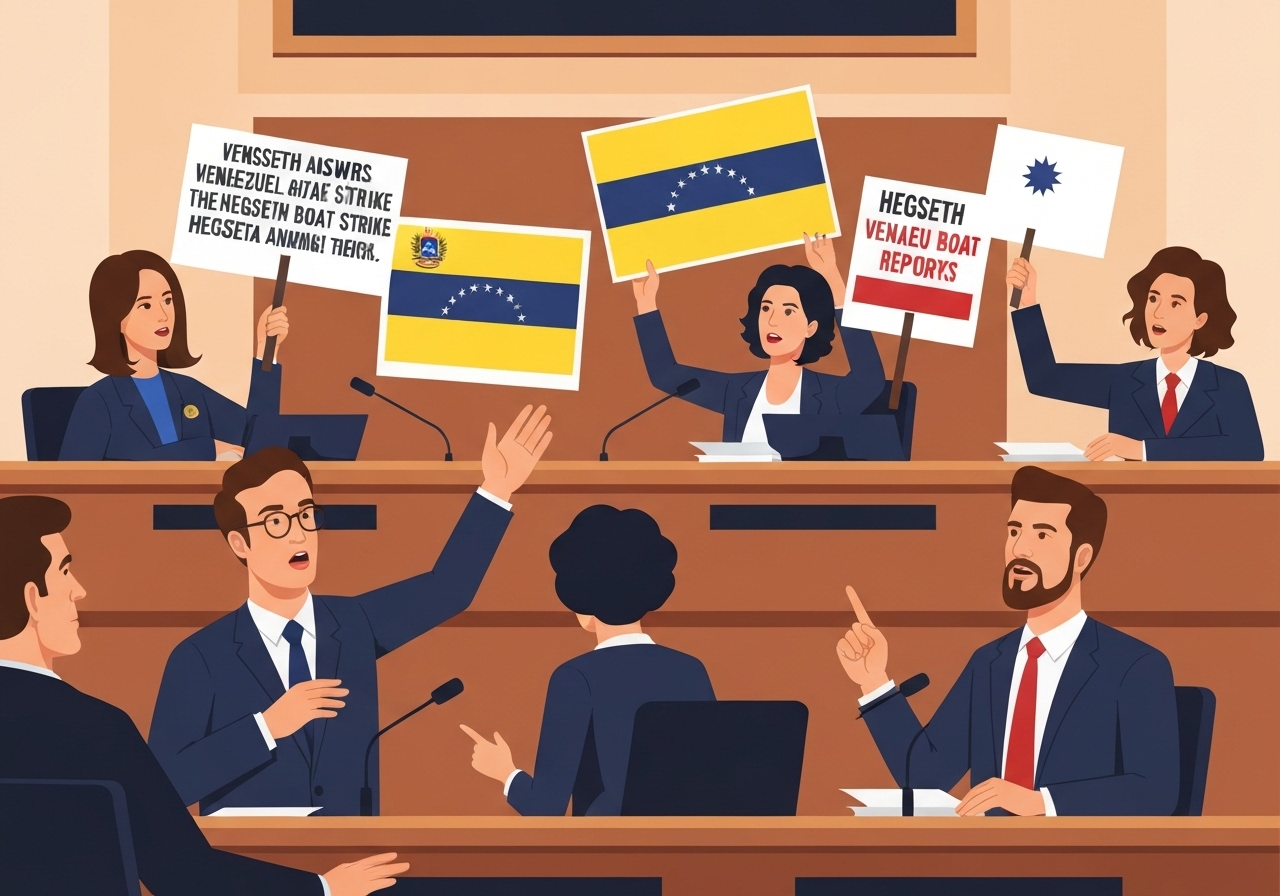
US lawmakers pressed the Trump administration on Sunday for a full accounting after reports that a follow-up US strike on 2 September targeted survivors of an earlier attack on a suspected Venezuelan drug-smuggling boat. Congressional leaders from both parties said they would probe the strikes conducted in international waters off Venezuela and Colombia, part of a stepped-up US anti-narcotics campaign. The Washington Post reported the follow-up attack was carried out to comply with an alleged order from Defence Secretary Pete Hegseth to “kill everybody” on board; Hegseth and the White House have disputed that account. More than 80 people have reportedly died in related strikes since early September, raising legal and oversight questions in Congress.
Key Takeaways
- Reported incident date: 2 September — media accounts say two survivors remained after an initial strike and a second attack followed, according to The Washington Post.
- Fatalities: US operations in the Caribbean have resulted in more than 80 reported deaths since early September, per US and media reporting.
- Allegation: The Post reported a spoken directive attributed to Secretary Pete Hegseth to “kill everybody,” an instruction Hegseth denies.
- Congressional response: Republican-led Senate and House Armed Services Committees have opened inquiries and pledged “vigorous oversight” into the strikes.
- Legal concern: Senators from both parties described attacking survivors as a potential war crime if the follow-up strike occurred as reported.
- Administration stance: The White House says it will review the matter; President Trump publicly defended Hegseth and said he believes him “100%”.
- International context: Venezuela has condemned the strikes and vowed its own investigation, accusing the US of escalating regional tensions.
Background
The US has increased its naval and special operations presence in the Caribbean this year as part of an intensified counter-narcotics effort targeting suspected drug-smuggling vessels operating off Venezuela and Colombia. American officials say the strikes aim to interdict shipments of illicit drugs bound for the United States and that some actions are justified as self-defence when confronted by hostile or dangerous vessels. The program has attracted scrutiny because many of the engagements occurred in international waters, where the legal authorities to use force are narrower and governed by international law, including norms reflected in the United Nations Convention on the Law of the Sea.
Historically, US interdiction operations at sea have relied on non-lethal measures, boarding and seizures, or cooperative enforcement with coastal states; lethal strikes at sea are less common and raise distinct legal questions. The recent series of strikes, which US officials characterize as anti-narcotics actions, have resulted in substantial casualties — more than 80 people since early September, according to reporting. Key stakeholders in this dispute include the Department of Defense, congressional oversight committees, the Venezuelan government and international legal scholars who monitor maritime use-of-force issues.
Main Event
On 2 September, US forces struck a vessel identified as a suspected drug-smuggling boat in international waters. According to published reporting, two people survived the initial attack; a second strike allegedly followed and killed those survivors. The Washington Post attributed the second strike to a directive from Defence Secretary Pete Hegseth, a characterization Hegseth called “fabricated, inflammatory, and derogatory” in public postings. The Pentagon provided an initial response disputing aspects of the report and has been asked by congressional committees for additional details.
Republican and Democratic members of Congress responded quickly on Sunday talk shows and in committee statements, calling for a thorough fact-finding review. Senator Roger Wicker and Senator Jack Reed, chair and ranking member of the Senate Armed Services Committee, said the committee has directed inquiries to the Department of Defense and will pursue oversight to determine the facts. The House Armed Services Committee announced a parallel bipartisan effort to assemble a full accounting of the operations in question.
President Trump, speaking aboard Air Force One, said he believed Hegseth’s denial and told reporters the administration would investigate. Trump added he personally would not have wanted a second strike if reports about killing survivors were accurate. Venezuela’s National Assembly condemned the strikes and said it would carry out its own investigation, while Caracas accused the US of stoking tensions with the aim of regime change.
Analysis & Implications
Legally, the most pressing issue is whether any follow-on attack intentionally targeted persons no longer posing a threat, which could constitute a violation of the laws of armed conflict and potentially a war crime if proven. International law generally limits use of lethal force in international waters, permitting seizure or non-lethal interdiction unless clear self-defence or other narrow exceptions apply. US military lawyers have previously advised that operations should be consistent with the spirit of the United Nations Convention on the Law of the Sea even though the US is not a party to the treaty.
Politically, the episode puts the administration on the defensive and risks bipartisan backlash in Congress at a time when Republican committees are leading oversight. If lawmakers find inconsistencies between public statements and operational records, Congress could consider hearings, requests for classified briefings, or legislative restrictions on future operations. The administration’s posture — defending Hegseth while agreeing to review the matter — aims to balance support for a senior official with damage control.
Operationally, the controversy may force a reassessment of tactics in maritime counter-narcotics missions. Commanders may be ordered to increase transparency, adjust rules of engagement to prioritize non-lethal measures when feasible, or strengthen documentation of threats that justify lethal force. Regionally, the strikes have amplified tensions with Venezuela and could complicate coordination with neighboring states if trust erodes over disagreements about use of force in international waters.
Comparison & Data
| Date/Period | Event | Reported fatalities |
|---|---|---|
| 2 September 2025 | Strike on suspected smuggling vessel; media report of follow-on attack killing survivors | At least 2 survivors from first strike reported; follow-up fatalities alleged |
| Early September 2025 (cumulative) | Series of US strikes in Caribbean operations against suspected smuggling boats | More than 80 reported deaths (since early September) |
The table summarizes public reporting: the 2 September incident is central to current scrutiny, while aggregate tallies exceed 80 fatalities for the broader operation since early September. Available public figures are imperfect: some counts come from media reports, some from government statements, and some from local authorities. Congressional inquiries and DoD briefings are expected to clarify exact timelines and casualty figures.
Reactions & Quotes
Lawmakers and officials framed the alleged follow-on strike as a matter requiring immediate oversight and potential legal review.
If what is reported is true, this rises to the level of a war crime and must be investigated.
Senator Tim Kaine (D)
Kaine’s remark underlines the gravity with which Democrats view the allegation and the legal standards that govern the use of force.
We do not have confirmation that a follow-up strike happened; if it did, it would be illegal.
Representative Mike Turner (R)
Turner’s statement reflects bipartisan concern and signals that Republican-led committees intend to scrutinize operations despite supporting wider counter-narcotics objectives.
These reports are fabricated and inflammatory; the strikes were lawful under US and international law.
Secretary Pete Hegseth (public post)
Hegseth’s public pushback seeks to dismiss the core allegation and defend the legality of operations, a stance the White House echoed while agreeing to review the facts.
Unconfirmed
- Whether a second strike on 2 September definitively killed the two survivors reported after the first strike — this remains contested in public accounts.
- Whether Secretary Hegseth issued a direct verbal order to “kill everybody” on the vessel — reported by The Washington Post but denied by Hegseth.
- The full chain-of-command communications and situational reports that led to any follow-on strike — classified operational records have not been publicly released.
Bottom Line
The allegation that survivors of a maritime strike were intentionally targeted has triggered bipartisan calls for oversight, placing the Pentagon and senior officials under scrutiny. Key questions center on the facts of the 2 September incident, the precise orders issued, and whether actions complied with US and international legal standards governing force at sea.
Congressional inquiries and Department of Defense briefings will be decisive in resolving ambiguities: if the follow-up strike occurred as reported, it could prompt legal and policy consequences; if the report is disproved, the administration will still face pressure to improve transparency around maritime counter-narcotics operations. For observers, the episode highlights the tension between aggressive interdiction tactics and the legal, ethical and diplomatic constraints that govern use of force in international waters.
Sources
- BBC News — reporting (news)
- The Washington Post — reporting (news)
- U.S. Department of Defense — official statements and responses (official)