
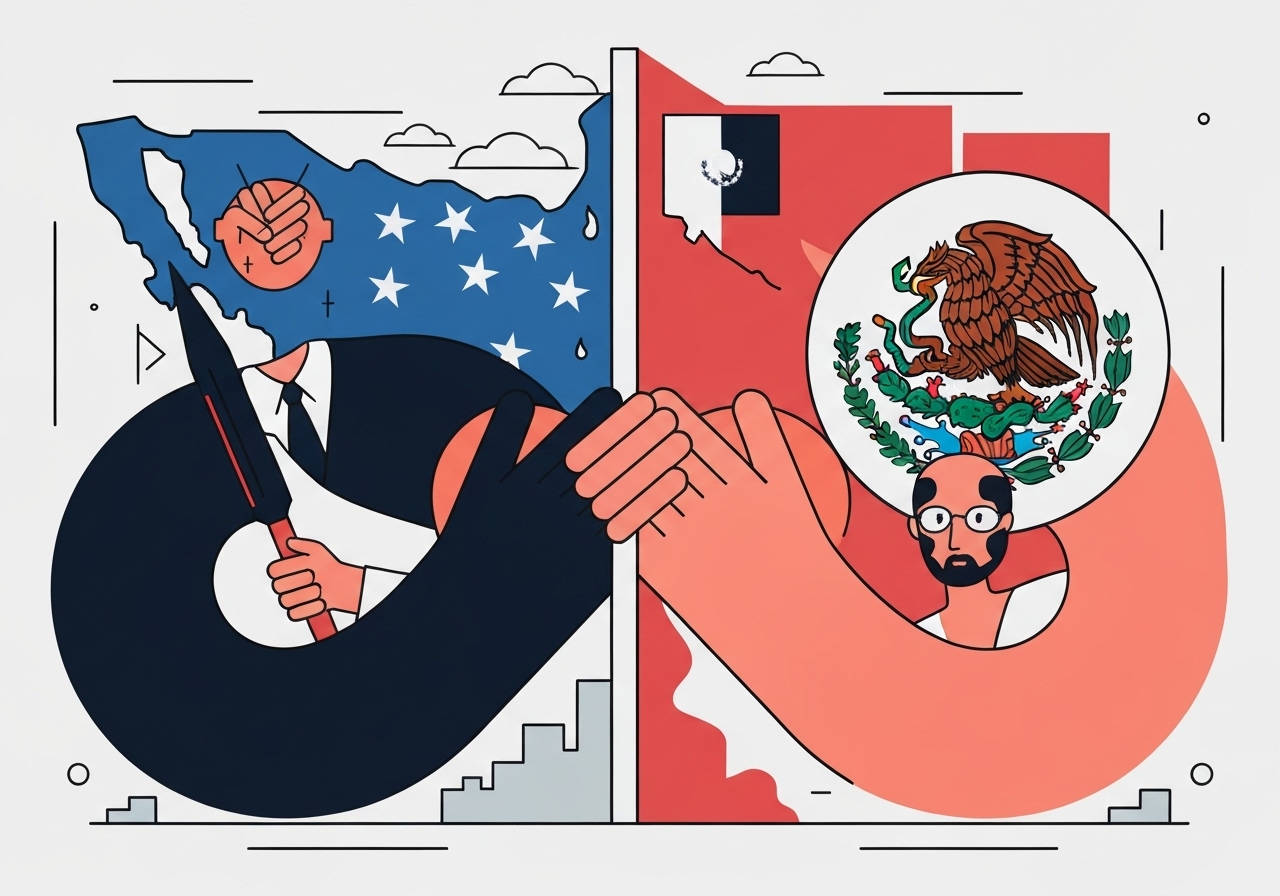
— In Mexico City, U.S. Secretary of State Marco Rubio met President Claudia Sheinbaum and senior Mexican officials to announce a new bilateral effort to dismantle drug-trafficking cartels and reduce irregular migration while explicitly respecting each nation’s sovereignty. The two governments agreed to create a high-level coordination group to guide the work.
Key Takeaways
- The meeting took place on Sept. 3, 2025, in Mexico City between Secretary of State Marco Rubio and President Claudia Sheinbaum.
- Mx. and U.S. officials pledged joint action against organized crime, especially drug cartels, and to curb migration flows.
- A bilateral “high-level” group will be formed to coordinate operations and intelligence sharing.
- Mexico emphasized that any U.S. military or unilateral strikes on Mexican soil would be unacceptable.
- Rubio praised Mexico for arresting dozens of suspects the U.S. regards as high-value targets and for extraditions to face U.S. charges.
- The U.S. military carried out a lethal strike on a boat the day before; the strike reportedly killed 11 people.
- Officials said ending illegal arms flows into Mexico will be a focus of the new coordination efforts.
Verified Facts
Secretary Rubio met President Sheinbaum along with Foreign Minister Juan Ramón de la Fuente and Security Minister Omar García Harfuch. The public announcement emphasized cooperation against organized criminal groups, including the Sinaloa cartel and the Jalisco New Generation cartel, which have been central to U.S. and Mexican counternarcotics concerns.
The two governments issued a joint statement saying they would establish a bilateral “high-level” group to coordinate actions against trafficking networks and to limit migration, but the statement did not list operational details or a timeline for the group’s work.
Mr. Rubio publicly commended recent Mexican arrests and the transfer of suspects to U.S. jurisdiction for prosecution. He also defended the U.S. decision, reported the previous day, to destroy a boat in the Caribbean used by suspected traffickers; officials reported 11 deaths in that strike.
Mexican officials reiterated that cooperation must respect Mexico’s territorial integrity. They have been monitoring increased U.S. troop deployments to the border and have expressed concerns about any U.S. strikes on Mexican soil.
Context & Impact
The meeting follows months of tense exchanges between the White House and Mexico over the best way to combat cartels and manage migration. President Sheinbaum’s administration has sought to balance collaboration on security with firm protections for national sovereignty.
The Trump administration has pushed for stronger measures against cartels, including a directive authorizing the Pentagon to act against groups labeled as terrorist organizations and a February 2025 State Department designation of several cartels as foreign terrorist organizations. Those steps raise legal and diplomatic questions about cross-border actions.
For Mexicans, close cooperation can mean more arrests and extraditions; for U.S. policymakers, it offers an avenue to pursue suspects without unilateral incursions. Economically, threats of tariffs on Mexican imports and other pressure tactics have added strain to bilateral talks.
Limiting the flow of U.S.-origin weapons into Mexico and strengthening arms-control measures were cited by both sides as operational priorities for the new coordination group.
“We both understand that cartels are a threat to the national security of both Mexico and the U.S.,”
Marco Rubio, U.S. Secretary of State
Official Statements
Sheinbaum described the meeting as “cordial” on social media and said the countries reached an understanding on security cooperation after months of talks.
President Claudia Sheinbaum (social media)
Unconfirmed
- Exact mandate, membership, decision-making rules and timeline for the bilateral high-level group have not been released.
- Whether the U.S. will rule out unilateral military strikes on Mexican territory remains unclear beyond verbal assurances about respecting sovereignty.
- Precise destination and intended route of the boat destroyed in the Caribbean are disputed between U.S. officials; accounts differ on whether it was heading to the United States or elsewhere in the Caribbean.
Bottom Line
The Sept. 3 meeting produced a statement of intent to intensify joint efforts against cartels while affirming sovereignty protections, but many operational details remain unresolved. The success of the cooperation will depend on how quickly both governments convert broad agreement into transparent rules for joint action, arms-control measures and migration management.