
Lead
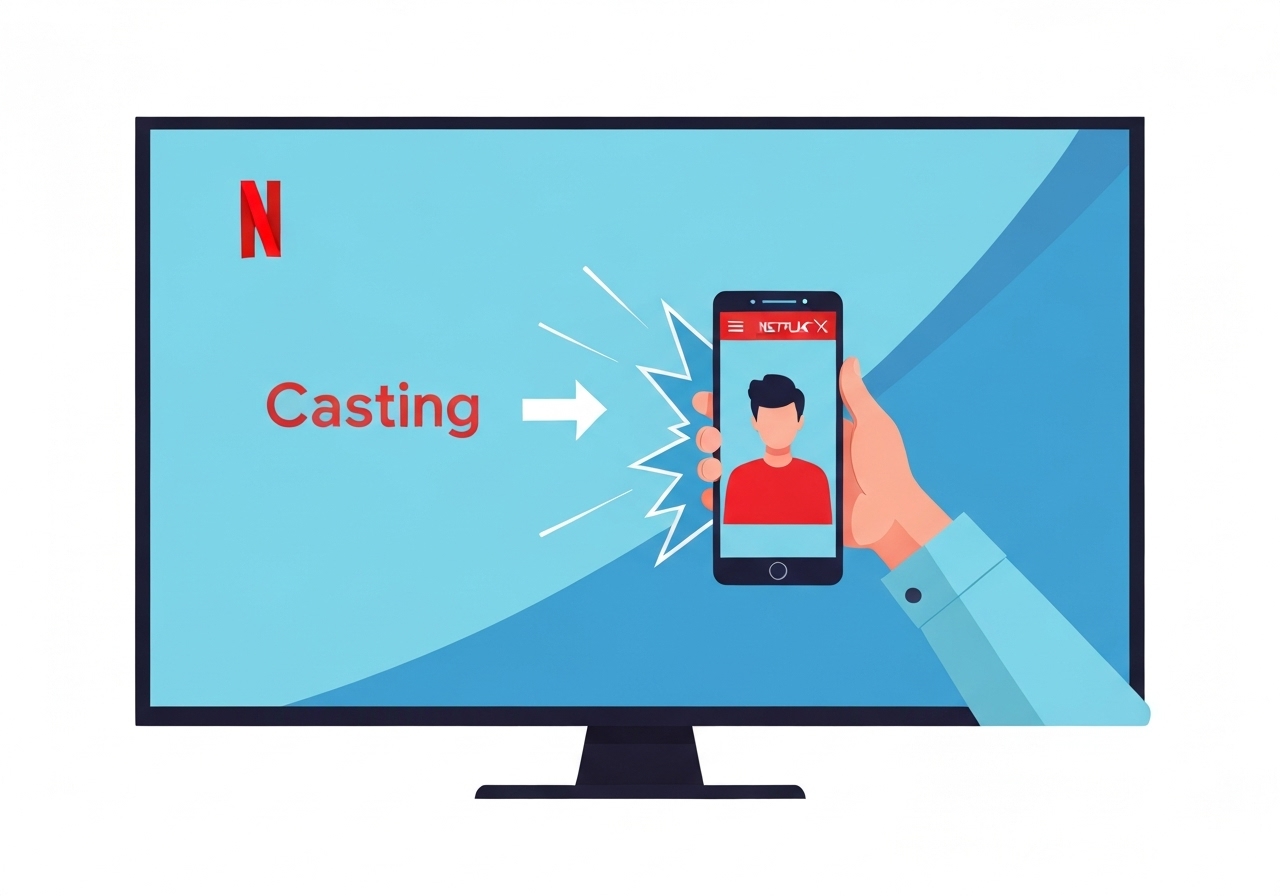
Netflix has begun removing the ability to cast shows from mobile apps to many newer smart TVs and streaming devices, a change uncovered in a support page noted by Android Authority and reported by Engadget. Users discovered the feature disappearing in mid-November when the app stopped listing compatible devices on phones and tablets. Netflix’s help text says casting remains available on older Chromecast units and some Google Cast–enabled TVs, but only for subscribers on ad-free plans. The immediate result: many viewers who rely on their phone to queue and scrub video must now use TV remotes instead.
Key Takeaways
- Netflix states mobile-to-TV casting is no longer supported on most newer TVs and TV-streaming devices, per a support page highlighted by Android Authority.
- Casting still appears to work with older Chromecast devices and TVs that support Google Cast, but only for customers on ad-free subscription tiers.
- Devices explicitly affected include Google TV Streamer, Chromecast with Google TV and televisions running Android TV, where casting may no longer appear in the Netflix app.
- Multiple users reported the change in mid-November when the mobile app stopped discovering cast-capable devices, even on updated iOS and Android apps.
- Netflix previously removed AirPlay support in 2019, citing technical limitations; the company has been contacted for comment about this latest change.
Background
Casting and second-screen workflows have been a common way for subscribers to search on a phone and send playback to a television since the rise of Chromecast and similar technologies. Mobile apps let users quickly find titles, adjust playback position and manage queues; those conveniences helped shape user expectations for cross-device control. Google Cast and Chromecast represent two distinct implementations: Google Cast is a protocol some smart TVs implement natively, while Chromecast devices run a receiver that accepts streams initiated from mobile apps.
Netflix’s relationship with casting protocols has shifted before: the company removed Apple AirPlay support in 2019, citing technical constraints, and its playback feature set has varied by device generation and regional licensing. Streaming services frequently change client behavior for reasons including DRM, advertising integrations, user-interface unification and support-cost reduction. Device makers, content partners and platform owners are all stakeholders in how casting and remote control functions operate across ecosystems.
Main Event
The change was first visible after users in mid-November reported that the Netflix mobile app no longer listed nearby TV devices when tapping the cast icon. Testers with the latest mobile apps on updated phones found the cast button present but no discoverable devices shown, even for Android TV–powered sets. Netflix’s help documentation now explicitly instructs users to operate Netflix with the remote supplied with their TV or streaming device for navigation.
According to the help note spotted by Android Authority, older Chromecast dongles and TVs that still implement Google Cast appear to remain supported, but Netflix conditions that support on having an ad-free subscription. Conversely, devices that run Google TV software, the Chromecast with Google TV hardware and many Android TV sets may no longer accept mobile casting commands from the Netflix app. The change seems to be implemented server-side and rolled out quietly rather than announced widely.
For many users this reduces convenience: searching on a phone, scrubbing to a last-watched spot and controlling playback remotely are faster on mobile than with a TV remote. Users who fall asleep while watching and want to resume at a precise point often rely on the mobile seek bar and text search; switching to a remote-centric workflow can add time and friction. Early reports indicate the behavior is inconsistent across device models and account types, producing confusion for households with mixed hardware.
Analysis & Implications
Removing casting support from the mobile app on newer platforms shifts the user interaction model toward in-TV navigation, which may be motivated by several operational factors. One plausible driver is the integration of advertising: Netflix limits legacy casting to ad-free subscribers, suggesting the company is aligning casting behavior with its monetization tiers or ensuring the ad experience is controlled within TV apps. Another factor could be DRM and content-protection complexity when initiating streams from third-party mobile clients.
Operational simplicity is a second consideration. Supporting discovery and casting across many OS versions and device firmware levels adds engineering and QA overhead. By funneling users to platform-native TV apps, Netflix reduces the surface area for debugging cross-device playback issues and can standardize feature rollout and measurement. That could improve stability for some viewers but frustrate others who prefer the convenience of their phones.
There are competitive and ecosystem consequences. Device makers and platform owners such as Google may view this as a step away from protocols that encourage cross-device continuity, while rival apps that maintain casting compatibility could gain a small user experience edge. For households that share accounts across members, the change could increase friction and prompt some users to seek alternative workflows like using older Chromecast hardware or casting from other apps where supported.
In the near term, expect mixed user sentiment and possible rollback requests; in the medium term, the change may push Netflix to further centralize playback and ad controls inside native TV applications. Content owners and advertisers will watch for whether this yields better ad measurement or fewer playback errors, and device vendors may respond with firmware or software tweaks to preserve interoperability where possible.
Comparison & Data
| Device / TV Type | Mobile Casting Status | Notes |
|---|---|---|
| Older Chromecast (legacy) | Supported | Works for ad-free subscribers per help page |
| Chromecast with Google TV | Likely unsupported | Casting may not appear in Netflix app on many units |
| Google TV streamer devices | Likely unsupported | Reported absence of cast discovery on mobile apps |
| Android TV sets | Likely unsupported | Many Android TV models no longer discover casting from Netflix app |
| TVs with Google Cast built-in | Supported | Support depends on ad-free subscription per official note |
The table condenses reported compatibility differences. Data are drawn from the Netflix help note as reported by Android Authority and user reports collected in mid-November. Because rollout appears uneven across device models and account types, the entries above reflect observed behavior rather than an exhaustive manufacturer-by-manufacturer audit.
Reactions & Quotes
Industry coverage highlighted the change and its practical effects on users who rely on phone-to-TV workflows. Reporters and early testers documented device discovery failing and noted that the cast icon remained visible but unpopulated on updated apps.
The company’s help page indicates that mobile casting to most TVs is no longer supported and advises using the TV or streamer remote to control Netflix.
Netflix Help Center (official)
Independent tech outlets flagged the help entry and compared experiences across devices, confirming that older Chromecasts still worked for some ad-free accounts while Google TV and Android TV units often did not show up as cast targets.
Android Authority’s review of the support note and hands-on tests found that casting behavior differs by device family and subscription tier.
Android Authority (technology news)
Engadget contacted Netflix for an explanation; the company had previously removed AirPlay in 2019 for technical reasons, a precedent that some observers cite when considering Netflix’s rationale.
Engadget reported that the change appears to be rolling out quietly and that Netflix was approached for comment about the rationale.
Engadget (technology news)
Unconfirmed
- Whether Netflix intends to permanently remove casting support on all Google TV and Android TV devices is not confirmed by an official long-term policy statement.
- The precise technical or contractual reasons behind the change—whether DRM, advertising integration, or engineering cost—have not been confirmed by Netflix.
- It is unconfirmed which geographic regions and device firmware versions are uniformly affected; reports show variability across devices and accounts.
Bottom Line
Netflix’s removal of mobile-to-TV casting on many newer platforms is a user-facing change that reduces a convenient cross-device workflow for search, scrubbing and remote control. Older Chromecast hardware and Google Cast–enabled TVs may still work for subscribers without ads, but many Google TV and Android TV owners will need to adapt to remote-first navigation. The update appears to be a deliberate shift toward controlling playback within native TV apps, likely driven by a mix of technical, DRM and monetization considerations.
For viewers, practical options include keeping older Chromecast dongles where possible, using the TV app’s search and playback controls, or awaiting clarification and potential fixes from Netflix. Observers should watch official Netflix communications and further platform-specific tests to determine whether this is a permanent change or a reversible policy/technical decision.
Sources
- Engadget (technology news report)
- Android Authority (technology news; help page coverage)
- Netflix Help Center (official support documentation)