
Lead
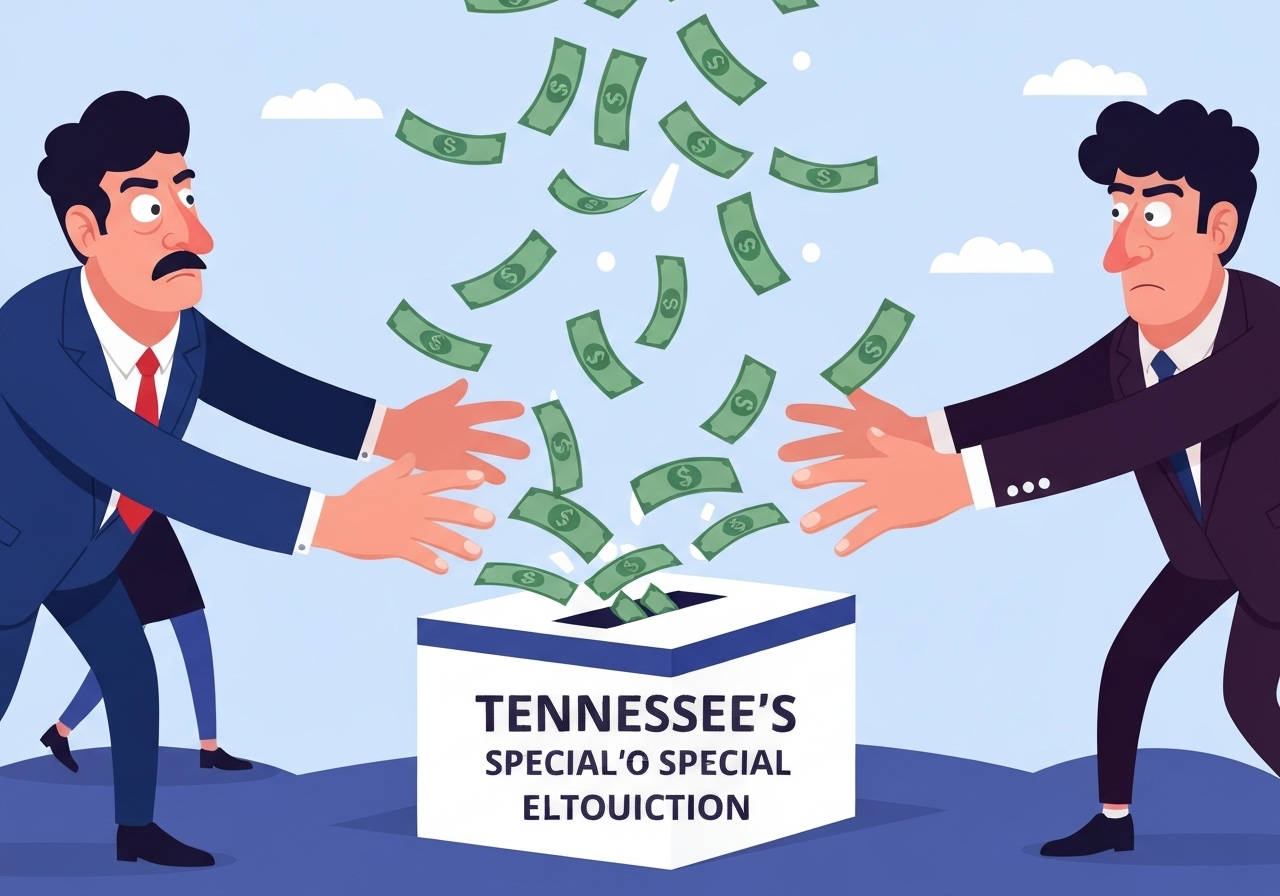
A special congressional election in Tennessee’s 7th District has become a national test case as Democrats and Republicans flood the contest with cash and surrogates in the run-up to the 2026 midterms. The district voted roughly 60% for Donald Trump in November 2024 and previously returned former Rep. Mark Green by a similar margin; Green resigned in July, triggering the contest. Despite that conservative baseline, Democrats have outperformed their 2024 vote shares in this year’s special elections by an average of 13 percentage points, prompting heavy outside investment. With early voting underway and public polling sparse, both parties are treating the race as a proving ground for messaging and turnout strategies.
Key takeaways
- Outside groups have spent more than $6.5 million on the race, with pro‑Trump MAGA Inc. contributing over $1.6 million, per recent FEC summaries cited by reporting.
- Approximately two‑thirds of outside super PAC dollars arrived in the final two weeks as early voting intensified.
- Emerson College’s late poll showed Republican Matt Van Epps narrowly ahead of Democrat Aftyn Behn, but the margin was inside the poll’s error range.
- October surveys from Democratic‑aligned firms showed Van Epps ahead by about 8 points, roughly matching the average Democratic special‑election overperformance this year.
- Both campaigns are centering affordability — health care, cost of living and jobs — in closing ads and field operations.
- High‑profile surrogates for Behn included former Vice President Kamala Harris, Al Gore and Rep. Alexandria Ocasio‑Cortez; for Van Epps, House Speaker Mike Johnson and a Trump phone appearance energized GOP turnout efforts.
- Low turnout and limited public polling in special elections increase the value of targeted spending and ground operations, making outside money potentially decisive.
Background
Tennessee’s 7th Congressional District is typically conservative; President Trump received roughly 60% of the district’s vote in the November 2024 presidential race. Former Rep. Mark Green, who resigned in July, had won the seat by a similar margin, creating an expectation that Republicans would start with an advantage. Still, the pattern of special elections this year — where Democrats have tended to exceed their 2024 baseline by an average of 13 percentage points — has altered national calculations and drawn attention (and dollars) from party committees and independent groups alike.
Special elections often hinge on turnout dynamics that differ from general elections: they draw lower turnout, older and more partisan electorates, and can be more susceptible to concentrated outside spending and rapid message swings. That volatility has encouraged both parties to test closing messages and mobilization tactics here as they prepare for the 2026 midterm environment. Stakeholders on both sides view the race as a barometer: a win for Democrats in a Trump‑leaning seat would be spun as evidence of broader momentum; a GOP hold would be positioned as confirmation of the party’s standing in conservative districts ahead of next year.
Main event
The contest pits Republican Matt Van Epps, a former Tennessee Department of General Services commissioner, against Democratic state Representative Aftyn Behn. In the final stretch, national groups and party committees accelerated spending: FEC data reported more than $6.5 million in outside group expenditures, with MAGA Inc. supplying over $1.6 million of that total. Campaign activity intensified as early voting began, with both sides sending surrogates and airing targeted advertisements aimed at persuadable voters and boosting turnout among base supporters.
Public polling has been limited and mixed. An Emerson College poll released in late November found Van Epps narrowly ahead of Behn but inside the poll’s margin of error, while earlier October surveys from Democratic‑aligned firms showed Van Epps leading by roughly eight points — a result aligned with the average Democratic overperformance in special contests this year. The lack of a clear, consistent public polling signal has increased the perceived value of direct voter contact and ad buys.
Messaging in the campaign’s final days has focused on cost‑of‑living concerns. Van Epps’s ads frame him as an outsider to “career politicians” and promise to lower prices, spur higher‑paying jobs and reduce healthcare costs for working families. Behn’s closing messaging similarly emphasizes affordability, pledging to make healthcare more affordable, lower the cost of living and protect workers and small businesses from harmful tariffs. High‑visibility appearances have underscored the nationalization of the race: former Vice President Kamala Harris and DNC Chair Ken Martin campaigned for Behn, while House Speaker Mike Johnson hosted a get‑out‑the‑vote rally for Van Epps that included a phone appearance from former President Trump.
Analysis & implications
The heavy influx of outside cash — more than $6.5 million in this single special election — illustrates how parties and allied groups are willing to concentrate resources in localized contests that they view as national signals. Because special elections draw smaller, more predictable electorates, a relatively modest amount of targeted spending and field work can shift outcomes; that math explains the spike in late‑stage investment. For Democrats, any gain here would bolster arguments that their messaging on economic pocketbook issues is resonating beyond typical geographic bounds. For Republicans, holding the seat would reinforce claims of baseline strength in conservative territory.
Nationalizing the race creates tradeoffs. High‑profile surrogates can energize base voters but also risk reinforcing opponents’ narratives about outside influence or Washington partisanship. The GOP’s alignment with Trump remains an asset in a district that favored him by about 60% in 2024, yet the same alignment can sharpen Democratic messaging about local economic pressure points. Conversely, Democrats hope to capitalize on the recent pattern of outperforming 2024 results in special elections — but converting that pattern into a repeatable midterm advantage depends on turnout and whether the overperformance reflects transient protest behavior or durable shifts.
Strategically, both parties are testing different combinations of ad saturation and one‑on‑one contact. Republicans appear to be leaning on large ad buys and high‑profile endorsements to maximize turnout among likely voters; Democrats are emphasizing canvassing and targeted persuasion in pockets where turnout can be boosted. The result will provide lessons for 2026, particularly about where and when outside spending and surrogates deliver returns on investment in lower‑turnout contests.
Comparison & data
| Metric | Value |
|---|---|
| Trump vote in 2024 (7th District) | ~60% |
| Mark Green winning margin (prior) | Similar to 2024 Trump share (~60%) |
| Average Dem overperformance in 2025 specials | +13 percentage points |
| Outside spending in race | $6.5 million+ |
| MAGA Inc. contribution | $1.6 million+ |
| Share of outside spending in last 2 weeks | ~66% |
The table synthesizes core numerical facts from FEC‑reported spending and recent public polling. While vote shares from 2024 and past special elections provide a baseline expectation, the 13‑point Democratic overperformance this year shows how special‑election dynamics can shift outcomes. The late surge in outside spending — concentrated in the final two weeks — highlights the campaigns’ focus on early voting and last‑minute persuasion.
Reactions & quotes
“The whole world is watching Tennessee right now,” a caller on behalf of former President Trump said during a GOP get‑out‑the‑vote event supporting Van Epps.
Former President Donald Trump (tele‑appearance)
This remark accompanied a Monday morning rally by House Speaker Mike Johnson and was used to frame the contest as nationally consequential. The GOP emphasized that endorsement to mobilize conservative turnout.
“I will bring down prices, create good‑paying jobs and lower health care costs for working families,” a closing ad for Matt Van Epps said.
Matt Van Epps campaign (advertisement)
Van Epps’s campaign ads mix Trump‑aligned messaging with promises on the economy, seeking to convert the district’s GOP lean into a clear election margin while appealing to working‑class voters.
“I will shake up Washington by making health care more affordable and bringing down the cost of living,” Aftyn Behn’s closing advertisement stated.
Aftyn Behn campaign (advertisement)
Democratic messaging frames Behn as a challenger to entrenched interests, emphasizing pocketbook issues to try to replicate recent special‑election gains in a heavier‑Republican district.
Unconfirmed
- The precise composition of the early‑voter electorate — including relative shares of suburban, rural and young voters — remains uncertain until official returns are released.
- The net effect of the late influx of outside money on actual turnout and vote choice is not yet verifiable and will require post‑election analysis.
- Attribution of recent Democratic special‑election overperformance to national trends versus unique local factors in each race requires more granular data and is not settled.
Bottom line
This Tennessee special election has become a concentrated demonstration of how both parties are willing to invest heavily in single races that they believe carry outsized political signals. The district’s 60% Trump baseline and Mark Green’s prior similar performance give Republicans structural advantages, but a year of Democratic overperformance in special contests and intense, late outside spending have compressed the margin and raised the stakes.
Campaigns and outside groups will watch turnout patterns and precinct returns closely; the result will shape narratives going into 2026 about which party’s economic messaging and voter‑contact strategies are more effective. Regardless of the winner, the race will yield concrete lessons about the efficacy of late spending, high‑profile surrogates and affordability messaging in lower‑turnout, traditionally partisan districts.
Sources
- NPR (national news reporting summarizing FEC data, polling and campaign activity)