
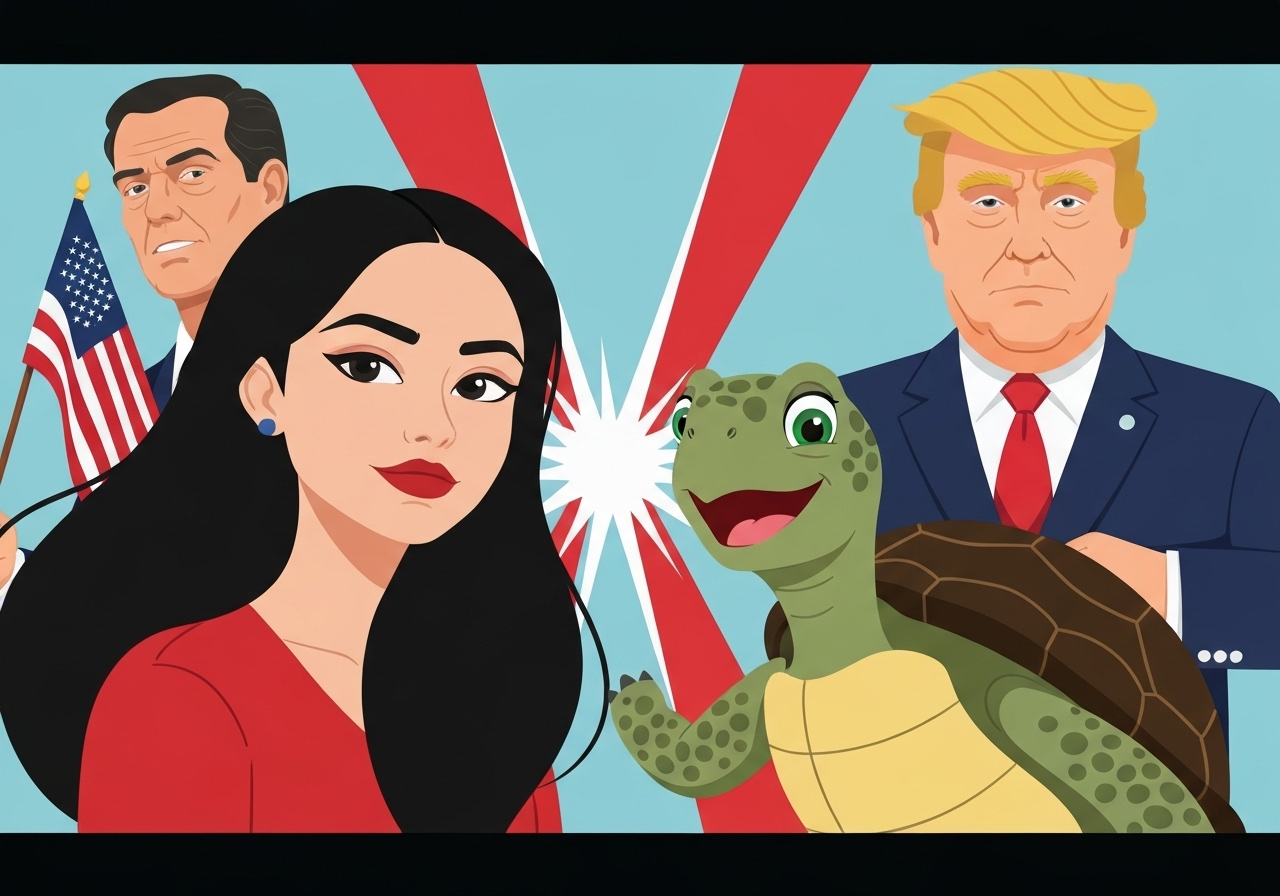
Lead: The use of two familiar cultural properties by U.S. government social media has sparked public outcry and a publisher protest. On 1 December the White House posted a clip using Sabrina Carpenter’s song in an immigration-enforcement montage, and the U.S. Defence Department’s social media account shared a mock book cover showing Franklin the Turtle firing on alleged drug traffickers. Publisher Kids Can Press condemned the Franklin image as unauthorized and violent, while Carpenter called the government’s use of her music “evil and disgusting.” The incidents come amid a series of U.S. strikes on alleged Venezuelan drug boats since early September.
Key takeaways
- The White House used Sabrina Carpenter’s music in a 1 December social media post tied to ICE operations; Carpenter publicly objected to the usage.
- Kids Can Press said the U.S. Defence Department’s mock cover of Franklin the Turtle—age six in the books—depicted the character firing a large weapon and contradicted Franklin’s values.
- Publisher’s statement: they “strongly condemn any denigrating, violent, or unauthorized use of Franklin’s name or image.”
- Pentagon spokesperson Sean Parnell defended the post, questioning whether Franklin would be sympathetic to drug cartels.
- These episodes follow similar pushback earlier in the year: Pokémon denied permission for government use in September and Jess Glynne objected to a July reuse of her music.
- The images and music were used in posts tied to broader U.S. actions against alleged narcotics shipments and immigration enforcement since early September.
Background
Franklin the Turtle originated as the central figure of a Canadian children’s book series and has become a cross-media property—appearing in television, film, games and live productions. The character, depicted as a six-year-old navigating everyday challenges, is closely associated with themes of kindness, empathy and inclusivity; those are the values emphasized by publisher Kids Can Press in its response. Intellectual-property holders routinely restrict government reuse of characters and songs, and unauthorized adaptations can provoke rapid reputational pushback from rights owners and fans alike.
Musical and visual material has been repurposed in government social-media content more than once this year, drawing objections from artists and brands. In September, Pokémon publicly stated it had not authorized use of its theme and footage in an ICE deportation video; in July, singer Jess Glynne criticized officials for reusing an advert that featured her music in the context of deportations. Those precedents set the stage for the high-visibility disputes involving Sabrina Carpenter’s music and the Franklin depiction.
Main event
The Franklin incident involved a social-media post attributed to Secretary of Defence Pete Hegseth’s account that presented a faux book cover: Franklin in a military helicopter firing a large weapon at suspected drug boats, under the mock title “Franklin Targets Narco Terrorists.” Kids Can Press issued a public rebuke, saying the violent depiction was unauthorized and inconsistent with the brand’s values. The publisher framed the image as a misuse of a children’s icon and demanded respect for the intellectual property and the character’s message.
Separately, the White House reposted a video on 1 December that paired footage of ICE operations with a lyric from Sabrina Carpenter’s song “Juno.” Carpenter responded on social media, describing the government’s use of her music in a deportation context as “evil and disgusting,” and demanding her work not be used to support what she characterized as an inhumane policy. Her post drew immediate media attention and public debate about artists’ control over how their work is repurposed.
The Pentagon defended the Franklin post through spokesperson Sean Parnell, who questioned whether the turtle would sympathize with drug cartels and treated the depiction as commentary on narco-violence. Publishers, creators and artists noted they had not been contacted for permission. The original creators of Franklin did not respond to requests for comment, according to reporting on the matter.
Analysis & implications
At the legal level, these episodes highlight tensions between government communications and third-party intellectual-property rights. Unauthorized use can expose agencies to takedown demands, cease-and-desist notices, and reputational risk, even when the agency claims the use is rhetorical or satirical. Public relations costs may outweigh any short-term messaging benefit when well-known family brands or pop artists are perceived as being co-opted into political narratives.
Politically, repurposing children’s characters and pop songs for messaging tied to enforcement or military actions changes how those actions are perceived by the public. Such juxtapositions can dilute the moral clarity of a children’s brand and may harden opposition among audiences who view the use as trivializing serious topics like deportation or lethal strikes. That dynamic can produce bipartisan discomfort: objections have come from rights holders and artists irrespective of their political affiliations.
Internationally, a Canadian publisher objecting to a U.S. Defence Department post creates a cross-border cultural-friction point. While the substantive dispute is over copyright and brand image, the diplomatic layer matters because cultural icons function as soft-power assets; their misuse risks complicating cultural relations and invites scrutiny from foreign regulators or media. Looking ahead, agencies may face increased pressure to clear rights before posting or to limit reuse to materials in the public domain or their own archives.
Comparison & data
| Month | Asset | Government use | Public outcome |
|---|---|---|---|
| July | Jess Glynne (song) | Reused in a travel-ad clip repurposed for deportation messaging | Artist protest, public criticism |
| September | Pokémon theme & footage | Used in ICE deportation video | Pokémon denied permission publicly |
| 1 December | Sabrina Carpenter (song “Juno”) | Paired with ICE operations video | Artist condemnation, media coverage |
| Recent | Franklin the Turtle (book character) | Mock book cover showing military action | Publisher condemnation, Pentagon defense |
These cases suggest a pattern of government accounts repurposing commercial songs and imagery in enforcement and security messaging. The table underscores recurring outcomes: quick public disputes, statements of non-authorization, and reputational fallout. Agencies now face a predictable sequence from reuse to rights-holder objection, increasing the operational cost of informal social-media tactics.
Reactions & quotes
Publishers and artists framed their objections in terms of unauthorized use and misalignment with their values. Kids Can Press emphasized Franklin’s role as a children’s icon and the inconsistency of violent depictions with the franchise’s message.
We strongly condemn any denigrating, violent, or unauthorized use of Franklin’s name or image.
Kids Can Press (publisher)
Sabrina Carpenter’s response focused on the moral and reputational implications of using her music in enforcement-related content; she demanded disassociation from the government’s policy aims.
“Evil and disgusting. Do not ever involve me or my music to benefit your inhumane agenda.”
Sabrina Carpenter (artist)
The Pentagon offered a defensive framing, rejecting the characterization that the post misused a children’s character and arguing the depiction was intended to comment on narco-violence.
“We doubt Franklin the Turtle wants to be inclusive of drug cartels… or laud the kindness and empathy of narco-terrorists.”
Sean Parnell (Pentagon spokesperson)
Unconfirmed
- Whether Pete Hegseth or the Defence Department sought formal permission from Kids Can Press prior to posting is not publicly confirmed.
- No public record has been released confirming direct contact between Sabrina Carpenter’s team and the White House before the December post.
- The original creators of Franklin have not publicly stated their position; their approval or objection remains unconfirmed.
Bottom line
These episodes illustrate the rising cost of informal cultural borrowing by government accounts: even minor social-media assets can ignite large reputational disputes when they involve cherished characters or popular songs. Rights holders and artists are prepared to push back publicly and assert control over how their work is used, and those objections resonate widely with fans and media.
For agencies, the practical takeaway is to tighten clearance practices and anticipate rapid public scrutiny. For the public and policymakers, the episodes raise questions about the appropriateness of leveraging cultural icons and commercial music in messaging tied to enforcement and military operations; lawmakers or regulators may eventually weigh in if disputes continue to escalate.
Sources
- BBC News — news report summarizing publisher and artist statements and government responses (news)