
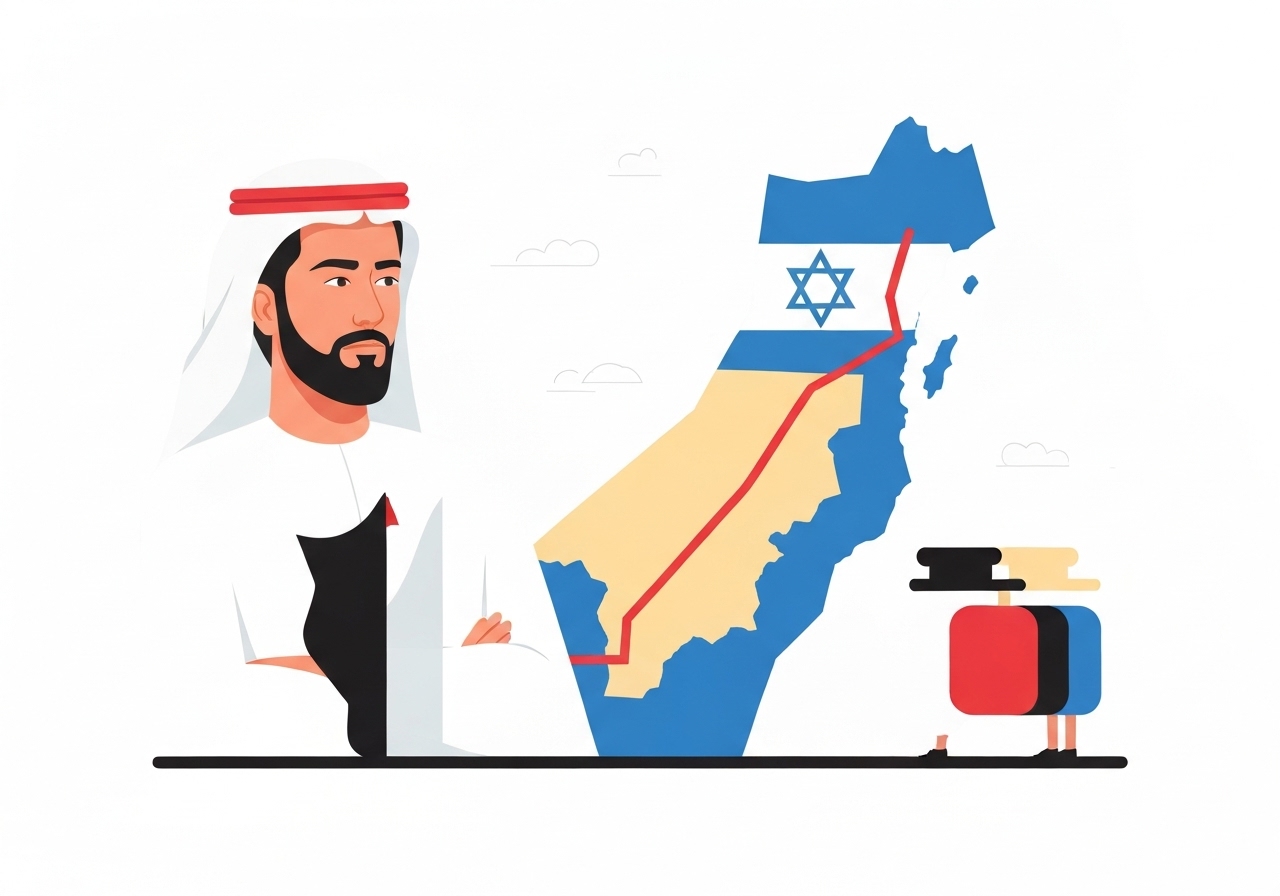
On 3 September 2025 the United Arab Emirates warned that any Israeli move to formally annex large parts of the occupied West Bank would cross a “red line,” undermining the 2020 Abraham Accords and jeopardising the prospect of a two‑state solution.
Key Takeaways
- The UAE publicly stated on 3 September 2025 that West Bank annexation would breach its conditions for normalisation with Israel.
- Emirati official Lana Nusseibeh said annexation would be the “death knell” for a two‑state outcome.
- Far‑right Israeli finance minister Bezalel Smotrich has promoted a plan to apply sovereignty to roughly 82% of the West Bank.
- Since 1967 Israel has established about 160 settlements in the West Bank and East Jerusalem, housing some 700,000 Israeli settlers alongside an estimated 3.3 million Palestinians.
- Most international bodies and human rights groups consider the settlements illegal under international law; the ICJ issued an advisory opinion in 2024 calling Israel’s presence unlawful.
- The UAE is among 147 UN member states that recognise the State of Palestine and views the Accords as contingent on supporting Palestinian aspirations.
Verified Facts
On 3 September 2025, Lana Nusseibeh, assistant minister for political affairs at the UAE foreign ministry, said that formal annexation of West Bank territory would breach the spirit of the Abraham Accords, which normalised relations between Israel and the UAE in 2020. The UAE has repeatedly linked its rapprochement to Israel with limits on unilateral territorial moves affecting Palestinian statehood prospects.
Far‑right Finance Minister Bezalel Smotrich presented a proposal he said came from the defence ministry’s settlement administration that would extend Israeli sovereignty over roughly 82% of the West Bank. His map reportedly leaves fragmented Palestinian enclaves around Jenin, Tulkarm, Nablus, Ramallah, Jericho and Hebron, with other Palestinian towns excluded.
Since the 1967 war Israel has built about 160 settlements in the West Bank and East Jerusalem, now home to roughly 700,000 Israeli settlers. An estimated 3.3 million Palestinians live in the occupied territory. International law and a wide range of human rights organisations characterise settlement expansion as illegal; the International Court of Justice issued an advisory opinion in 2024 stating Israel’s continued presence in the occupied territory is unlawful.
Context & Impact
The 2020 Abraham Accords—brokered by the United States—opened formal ties between Israel and several Arab states, including the UAE. A key UAE condition for normalisation was that Israel suspend formal annexation plans for parts of the West Bank, a commitment then‑Prime Minister Benjamin Netanyahu described as “suspended” but not removed from consideration.
If annexation proceeds, the UAE warns it would undercut regional integration efforts established under the Accords and erode the broadly shared international trajectory toward a two‑state solution. Several European governments have recently signalled moves to recognise Palestinian statehood, and annexation could intensify diplomatic friction between Israel and both Arab and Western partners.
Human rights groups and some Israeli civil society organisations say the proposed map would institutionalise separate legal and administrative regimes for Palestinians and Israelis in the same territory—an outcome critics link to the term “apartheid,” a characterisation Israeli authorities reject.
Official Statements
“Annexation in the West Bank would constitute a red line for the UAE. It would severely undermine the vision and spirit of the Accords,”
Lana Nusseibeh, UAE foreign ministry
“The time has come” to apply sovereignty, and to prevent the establishment of what he called “a terrorist state” in Israel’s centre,
Bezalel Smotrich, Israeli finance minister (summary)
Unconfirmed
- Whether Smotrich’s map reflects a finalized defence‑ministry position or only an initial proposal remains unclear.
- Timing and legal mechanism for any annexation—if pursued by the Israeli government—are not confirmed.
- How other Abraham Accords signatories will respond politically and practically to annexation proposals is not yet determined.
Bottom Line
The UAE’s warning signals that formal annexation of the West Bank could fracture recent Arab‑Israeli diplomatic gains and further isolate Israel internationally. The comments crystallise a diplomatic split: hardline Israeli ministers pressing annexation, and regional partners warning that such a move would undo the conditions that enabled normalisation.
Observers say the coming weeks will be decisive: whether Netanyahu’s government advances a legislative or administrative annexation, how international actors respond, and whether Palestinian leadership and regional states can mobilise diplomatic pressure to preserve the prospect of a negotiated two‑state outcome.