
Lead
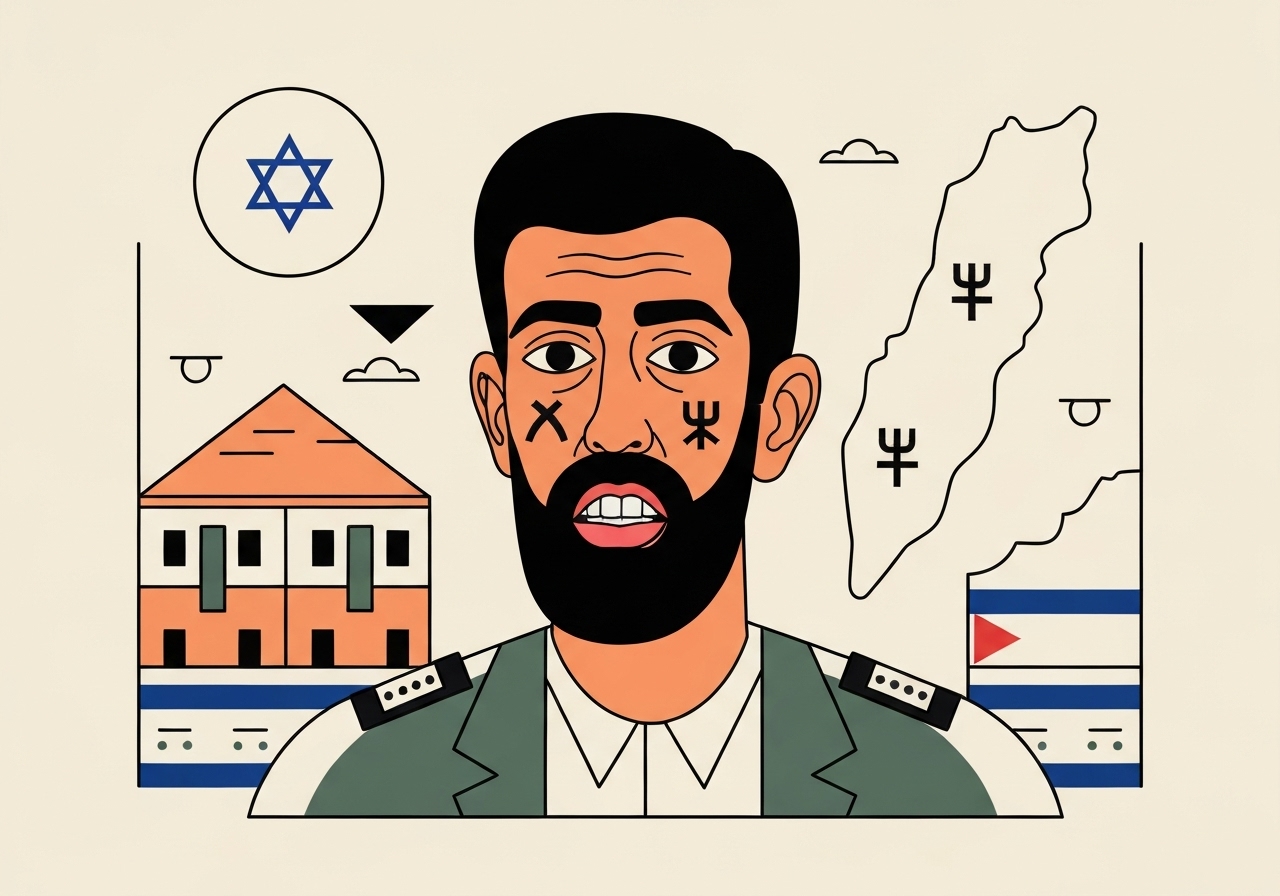
Yasser abu Shabab, the commander of the Popular Forces — an Israel-backed militia active in parts of Gaza — has died of wounds sustained in a violent clash, Gaza sources and local media report. The incident occurred within roughly 48 hours of reports published on 4 December 2025 and took place in territory controlled by Israel. Local accounts say the fighting involved powerful, heavily armed family groups rather than Hamas; the Popular Forces issued a statement saying Abu Shabab was shot while attempting to defuse a family dispute. His death marks a significant setback for efforts to cultivate Palestinian proxies that could counter Hamas.
Key takeaways
- Yasser abu Shabab, in his 30s and leader of the Popular Forces, was reported killed within the last 48 hours as of 4 December 2025.
- The Popular Forces is described as the largest and best-armed of several militias that formed in Gaza late in the two-year conflict; the group numbered roughly 100 fighters.
- Local reporting attributes the fatal clash to a confrontation with a powerful local family after a hostage dispute; the Popular Forces say Abu Shabab was shot while intervening in a family quarrel.
- Hamas publicly denied involvement; some social-media and Gaza sources earlier suggested a refusal to free a hostage precipitated the attack.
- Israel has been reported to have supported multiple anti-Hamas factions as part of a strategy to arm proxies; Prime Minister Benjamin Netanyahu acknowledged arming clans and factions in June 2025.
- Analysts warn the episode underscores the limits of armed proxies as an alternative to Hamas and raises questions about control over Gaza’s security environment.
- The wider conflict context: a Hamas attack in 2023 killed 1,200 people in Israel and abducted 250; subsequent Israeli operations and strikes since the ceasefire have killed more than 70,000 Palestinians, mostly civilians.
Background
The Popular Forces emerged in the latter stages of the two-year war after local leaders, family chiefs and armed elements coalesced into militias in areas under Israeli control. Israel’s security services, facing the difficulty of erecting a stable civil authority in Gaza, turned to community figures and clan leaders to build an anti-Hamas network. Some of these newly formed groups were reportedly equipped and permitted to operate around aid-distribution points and other sites where Israeli forces exerted influence.
Benjamin Netanyahu publicly acknowledged in June 2025 that Israel had armed anti-Hamas clans and factions, a policy intended to weaken Hamas’s monopoly on force and to create local partners for security tasks. Critics say the approach risks empowering armed actors with little accountability, while supporters argued it was a pragmatic response to Hamas’s entrenched control since 2007. The Popular Forces, led by a member of the Tarabin Bedouin tribe, coordinated at times with Israeli forces and operated near contested distribution and security zones.
Main event
According to local media and Gaza sources, the fatal confrontation unfolded after a row over a hostage reportedly held by members of Abu Shabab’s militia. Relatives of the hostage are said to have mounted an assault on the Popular Forces’ base, and fighting broke out that left casualties on both sides. The Popular Forces acknowledged their leader sustained a gunshot wound while trying to intervene in a family dispute and later died of his injuries.
Other reports, including social-media accounts and Israeli items, suggested Abu Shabab had been expelled by elements of his own clan and that tensions with powerful local families had escalated over the detention of a hostage. A Hamas spokesperson, noting the movement had branded Abu Shabab a collaborator, denied any role in his death. There has been no official comment from the Israeli government on the incident as of 4 December 2025.
The Popular Forces had remained active after a US-backed ceasefire agreement in October 2025, operating in Israeli-held parts of Gaza and claiming occasional successes against alleged Hamas cells. A video posted on 18 November 2025 showed Abu Shabab and his deputy, Ghassan al-Duhaini, with armed men in Rafah and orders to conduct security sweeps; the group later said it had detained suspected Hamas members during such operations.
Analysis & implications
Abu Shabab’s death is a direct challenge to Israel’s proxy strategy. Placing armed, locally recruited groups at the center of enforcement and aid protection was meant to produce a native counterweight to Hamas; the killing exposes how fragile and fractious such arrangements can be when intra-Palestinian rivalries and clan dynamics are involved. Analysts warn that arming militias without clear chains of command can deepen fragmentation and spur violent settling of scores.
Politically, the episode weakens arguments that local militias can provide a viable alternative to Hamas’s governance in Gaza. Experts point out that many recruits into the new factions had histories of criminality, including documented incidents around looting of aid, which damaged the legitimacy of armed proxies. The situation complicates any plan for a transitional authority because externally backed militias may not accept central control or demobilisation easily.
Regionally, the death could increase instability in Israeli-controlled pockets of Gaza and risk retaliation or further clan reprisals. For humanitarian operations, the presence of multiple armed groups with competing loyalties raises the prospect of further disruption to aid delivery. International plans — including proposals such as a multinational stabilisation force envisaged in some political road maps — face higher hurdles if local security actors remain autonomous and armed.
Comparison & data
| Item | Figure |
|---|---|
| Hamas 2023 attack (killed in Israel) | 1,200 |
| People abducted in 2023 attack | 250 |
| Palestinians killed since ceasefire (approx.) | more than 70,000 |
| Estimated Popular Forces fighters | ~100 |
The numbers above highlight the asymmetry between isolated militia formations and the large-scale human cost of the conflict. The Popular Forces’ estimated strength — roughly a hundred fighters — is small relative to Hamas’s organisational depth in Gaza, underscoring why experts question the viability of proxy-based security models.
Reactions & quotes
Officials and analysts provided measured responses while disputing some claims about responsibility for the killing. Public statements reflected concern about both the immediate violence and its broader implications for Gaza’s security landscape.
“The writing was on the wall. Whether he was killed by Hamas or in some clan infighting, it was obvious that it would end this way.”
Dr Michael Milshtein, Moshe Dayan Center (academic)
Milshtein’s comment frames the death as a predictable outcome of arming fragmented local actors without durable oversight. He pointed to longstanding divisions inside Gaza and to the difficulty of shaping militias into disciplined forces with civilian legitimacy.
“We offered an alternative force to Hamas,”
Hossam al-Astal, militia leader (local actor)
Al-Astal — head of another anti-Hamas group in the Khan Younis area whose current whereabouts are unclear — previously presented new militias as a local counterweight to Hamas. Abu Shabab’s killing raises doubts about whether such alternatives can survive internal and external pressures.
“We did not carry out this operation,”
Hamas spokesperson (movement official)
Hamas publicly denied involvement in the killing, while also having earlier designated Abu Shabab a collaborator and vowed to pursue those it called traitors. The denial leaves responsibility contested among local actors, social-media narratives and rival claims.
Unconfirmed
- The exact time and location of the gunshot that ultimately killed Abu Shabab remain unverified; reports place the incident within about 48 hours before 4 December 2025.
- Attribution of responsibility — whether to Hamas, a rival family, or internal dissent — is contested and not independently corroborated.
- Claims that Abu Shabab had been expelled by his clan and that the clash began over a hostage remain based on local reports and social-media accounts rather than confirmed, independently verified evidence.
Bottom line
Yasser abu Shabab’s death deals a political and operational blow to the project of building Israel-aligned Palestinian militias inside Gaza. The episode illustrates the risks inherent in relying on locally armed factions: they can be fragile, driven by personal or clan interests, and prone to internal violence that undermines wider strategic goals. For Israeli planners, the incident raises hard questions about control, accountability and the long-term viability of proxy forces.
For Gaza’s civilians and for international actors, the immediate concern is whether the killing will trigger further clashes that disrupt aid and deepen insecurity. Policymakers seeking a post-conflict stabilisation path — whether a transitional authority or a multinational force — will face higher obstacles unless mechanisms for command, accountability and reconciliation are implemented and trusted by local communities.
Sources
- The Guardian (news media) — original reporting summarising the incident, local statements and context.
- Moshe Dayan Center, Tel Aviv University (academic) — institutional profile and expert commentary referenced regarding analyst views.