
Lead
On Dec. 5, 2025, IndiGo, India’s largest carrier, canceled more than 1,000 flights, halting over half of its scheduled departures and leaving thousands of passengers stranded across the country. The disruption, centered on New Delhi and rippling to airports from Bengaluru to Ahmedabad, followed days of increasing cancellations that began on Dec. 2. IndiGo attributed the spike to a combination of weather, technical system adjustments and crew-rest compliance; pilots and some passengers said operational shortcuts and scheduling changes worsened the collapse. The airline said it initiated a systems and schedule “reboot” to restore normal operations by the coming weekend.
Key Takeaways
- IndiGo canceled more than 1,000 flights on Dec. 5, 2025, representing more than half of its planned departures that day.
- The airline operates roughly 2,300 flights daily and recorded about 118 million passenger arrivals in the prior year, underscoring the scale of the disruption.
- IndiGo holds nearly two-thirds of India’s domestic market by some measures, concentrating the national impact of cancellations.
- All departures from New Delhi Airport were canceled at midday on Dec. 5, causing major hub disruption and connecting-flight knock-on effects nationwide.
- Company executives cited a scheduled systems and schedule “reboot,” plus weather and crew-rest rules, while some pilots alleged corners were cut in rostering and operations.
- Passengers reported waits of 20 hours or more at airports such as Ahmedabad and footage showed large accumulations of unclaimed luggage at major airports.
- Public anger manifested at terminals with chants and protests; competitive rescue bookings (e.g., on Akasa Air) were sometimes more expensive than international alternatives.
Background
IndiGo has grown rapidly since its founding, becoming the dominant player in India’s domestic aviation market with a fleet and schedule that now support roughly 2,300 daily flights. That scale gives the carrier strong operational leverage but also concentrates systemic risk: an operational fault at a major hub or in centralized systems can cascade through the network. Indian aviation has experienced capacity expansion and staffing strains in recent years as demand rebounded following the pandemic; regulators have tightened crew-rest and safety rules, which airlines say increase rostering complexity.
Historically, Indian carriers have faced episodic disruptions tied to weather, infrastructure constraints and staff shortages; however, the December 2025 event stands out for its speed and breadth because it affected a majority of a single carrier’s flights, including a temporary shutdown at New Delhi. Stakeholders include the airline’s management and pilots, airport operators, the Directorate General of Civil Aviation (DGCA), travel agents, and a large base of leisure and business travelers. The economic backdrop — rising demand, fuel volatility and thin margins — shapes carriers’ operational choices and their ability to absorb shocks.
Main Event
Cancellations began accelerating on Tuesday, Dec. 2, when IndiGo reported an unusual shortage of crew for parts of its schedule. By Friday midday, the airline canceled all departures from New Delhi Airport, one of India’s busiest hubs, triggering widespread ripple effects. Airline leadership, including CEO Pieter Elbers, released a video statement saying a planned “reboot” of systems and schedules produced a concentrated wave of cancellations intended to reset operations by the weekend.
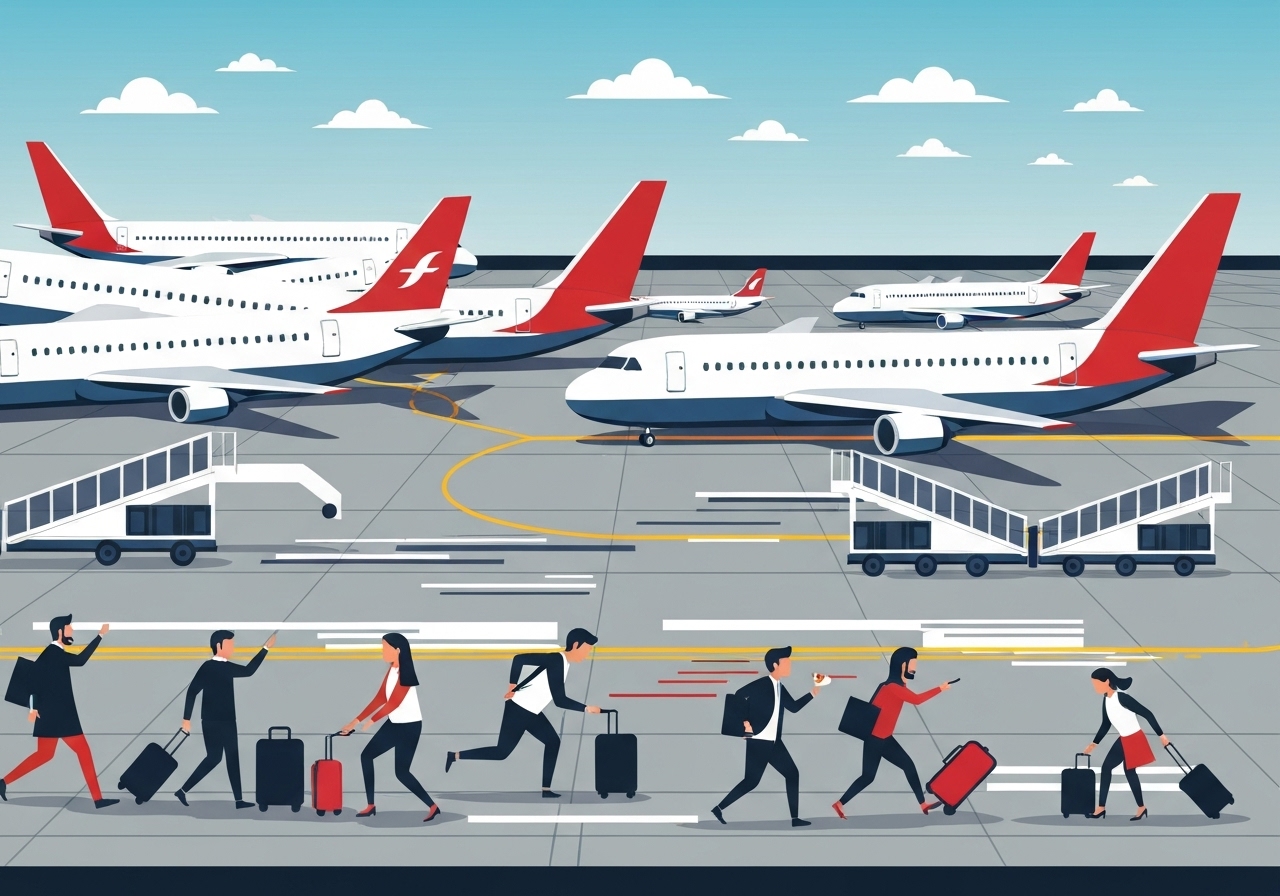
On the ground, passengers described chaotic scenes: long queues, congested customer-service desks and piles of unclaimed luggage at baggage halls. Social media posts captured crowds chanting “IndiGo! Shame, shame!” at terminals and travelers recounting delays of up to 20 hours. Some passengers sought alternatives on competing carriers like Akasa Air, but fare spikes and capacity limits made rebooking difficult and often costly.
Pilots and some frontline staff reported internal tensions, with claims surfaced in informal channels that operational shortcuts in rostering and scheduling contributed to the breakdown. IndiGo has denied that safety was compromised and emphasized compliance with mandatory crew-rest rules, while acknowledging that technical adjustments and weather also played roles. Airport authorities and the airline coordinated to prioritize rebooking and accommodation for stranded travelers as the company worked to restore its network.
Analysis & Implications
The incident exposes how network concentration can magnify disruption: when a carrier responsible for roughly two-thirds of domestic seats in a market falters, alternatives are limited and congestion multiplies across airports and service providers. For India’s aviation ecosystem, the episode is a stress test of contingency planning — from crew rostering and real-time operational systems to airport handling capacity and regulator oversight. Rest rules, while necessary for safety, require robust rostering buffers; airlines operating at tight margins may have limited slack, increasing vulnerability to combined shocks such as weather plus IT or staffing issues.
Economically, the short-term costs are visible — accommodation, vouchers, rebooking and reputational damage — but there are also potential medium-term consequences: passengers may shift loyalty, corporate travel policies could alter vendor preferences, and competitors could gain market share if they can scale capacity reliably. Regulators such as the DGCA may respond with inquiries into compliance and contingency adequacy, which could yield fines, mandated operational changes or guidance on scheduling practices.
Operationally, the episode will likely accelerate investments in resilient scheduling software, redundant IT systems and cross-training for crew and ground staff. For a carrier of IndiGo’s scale, transparency about root causes will matter to rebuild consumer trust; vague attributions to a “reboot” risk fueling skepticism unless backed by a clear timeline and independent verification. Internationally, the disruption may complicate transfer traffic and partnerships with foreign carriers that feed into or out of India’s hubs.
Comparison & Data
| Metric | Reported Figure |
|---|---|
| Daily scheduled flights (approx.) | 2,300 |
| Flights canceled on Dec. 5, 2025 | >1,000 |
| Passenger arrivals last year | ≈118 million |
| Market share (domestic) | ~66% |
| Reported passenger wait example | ~20 hours (Ahmedabad) |
The table shows the scale of the carrier relative to the disruption: canceling over 1,000 departures in a 2,300-flight daily schedule removes a majority of supply for a single day. That level of contraction is rare for a single operator and highlights the cascade effects into connecting itineraries and ground operations. Comparing this event to prior Indian disruptions, the concentrated cancellations at the nation’s busiest hub (New Delhi) are notable for speed and breadth.
Reactions & Quotes
IndiGo’s chief executive framed the action as a necessary operational reset to protect schedule integrity in the near term.
“A reboot of the systems and schedules resulted in a concentrated set of cancellations that we believe will allow us to normalise operations over the weekend.”
Pieter Elbers, IndiGo CEO (video statement)
Passengers expressed frustration and anger at terminals, with public chants and long waits reflecting a sharp deterioration of consumer experience.
“IndiGo! Shame, shame!”
Passengers at New Delhi and Bengaluru airports (video footage and social posts)
Some pilots, speaking through informal channels, suggested roster and operational practices contributed to the breakdown; the airline rebutted claims that safety was compromised.
“There were operational shortcuts in rostering that made the system brittle under stress.”
Unidentified pilot representative (reported allegation)
Unconfirmed
- Whether specific automated scheduling settings in IndiGo’s systems directly triggered the mass cancellations has not been independently verified.
- Allegations that management intentionally under-rostered flights to cut costs are reported by some crew sources but lack corroborating documentary evidence at this time.
- The precise contribution of weather versus technical and crew-rest factors to the day’s cancellations remains subject to further investigation.
Bottom Line
The Dec. 5, 2025 disruption at IndiGo demonstrates how operational stress at a dominant carrier can rapidly cascade into nationwide travel paralysis. For travelers, the immediate priority is rebooking, accommodation and clear communication; for regulators and the industry, it is ensuring systemic resilience in crew rostering, IT systems and contingency planning.
Looking ahead, IndiGo’s response — including transparent disclosure of root causes, remedial measures and timelines — will be critical to restoring confidence. Regulators may impose closer scrutiny or require corrective actions, and competitors and corporate buyers will watch whether this episode prompts a durable reallocation of market share.
Sources
- The New York Times — news report (Dec. 5, 2025)
- IndiGo — official airline site (company information and customer notices)
- Directorate General of Civil Aviation — Indian regulator (regulatory framework and safety guidance)