
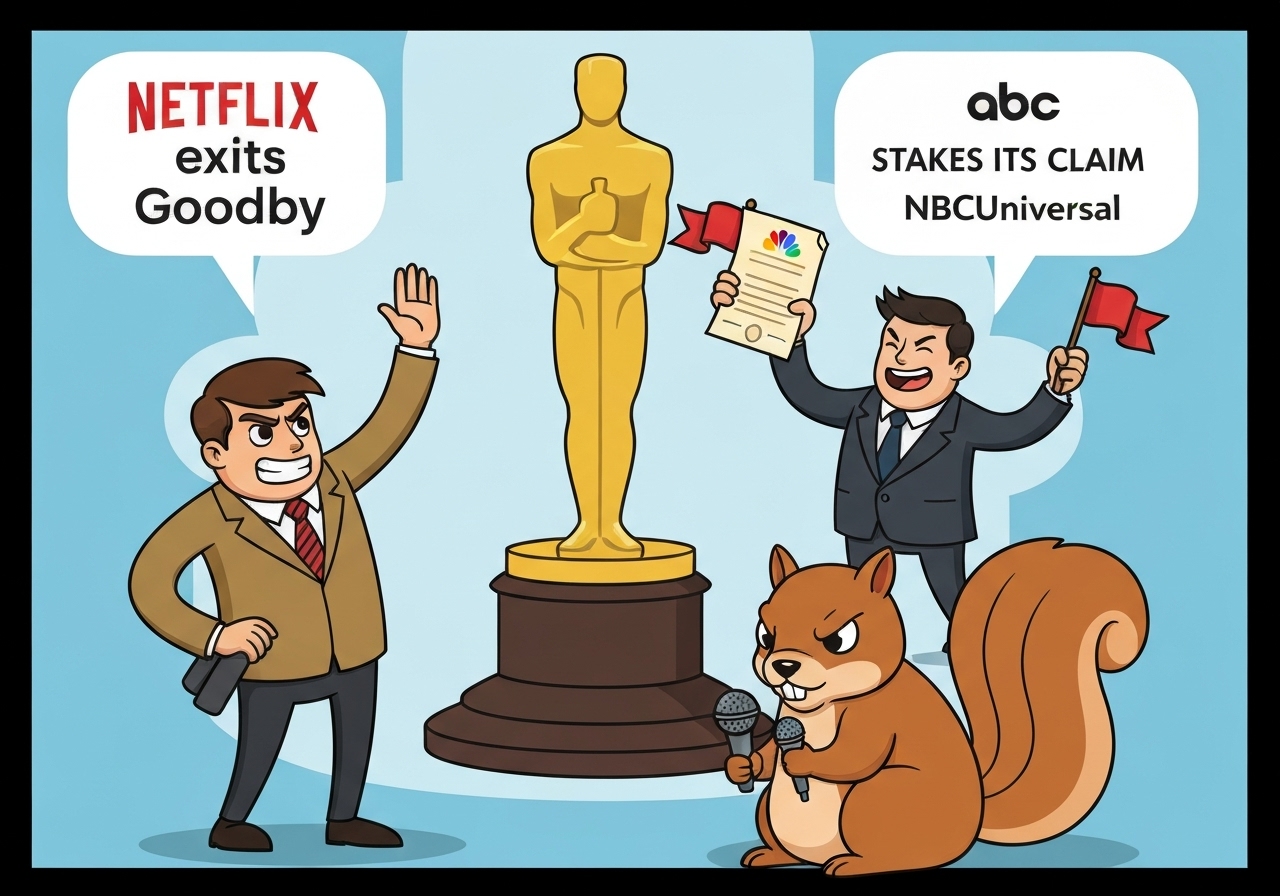
With roughly eight weeks until Oscar nominations are revealed, the race to secure broadcast rights to the Academy Awards has intensified. Sources close to negotiations say the Academy of Motion Picture Arts and Sciences is seeking a new 5–10 year licensing pact, and several potential bidders have been sizing up the deal. Netflix has stepped back from talks, while NBCUniversal has emerged as a strong contender and YouTube remains active. ABC, which holds rights through 2028 and will carry the 100th ceremony, is pushing to maintain its long relationship with AMPAS.
Key Takeaways
- The Academy wants a 5 to 10 year broadcast deal that would begin after ABC’s current contract ends in 2028.
- Netflix is no longer pursuing the Oscars broadcast rights, according to two sources close to talks.
- NBCUniversal has increased its interest after strong live-event ratings from the 2024 Summer Olympics and other recent broadcasts.
- YouTube remains a bidder and offers large clip-driven viewership, per Nielsen data on app connectivity.
- ABC currently spends about $120 million per year on the Oscars, covering rights, production and institutional support.
- This year’s telecast drew 19.69 million viewers on ABC and Hulu, versus about 40 million a decade earlier.
- The Academy and bidders are cautious on price, with multiple parties signaling they will not overpay for the franchise.
Background
The Academy of Motion Picture Arts and Sciences relies on its broadcast partnership as a key revenue and promotional engine, supporting its mission to celebrate theatrical cinema. AMPAS has been testing the marketplace through 2025 to secure a longer-term licensing arrangement that stabilizes funding and extends the Oscars reach in an era of fragmented viewing. Historically, ABC has been the dominant TV home for the ceremony, airing most telecasts since 1976 and slated to host the show through the 100th Oscars in 2028.
In recent months, media reports suggested unconventional suitors including streamers and digital platforms might bid, reflecting a wider trend of awards shows courting new distribution models. The industry is navigating sharper scrutiny of rights costs as linear ratings decline for many live awards programs. Studios, talent agents and the Academy itself are weighing not just financial offers but the reputational and logistical implications of moving such a marquee event to purely digital platforms.
Main Event
Sources tell this outlet that Netflix, after preliminary interest over the summer, has withdrawn from active consideration. Two people familiar with the talks described the streamer as having conducted exploratory conversations but ultimately stepping back. CBS and Paramount were reported earlier as potential suitors, though one source said those parties were not substantively engaged during the current round of negotiations.
NBCUniversal has notably stepped forward in talks, buoyed by its recent live-event momentum and ownership ties to Universal Pictures. Insiders say NBCU sees strategic value in adding the Oscars to its tentpole live portfolio, pointing to the 2024 Summer Olympics and recent record ratings for the Macy’s Thanksgiving Day Parade as proof of its live-audience strength. Executives also note marketing synergies with NBCU’s film studio and the promotional advantages a broadcast could gain from the 2028 Los Angeles Olympics.
YouTube remains on the roster of interested bidders, with sources emphasizing its unmatched clip and highlights reach. Nielsen data referenced by industry participants shows YouTube ranking among the most connected TV apps, and sources say the platform generates major engagement with moments from past Academy broadcasts. Yet several studio and talent contacts warned of friction if the Oscars were hosted exclusively on a dominant tech-owned video service, citing concerns about surrounding content and presentation context.
ABC sources describe the network’s long institutional memory and promotional muscle as central to AMPAS’s calculus. Though some insiders characterize ABC as less aggressive in negotiations, others stress Disney’s broader corporate reach that amplifies the awards across theme parks, streaming services and linear promotion. The network currently holds rights through 2028, a run that will amount to 50 consecutive ceremonies aired on ABC by that year.
Analysis & Implications
The bidding dynamics reflect a broader recalibration of value for live-event television. For the Academy, the top priority is preserving the Oscars as a cultural showcase for cinema while securing predictable funding. A 5–10 year pact would give AMPAS runway to plan long-range partnerships and to coordinate with studios and talent on scheduling and sponsorships. The choice of platform also shapes perceptions of prestige; industry stakeholders are sensitive to the optics of moving the venerable ceremony to a service perceived primarily as a digital clip hub.
For NBCUniversal, the upside includes portfolio synergy, cross-promotion with Universal Pictures, and the opportunity to package high-profile live content across linear and streaming outlets. NBCU’s recent live ratings show strength in drawing mass audiences, and executives may calculate that adding the Oscars could reinforce the network’s identity as the premier home for large-scale live entertainment. However, NBCU would need to weigh the upfront rights cost against long-term advertising and subscription benefits.
YouTube offers a different calculus: massive global reach for clips and highlights, strong younger-skewing engagement, and sophisticated digital ad targeting. But an exclusively digital Oscars could alienate segments of talent and older viewers who expect a traditional TV spectacle. The Academy would likely demand a premium if the winner were a digital-only platform to offset reputational and industry concerns.
ABC’s position hinges on institutional continuity and promotional scale. Disney’s ecosystem can elevate the ceremony in ways a standalone streamer may not match, from cross-platform storytelling to park and cruise activations. Yet ABC will face pressure to justify existing spending as linear viewership softens and bidders demand more measured rights fees.
| Metric | Value |
|---|---|
| ABC annual Oscars spend | ~$120 million |
| 2025 telecast viewership (ABC/Hulu) | 19.69 million |
| Approx. viewership a decade earlier | ~40 million |
| Academy desired contract length | 5–10 years |
The table above synthesizes the headline financial and audience figures under discussion. These numbers highlight why bidders are cautious: a sizeable annual outlay must be justified against long-term ad revenue, subscription lift and brand value, while the Academy must balance revenue goals against stewardship of the Oscars brand.
Reactions & Quotes
Industry participants expressed a mix of enthusiasm and caution as the talks progress.
We re not overpaying for legacy tentpoles; whoever wins has to justify the math,
Unidentified industry executive involved in negotiations
The comment reflected a recurring theme among bidders who say rights prices must align with realistic revenue projections. Participants repeatedly described disciplined stewardship of corporate capital as a guiding constraint.
ABC s institutional memory around the telecast is a real asset that AMPAS values,
Source close to ABC
That view captures why some insiders believe AMPAS may prefer continuity, especially with the centennial ceremony approaching in 2028. Promotional ties across Disney could enhance year-round visibility for the Oscars.
Are you going to have the Academy Awards roll into an autoplay of Ms. Rachel,
Studio insider voicing concerns about a digital-only home
This quip signals a reputational worry voiced by talent and studio executives who fear the ceremony could be visually or contextually diluted if placed amid unrelated digital content.
Unconfirmed
- Reported premium demands for selling rights to an exclusively digital buyer have not been publicly verified with concrete offers.
- Specific dollar figures the Academy is requesting from each bidder were not disclosed and remain subject to negotiation.
- Any formal timeline for when AMPAS will select a partner beyond ABC s current 2028 window has not been confirmed.
Bottom Line
The Oscars rights auction is shaping up as a careful balancing act between tradition and modern reach. AMPAS seeks long-term stability and adequate compensation while protecting the ceremony s prestige; bidders must reconcile high upfront costs with the uncertain economics of live-event TV in a streaming era. NBCUniversal s current momentum makes it a formidable contender, but ABC s institutional role and Disney s promotional ecosystem remain powerful counterweights.
Expect negotiations to proceed cautiously and for price discipline to dominate bidders conversations. The Academy s final partner will determine not only where millions tune in for the show but also how the Oscars position themselves for the next decade, especially as the film and broadcast landscapes continue to evolve.
Sources
- Variety (entertainment trade reporting)
- Nielsen (media measurement firm)
- Academy of Motion Picture Arts and Sciences (official organization)