
Lead
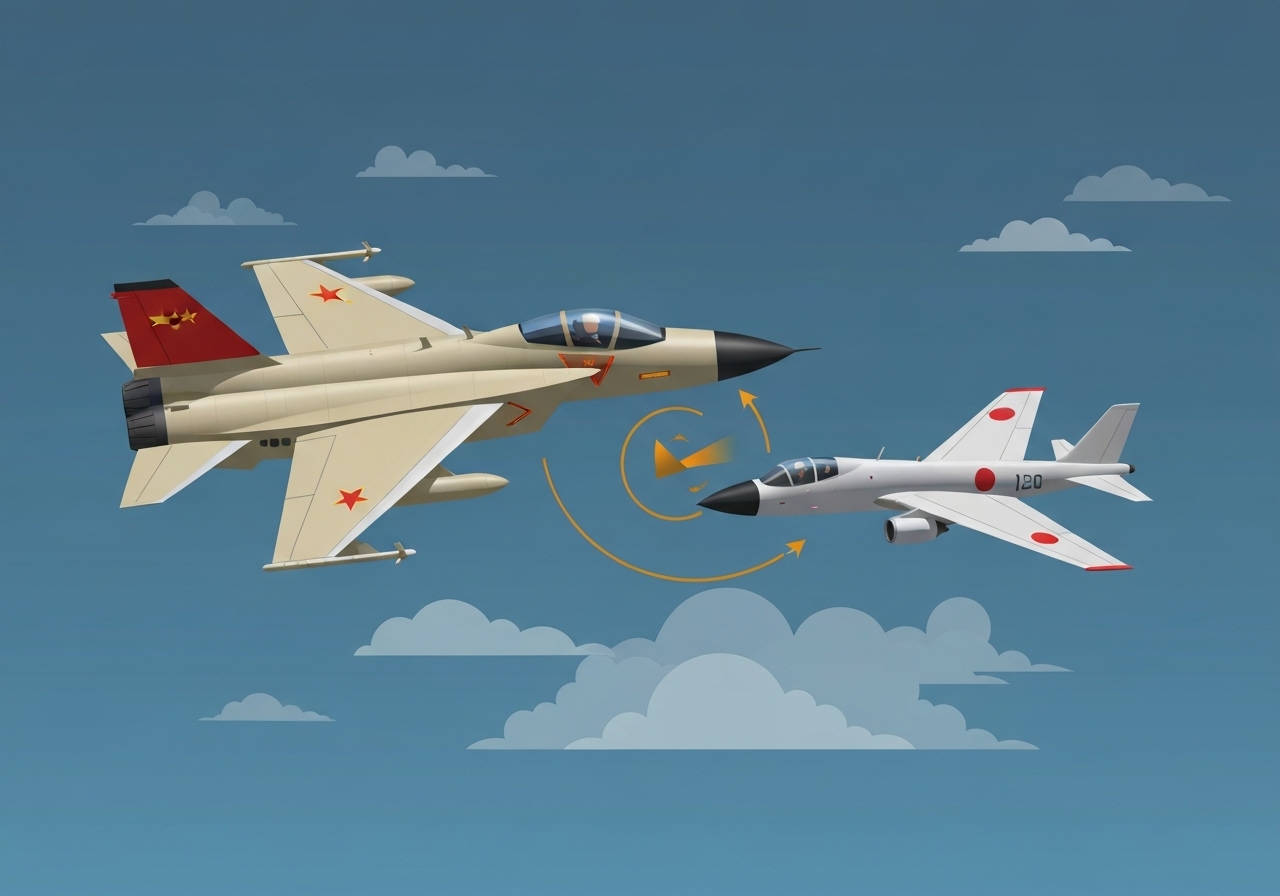
On December 6, 2025, Japan reported that a Chinese fighter jet directed its fire‑control radar at Japanese military aircraft during a weekend encounter, marking what Tokyo described as the first such radar lock. The episode comes amid rising strain after Prime Minister Sanae Takaichi’s remarks last month suggesting Japan might join other countries in a military response if China attacked Taiwan. Japanese officials say the move represents a new level of risk in routine air encounters; Beijing and Tokyo have exchanged terse public statements since the report. The incident is likely to complicate diplomatic ties and heighten military caution across the region.
Key Takeaways
- Japan reported a Chinese fighter locked fire‑control radar on Japanese aircraft on December 6, 2025, which Tokyo described as the first recorded instance of such targeting.
- The event occurred days after Prime Minister Sanae Takaichi publicly proposed that Japan could participate in allied military action if China attacked Taiwan, elevating bilateral tensions.
- Japan characterized the radar lock as a dangerous escalation in aerial encounters that have otherwise involved intercepts and close passes without weapons‑grade targeting.
- Tokyo’s account has raised alarm among allied governments concerned about unintended escalation in the East China Sea and surrounding airspace.
- Beijing and Tokyo offered contrasting narratives; official comments from both sides focused on restraint while diplomatic exchanges continued behind the scenes.
- Analysts warn the episode increases the risk of miscalculation between two heavily armed neighbors operating in congested air and maritime corridors.
Background
China and Japan have experienced frequent military and maritime encounters in recent years as both nations expand patrols around key maritime approaches and airspace. Incidents historically include close intercepts, wake turbulence passes, and radio warnings, but Japan says this case is distinct because of a fire‑control radar lock — a technical action that can be interpreted as preparatory targeting. The broader context includes intensifying regional competition over Taiwan, where Tokyo, Washington and other partners have been debating deterrence options while Beijing insists on sovereignty claims.
Prime Minister Sanae Takaichi’s remarks last month about potential Japanese participation in collective military responses to a Chinese attack on Taiwan added a political flashpoint to routine operational friction. Japan has been gradually strengthening security cooperation with the United States and other partners, while remaining constrained by legal and political debates at home about the scope of its Self‑Defense Forces. For Beijing, Japan’s political language and expanded patrols are seen as provocative; for Tokyo, China’s expanding air and naval activities are a security challenge that demands clearer deterrence.
Main Event
According to Tokyo’s account released December 6, Japanese military aircraft were operating in international airspace when a Chinese fighter aircraft activated its fire‑control radar and held a lock on the Japanese jets. Japanese officials described the technical action as the first time such radar locking had been observed in contacts between the two air forces. The Japanese report did not allege an armed attack, but it framed the lock as a hazardous escalation that could reduce reaction times and increase the chance of an inadvertent engagement.
The timing of the incident, occurring during a period of heightened political rhetoric about Taiwan, has added diplomatic sensitivity. Japanese military spokespeople and government officials issued public statements reiterating the danger of such actions and calling for de‑escalation. Chinese officials, in turn, emphasized that their operations were routine and accused critics of inflating normal military activity; Beijing’s public statements urged calm and dialogue but stopped short of acknowledging an intentional weapons‑grade targeting step.
Japan has not publicly released cockpit video or detailed radar logs; it summarized the technical characterization and asked for international attention to the potential risks. Military planners in Tokyo and allied capitals reportedly reviewed rules of engagement and communications channels to lessen the chance that a new pattern of technical targeting would translate into armed confrontation. Diplomatic interactions in the immediate aftermath focused on clarifying facts and encouraging restraint while avoiding immediate reciprocal measures.
Analysis & Implications
A fire‑control radar lock is widely interpreted in military terms as an indicator that a platform is preparing weapons systems, even if no weapons are launched. That technical implication is why Tokyo’s characterization of a radar lock is meaningful beyond a single headline: it changes threat perceptions and may prompt operational adjustments such as increased stand‑off, revised escort tactics, or altered training patterns. For Japan, documenting and publicizing the event serves both to signal concern domestically and to alert allies about evolving risks.
The incident intersects with politics: Prime Minister Takaichi’s Taiwan remarks have already brought diplomatic pushback from Beijing and prompted debate inside Japan about deterrence posture. If Tokyo responds to perceived increases in Chinese operational assertiveness by deepening cooperation with partners or expanding its own peacetime capabilities, Beijing may view those moves as justification for further operational pressure — a feedback loop that raises the prospect of miscalculation. Analysts caution that technical steps by pilots or commanders can quickly exceed political intent in contested airspace.
Regionally, allies including the United States will likely reassess communication and de‑confliction measures with both Tokyo and Beijing to reduce inadvertent escalation. Economically and diplomatically, repeated security frictions could complicate trade relations and multilateral negotiations where China and Japan have long mutual interests. The most immediate practical implication is military: both sides may revise patrol patterns, frequency of intercepts and the thresholds for reporting or publicizing encounters.
Comparison & Data
| Item | Detail |
|---|---|
| Incident date | December 6, 2025 |
| Noted novelty | Japan says first recorded fire‑control radar lock by Chinese fighter on Japanese jets |
The table above isolates the central factual claims: the date and Tokyo’s characterization of the technical action. Prior encounters between Chinese and Japanese aircraft have commonly involved close intercepts and radio warnings, but Tokyo’s emphasis on a fire‑control radar lock indicates a qualitative shift in how contacts are being conducted or perceived. This single reported event does not, by itself, prove a sustained trend, but it is likely to change operational planning and diplomatic messaging in the near term.
Reactions & Quotes
Tokyo’s public safety and defense officials framed the encounter as hazardous and urged restraint from both sides. Japan emphasized monitoring and documentation of the event and called for adherence to established protocols for safe air operations.
“This action is dangerous and raises the risk of miscalculation in the air,”
Japan Ministry of Defense (official statement)
Beijing’s official channels responded with language urging calm and rejecting what they described as exaggeration; Chinese officials reiterated that military operations near China are routine and framed criticism as politically motivated.
“Military activities are part of normal operations; we urge relevant parties not to sensationalize routine maneuvers,”
Chinese Ministry of Foreign Affairs (official comment)
Outside experts called for strengthened communication channels and clearer rules of engagement to prevent technical targeting steps from producing wider crises. Analysts also noted that political rhetoric on Taiwan is amplifying already sensitive operational interactions.
Unconfirmed
- Whether the radar lock reflected an intentional weapons‑grade targeting decision by Chinese command rather than a pilot‑level action remains unconfirmed.
- There is no publicly released cockpit video or raw radar log available to independent observers that would allow third‑party verification of the technical claim.
- Any direct link between Prime Minister Takaichi’s remarks and the timing of the radar event is inferential rather than conclusively established.
Bottom Line
This December 6 encounter, as described by Japan, marks a probable escalation in the technical character of air contacts between Chinese and Japanese forces. Even without proof of intent to fire, the move to a fire‑control radar lock raises the stakes in routine intercepts and increases the likelihood that a future incident could spiral into greater conflict if not carefully managed.
Practical next steps will likely include tightened de‑confliction procedures, enhanced diplomatic communication, and a review of operational rules in Tokyo and allied capitals. For observers and policymakers, the key questions are whether this is an isolated operational development or an emergent pattern; answering that will require transparent data sharing, third‑party monitoring where possible, and steady diplomatic engagement to lower the risks of miscalculation.
Sources
- Bloomberg (international news)
- Japan Ministry of Defense (official government site)
- Chinese Ministry of Foreign Affairs (official government site)