
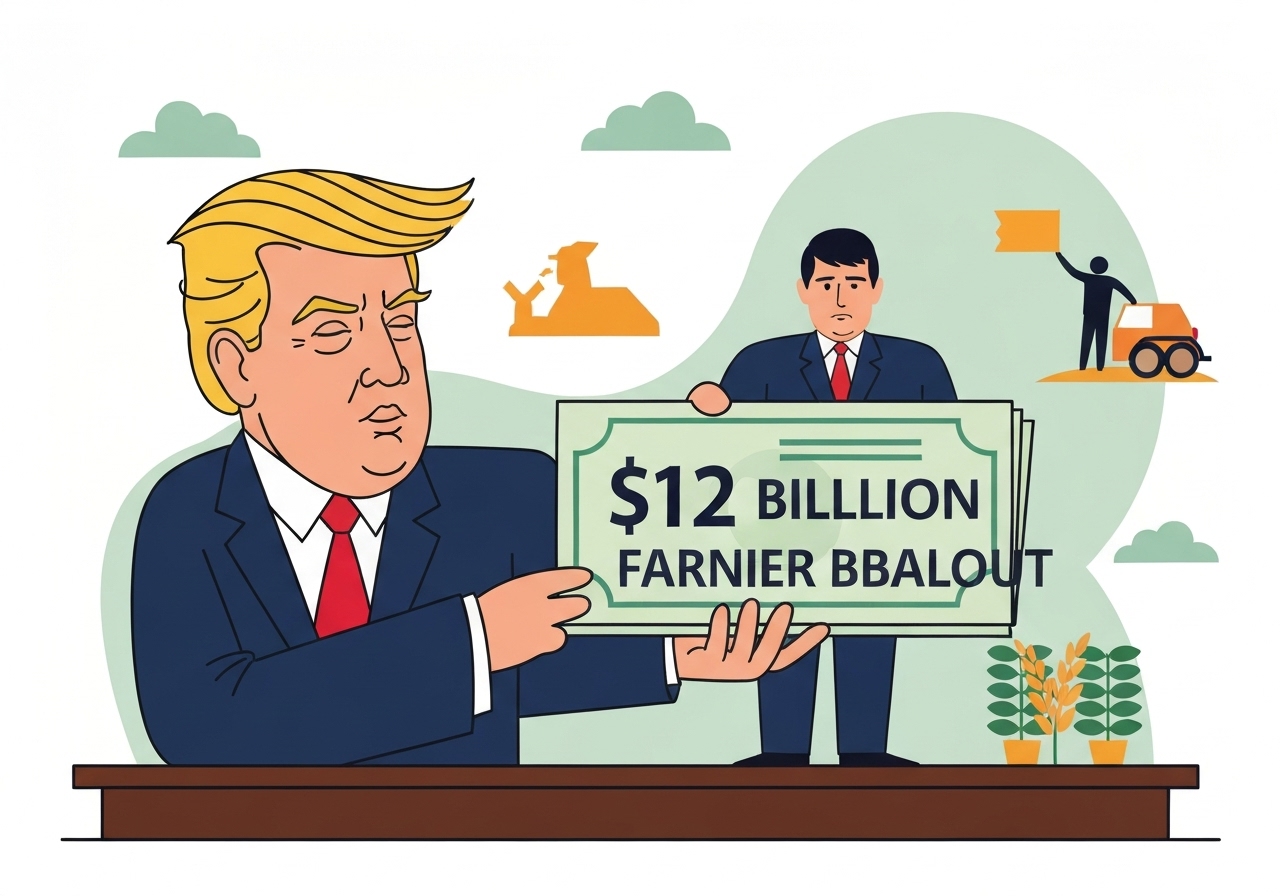
On Dec. 8, 2025, the White House announced a $12 billion aid package aimed at farmers harmed by recent tariff-driven trade disruptions. The plan, presented at a White House roundtable, directs most funds through the Agriculture Department’s Farmer Bridge Assistance program and targets corn, cotton, sorghum, soybean, rice, cattle and wheat producers. The administration said it will distribute $11 billion immediately and hold $1 billion in reserve for fruit and vegetable growers, with payments scheduled by the end of February 2026. The move acknowledges that retaliatory import restrictions — most notably from China — have reduced export demand and squeezed farm revenues.
Key Takeaways
- The administration unveiled a $12 billion rescue for U.S. farmers on Dec. 8, 2025, to address fallout from tariff-driven trade disputes.
- $11 billion will be distributed initially; $1 billion is reserved for specialty crop (fruit and vegetable) support.
- Funds will flow primarily through the Agriculture Department’s Farmer Bridge Assistance program to producers of corn, cotton, sorghum, soybeans, rice, cattle and wheat.
- Payments are scheduled to be delivered by the end of February 2026, according to the White House announcement.
- The package was framed as mitigation for losses after major buyers — including China — curtailed purchases in response to U.S. tariffs.
- The White House said the pool is a portion of tariff-related receipts, but reporting notes the payments are not financed directly by a single tariff account.
Background
The administration’s tariffs, instituted earlier in the trade dispute, were intended to reshape trade relationships and stimulate domestic production. Agricultural exports — particularly soybeans, a major U.S. commodity — were exposed when key buyers reduced or halted purchases in retaliation. China, the largest market for some U.S. crops, scaled back imports this year, directly affecting farm income in rural states that backed the administration.
Farm economics are sensitive to both global prices and export demand; lower foreign purchases translate quickly into falling producer prices and tighter cash flow for planting and operating expenses. The Farmer Bridge Assistance program, an Agriculture Department channel used for targeted support, becomes the vehicle for short-term relief. Historically, federal farm aid has been invoked after weather shocks, price collapses or market disruptions; using aid to buffer policy-created trade shocks reopens familiar political and economic debates about intervention and moral hazard.
Main Event
At a White House roundtable on Dec. 8, 2025, administration officials described the $12 billion package as a targeted response to widespread stress in the farm sector. Officials said $11 billion will be deployed immediately through the Agriculture Department and an additional $1 billion held to respond to needs among fruit and vegetable growers. The administration emphasized speed: payments are scheduled to reach eligible producers by the end of February 2026.
White House materials listed eligible commodities—corn, cotton, sorghum, soybeans, rice, cattle and wheat—reflecting crops that lost export markets or faced depressed prices during the trade backlash. The choice to funnel most assistance through Farmer Bridge Assistance leverages an existing program intended to bridge producers through temporary disruptions, according to the administration.
President Trump framed the package as support for a core constituency affected by the administration’s own trade posture, saying the funds were possible because of tariff receipts while also acknowledging the tariffs had contributed to the need for relief. The announcement came amid broader negotiations and rhetoric on trade policy, with officials urging farmers that the aid is a stopgap while longer-term trade outcomes are pursued.
Analysis & Implications
The $12 billion rescue underlines a political and economic tension at the heart of tariff strategy: protective levies can aim to pressure trading partners or reorient supply chains but can also provoke retaliatory measures that harm export-dependent sectors. For U.S. producers of soybeans and other grains, lost access to major markets translated into lower prices and reduced farm income; the aid package is intended to blunt those immediate losses.
Economically, one-time payments can ease liquidity strains and prevent forced sales of livestock or crop assets ahead of planting seasons, but they do not restore lost market share. If key buyers remain shut off or seek alternative suppliers long-term, recurrent support or structural adjustment may be necessary. The administration’s emphasis on rapid distribution addresses near-term solvency but leaves unanswered questions about competitiveness and the timeline for trade normalization.
Politically, the package seeks to shore up support in farm states where producers have been vocal about financial stress. Providing visible relief may dampen criticism from affected constituencies, but critics will note the irony of compensating for consequences of policies the administration championed. Internationally, trading partners watching U.S. trade measures and countermeasures may view the relief as a domestic patch rather than a solution to the underlying dispute.
Comparison & Data
| Item | Amount |
|---|---|
| Total announced package | $12,000,000,000 |
| Initial distribution | $11,000,000,000 |
| Reserve for specialty crops | $1,000,000,000 |
| Targeted commodity groups | Corn, cotton, sorghum, soybeans, rice, cattle, wheat |
The table summarizes the administration’s headline figures. Historically, U.S. farm support packages have ranged from emergency payments after natural disasters to multi-year commodity programs; this $12 billion package is sizable for a single short-term intervention but smaller than multiyear stabilization programs enacted in prior decades. The reserve for specialty crops signals attention to perennial gaps when broad commodity programs leave fruits and vegetables less covered.
Reactions & Quotes
Officials and participants framed the package both as immediate relief and as part of broader trade strategy messaging.
“We love our farmers,”
President Donald J. Trump, White House roundtable, Dec. 8, 2025
In the announcement materials, the White House specified program mechanics and target crops.
“The money will go to corn, cotton, sorghum, soybean, rice, cattle and wheat farmers,”
White House statement (program summary)
Observers warned that payments could stabilize cash flow without resolving longer-term market access problems. Agricultural groups welcomed prompt aid while urging clear rules for eligibility and timely payments.
Unconfirmed
- Whether tariff receipts will be used directly as an ongoing funding source for similar payments beyond this package — the administration said tariffs made the payments possible, but long-term funding sources remain unclear.
- Whether China or other major buyers will resume previous purchase volumes in 2026 — no firm commitments from trading partners were announced alongside the package.
- Exact eligibility formulas and per‑acre or per‑head payment rates have not been published; details remain pending Agriculture Department guidance.
Bottom Line
The $12 billion package is a rapid, politically salient response to visible distress in the farm sector caused in part by retaliatory trade measures. It is designed to provide immediate liquidity and targeted support to commodity groups most affected by export losses, with most funds routed through an existing Agriculture Department program and payments expected by the end of February 2026.
But short-term payments do not eliminate the underlying trade tensions that reduced export demand; unless market access is restored or alternative buyers are secured, producers may face recurring pressure. The administration’s next steps—detailed eligibility guidance, longer-term trade negotiations and monitoring of market recovery—will determine whether this intervention is a temporary bridge or the start of a larger, sustained support effort.
Sources
- The New York Times (news report)