
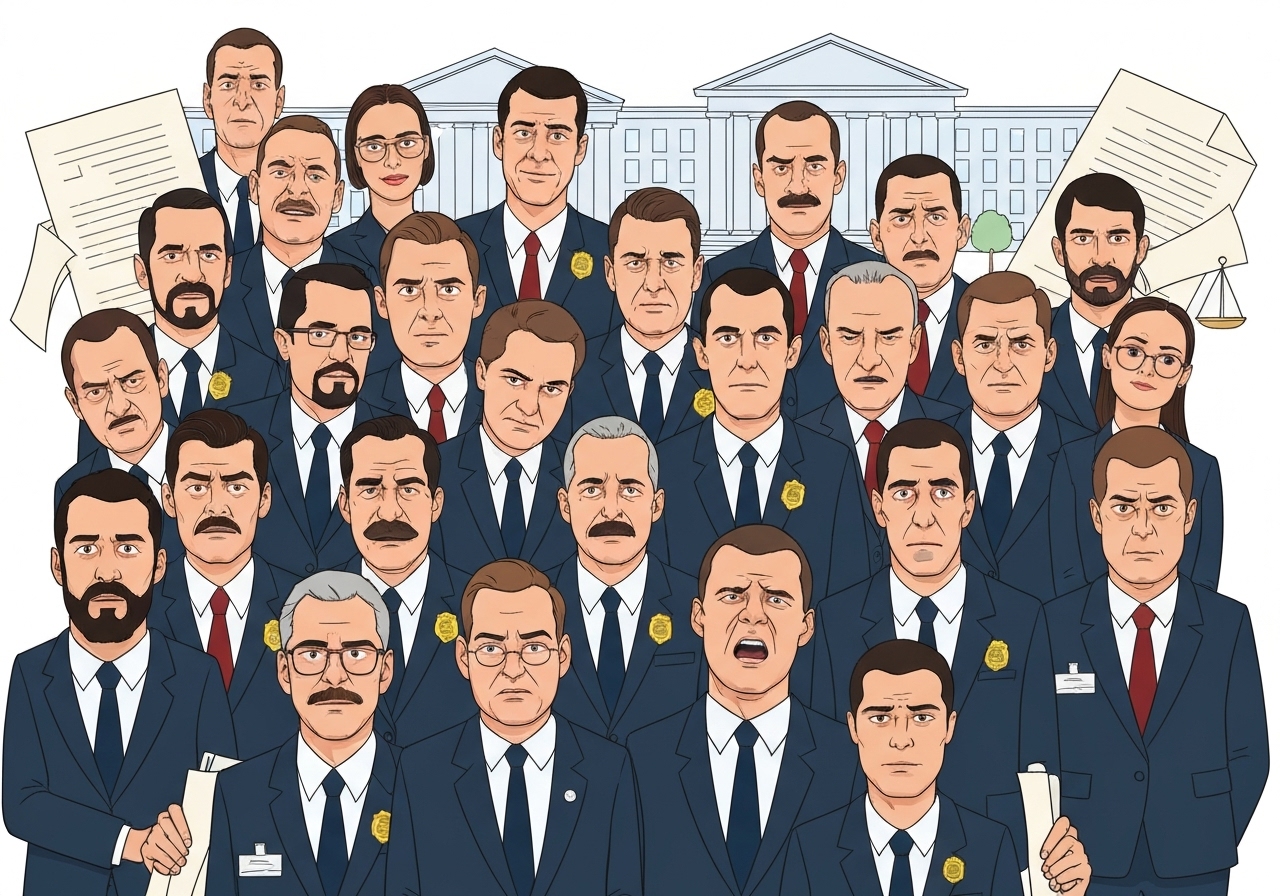
On Dec. 8, 2025, a group of 12 former FBI agents filed a federal civil suit in Washington, D.C., seeking reinstatement and damages after being dismissed earlier this year. The complaint says the agents were fired in retaliation for kneeling on June 4, 2020, while deployed in Washington to defuse unrest following George Floyd’s killing. Plaintiffs allege FBI Director Kash Patel and the Department of Justice, including Attorney General Pam Bondi, acted from partisan motives rather than impartial personnel review. The suit — described as a 47-page filing — frames the kneeling as a tactical move that prevented escalation when agents lacked crowd-control equipment.
Key Takeaways
- Twelve former FBI agents filed the lawsuit on Dec. 8, 2025, in U.S. District Court for the District of Columbia seeking reinstatement and other relief.
- The incident at issue occurred on June 4, 2020, during post-George Floyd protests in Washington, D.C.; plaintiffs say they knelt to avoid confrontation and de-escalate crowds.
- Plaintiffs contend they lacked riot shields, gas masks and helmets while deployed, and that tactical kneeling prevented violence on that day.
- The complaint names FBI Director Kash Patel and Attorney General Pam Bondi and alleges partisan animus motivated the terminations.
- At least one plaintiff, identified as “Jane Doe 5,” says she was removed from a Deputy Assistant Director position overseeing counterintelligence at FBI Headquarters at Patel’s direction.
- The filing is characterized as 47 pages long and joins earlier suits, including one by former Acting Director Brian Driscoll, alleging political retribution at the FBI.
- Some plaintiffs are described as counterterrorism specialists with more than 15 years of service, according to the complaint.
Background
The complaints reach back to June 2020, when demonstrations erupted nationally after George Floyd’s death in Minneapolis. In Washington, D.C., federal agents from multiple agencies were deployed to provide visible law-enforcement presence as protests and, in some places, unrest grew. Plaintiffs say FBI teams were briefed to show presence, wore vests labeled “FBI,” and carried firearms but were not outfitted or trained for crowd-control operations.
Federal personnel actions since the start of the second Trump administration have been politically contentious, with several high-profile departures and lawsuits alleging improper motives. The new suits follow earlier litigation claiming that political actors influenced personnel decisions at the FBI. The plaintiffs’ filing cites public statements and writings by Director Patel, including his book, as context for alleged partisan personnel purges.
Main Event
The lawsuit recounts that on June 4, 2020, teams patrolling D.C. encountered a mixed crowd described as “hostile individuals alongside families with young children.” Plaintiffs say the agents closest to the crowd knelt to keep a physical barrier between civilians and officers and to avoid provoking unrest. According to the complaint, the kneeling allowed the crowd to move past without violent contact and reduced the risk of an escalation that might have ensued if agents had used force.
Plaintiffs say they had not been issued sufficient riot-control equipment such as shields and gas masks, and that tactical decisions were made in real time to protect civilians and officers. The suit identifies one affected senior official, “Jane Doe 5,” who alleges removal from a Deputy Assistant Director post overseeing counterintelligence was ordered by Director Patel because she had knelt on June 4, 2020.
The complaint portrays the later personnel actions as departures from normal internal disciplinary and review procedures, alleging they were driven by perceived political loyalty rather than job performance. The plaintiffs seek reinstatement and damages, and they ask the court to examine whether the FBI and DOJ violated civil-service protections and federal law.
Analysis & Implications
If the court finds evidence that leadership directed firings for political reasons, the case could reshape internal protections for career federal law-enforcement employees and invite broader scrutiny of personnel decisions at the Department of Justice. A ruling for plaintiffs might prompt reinstatements or new limits on leadership authority to remove senior staff without traditional merit-review processes.
The litigation also raises questions about operational guidance for domestic crowd responses: plaintiffs emphasize insufficient equipment and training, which could fuel policy reviews about agency readiness and interagency roles when civil unrest occurs. Lawmakers and oversight bodies may press for reforms or investigations if the complaint’s facts are substantiated.
On the other hand, if defendants successfully show the terminations followed lawful procedures or were driven by nonpartisan performance concerns, the suit could affirm broader managerial discretion at the top of law-enforcement agencies. Either outcome is likely to carry political and institutional consequences, affecting morale among career agents and the perceived independence of the FBI.
Comparison & Data
| Case | Filed | Main Allegation | Status (Dec. 8, 2025) |
|---|---|---|---|
| Former FBI agents (this suit) | Dec. 8, 2025 | Unlawful retaliation for kneeling, wrongful termination | Pending in U.S. District Court for D.C. |
| Brian Driscoll | 2025 (earlier filing) | Challenge to termination of Acting Director | Pending |
| Group of agents tied to Jan. 6 scrutiny | 2025 | Challenges to investigation and administrative actions | Pending |
The table places the new complaint alongside related litigation by former leadership and other agents, showing multiple parallel legal challenges that allege political interference at senior levels. While counts and outcomes vary by complaint, the trend of litigation in 2025 reflects escalating legal disputes over personnel decisions tied to politically sensitive events.
Reactions & Quotes
“Internal FBI processes are being subverted in a way that makes us all less safe.”
Mary Dohrmann, counsel for plaintiffs (quoted to CBS News)
Dohrmann framed the case as a defense of institutional process and public safety, arguing the terminations undermined established personnel safeguards. The plaintiffs’ lawyers say the litigation is both a remedial step for affected agents and a test of whether political directives have overridden civil-service norms.
“The bureau does not comment on pending litigation.”
FBI spokesperson (statement to CBS News)
The FBI declined further comment, citing the active litigation. The Department of Justice has not issued a public, case-specific statement beyond standard references to personnel authority and litigation confidentiality.
Unconfirmed
- Direct evidence that Director Patel personally ordered each termination beyond the instances alleged remains subject to discovery and is not independently verified in public records.
- The lawsuit characterizes the kneeling as causally linked to the terminations; that causal link is contested and has not been legally established.
- The full scope and identities of all 12 plaintiffs are not public; the complaint uses Jane and John Doe designations for several individuals.
Bottom Line
The Dec. 8, 2025 lawsuit adds to a series of high-profile legal challenges alleging political interference in FBI personnel decisions. Plaintiffs contend that a tactical decision made on June 4, 2020, intended to prevent violence, became the pretext for their removal under a leadership allegedly hostile to perceived nonalignment with the administration.
The case will test courts’ willingness to police the boundary between managerial discretion and prohibited political retribution in federal employment. Beyond legal remedies for the plaintiffs, the litigation could trigger congressional oversight, influence future internal protocols for crowd response, and affect morale among career federal agents.
Sources
- CBS News – Scott MacFarlane (news report)
- U.S. District Court for the District of Columbia (official court information)