
Lead
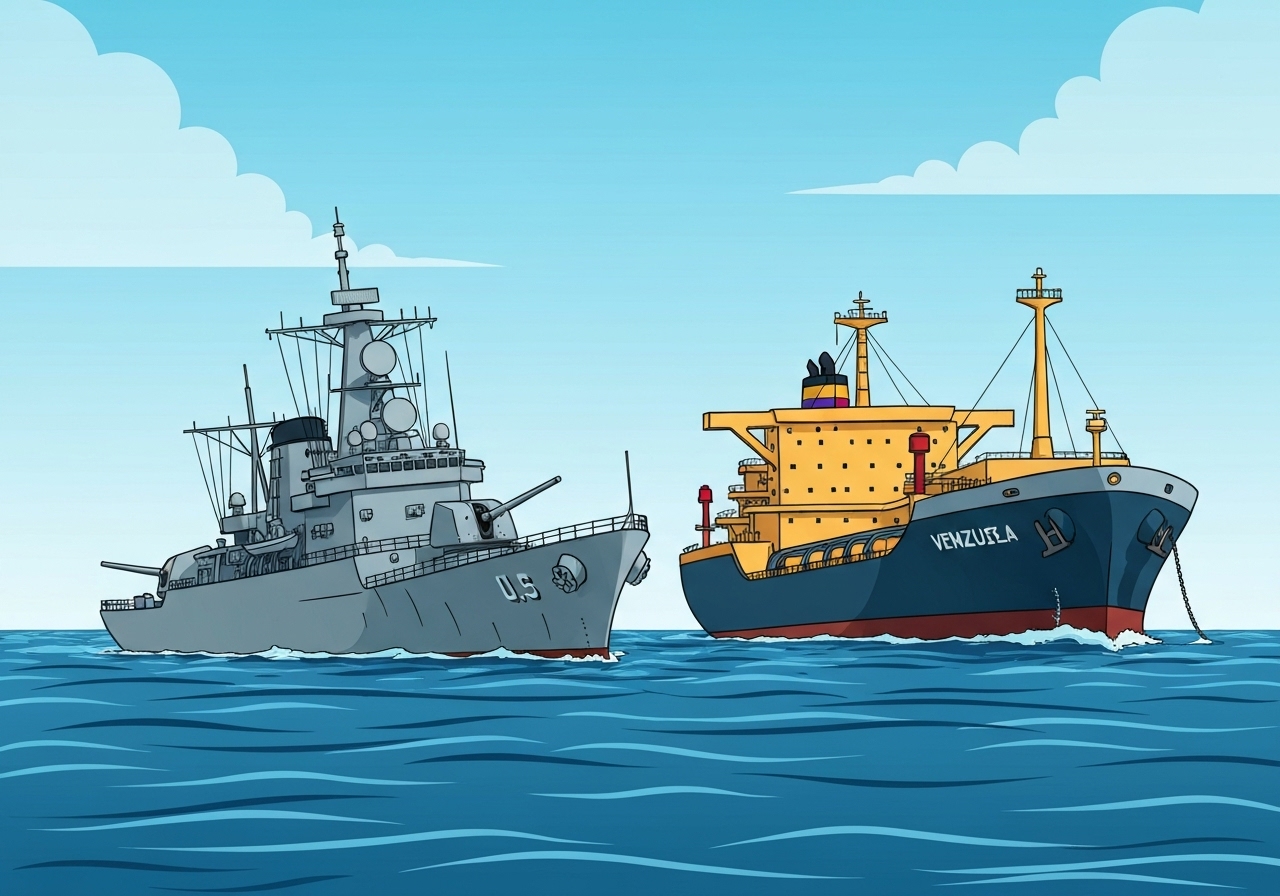
On December 10, 2025, U.S. authorities seized a large crude oil tanker, identified as the Skipper, just after it departed a Venezuelan port, prompting denunciations from Caracas and sharp remarks from President Donald Trump. The Coast Guard led a helicopter-supported boarding that sources say began about 6 a.m., and senior officials described involvement by FBI and Homeland Security investigators. President Trump told reporters he ‘assumes we are going to keep the oil,’ while Venezuela called the action ‘international piracy.’ The operation adds a new flashpoint to already elevated U.S.-Venezuelan tensions in the Caribbean.
Key takeaways
- The vessel is named the Skipper; U.S. sources say the seizure began about 6 a.m. on December 10, 2025, after the ship had left a Venezuelan port.
- U.S. officials say the boarding force included two helicopters, about 10 Coast Guard personnel, 10 Marines and special operations support.
- The operation launched from the aircraft carrier USS Gerald Ford, which arrived in the Caribbean last month as part of a broader U.S. military buildup.
- The Skipper was sanctioned by the U.S. Treasury in 2022 for alleged links to Iran-aligned networks and formerly sailed as Adisa; maritime records show an earlier name of The Toyo in 2005.
- Attorney General Pam Bondi posted video of the seizure and described involvement by the FBI, Homeland Security Investigations and the U.S. Coast Guard, with support she referred to as the ‘Department of War.’
- President Trump publicly characterized the tanker as ‘seized for a very good reason’ and said, when asked about the cargo, ‘Well we keep it, I guess.’
- The U.S. government has previously interdicted sanctioned tankers, but a fast-rope helicopter boarding at sea is an uncommon, high-risk tactic for such cases.
Background
Tensions between Washington and Caracas have deepened over the past decade as the U.S. has maintained sanctions on Venezuela’s oil sector and targeted shipping networks accused of evading those measures. The 2022 Treasury designation of the Skipper (then known as Adisa) forms part of a broader U.S. effort to disrupt maritime routes that officials say support sanctioned entities and foreign groups. Those sanctions have included vessel blacklisting, asset freezes and restrictions on parties that facilitate illicit shipments.
At the same time, the U.S. has expanded maritime interdiction and counter-narcotics operations in the Caribbean and eastern Pacific, citing threats from drug traffickers and illicit maritime networks. The deployment of the USS Gerald Ford to the region last month was described by U.S. officials as reinforcement to support ongoing missions, surveillance and rapid-response options. For legal and operational reasons, the U.S. Coast Guard typically leads seizures of vessels suspected of violating U.S. law or sanctions at sea.
Main event
U.S. officials said the boarding began in the early morning and involved a coordinated helicopter insertion followed by a boarding team securing the vessel. Sources familiar with the operation identified the ship as the Skipper and said it had only recently departed a Venezuelan port. Authorities described the Coast Guard’s Maritime Security and Response Team as a central component of the boarding force; that unit trains for fast-rope insertions and complex boardings at sea.
Attorney General Pam Bondi posted video excerpts of the operation and stated the vessel had been used to transport sanctioned oil from Venezuela and Iran, naming the FBI, Homeland Security Investigations and the Coast Guard as executing agencies and adding that the operation had ‘support from the Department of War’ in her post. U.S. officials clarified to reporters that the Coast Guard led the operation with Navy support and that the warrant was executed under U.S. legal authority for sanctions enforcement.
President Trump announced the seizure at a White House roundtable and emphasized the size of the vessel, calling it ‘very large’ and saying it was ‘seized for a very good reason.’ When pressed about the fate of the oil onboard, he said, ‘Well we keep it, I guess,’ and added he expected the U.S. to retain the cargo. The administration has not released a detailed legal memorandum explaining disposition of seized oil or the international-law rationale beyond references to sanctions enforcement.
Analysis & implications
Operationally, the boarding demonstrates a willingness by the U.S. to use high-risk maritime tactics to interdict vessels it deems in violation of sanctions. Fast-rope helicopter insertions at sea are practiced but infrequent for sanctions cases because of safety, sovereignty and escalation concerns. Using such a tactic signals to both maritime operators and foreign governments that interdiction authorities are prepared to act decisively.
Diplomatically, the seizure risks a sharp reaction from Venezuela’s government, which immediately denounced the action as theft and ‘international piracy.’ Caracas may pursue legal routes at international fora, lodge protests with regional organizations, or undertake reciprocal measures against U.S. interests in the region. Such responses could widen the confrontation, complicating channels for de-escalation.
Economically, control over oil cargoes raises questions about ownership and disposition under U.S. law versus international maritime law. If Washington retains custody, that could set a de facto precedent for how sanctioned commodities are treated, potentially accelerating evasive tactics by intermediaries or prompting third-party states to contest U.S. actions. The incident could also spur volatility in regional oil shipping routes and insurance costs for tankers operating near Venezuela.
Comparison & data
| Attribute | Detail |
|---|---|
| Vessel name | Skipper (sanctioned 2022; formerly Adisa; The Toyo in 2005) |
| Operation start time | About 6 a.m., December 10, 2025 |
| Boarding force | 2 helicopters, ~10 Coast Guard personnel, ~10 Marines, special operations support |
| Flagship in region | USS Gerald Ford (arrived in Caribbean last month) |
The table condenses the key operational facts reported by U.S. and media sources. The data underscore the concentrated, carrier-supported nature of the interdiction and the vessel’s prior sanctions history, which U.S. agencies cite as the legal basis for enforcement actions.
Reactions & quotes
‘We strongly denounce and repudiate what constitutes a shameless robbery and an act of international piracy,’ Venezuela’s government said, calling the seizure an attack on the nation’s natural wealth.
Venezuelan government statement
‘For multiple years, the oil tanker has been sanctioned by the United States due to its involvement in an illicit oil shipping network supporting foreign terrorist organizations,’ Attorney General Pam Bondi wrote alongside video of the seizure.
Attorney General Pam Bondi (social post)
‘As you probably know, we’ve just seized a tanker on the coast of Venezuela… Well we keep it, I guess. I assume we’re going to keep the oil,’ President Donald Trump said at a White House roundtable.
President Donald Trump (White House remarks)
Unconfirmed
- Whether U.S. authorities will permanently retain title to the oil cargo rather than hold it pending legal proceedings remains unclear and has not been documented in a public legal filing.
- Publicly available evidence linking the Skipper to Iran’s Islamic Revolutionary Guard Corps or Hezbollah rests primarily on the 2022 Treasury designation; the operational details and chain of custody underlying those assertions are not fully disclosed.
- Pam Bondi’s reference to ‘Department of War’ in her social post is atypical terminology; the exact nature and extent of Department of Defense involvement beyond Navy support has not been fully specified by officials.
Bottom line
The Dec. 10 seizure of the Skipper marks a significant escalation in U.S. enforcement of sanctions and in the operational tempo of interdictions near Venezuela. The use of carrier-based helicopters and a specialized Coast Guard boarding team signals an appetite in Washington to take riskier measures to interdict ships it alleges are part of illicit networks.
For Caracas, the move will be framed domestically and internationally as a hostile act and could harden positions on both sides, narrowing diplomatic avenues. Markets and maritime insurers will monitor follow-on steps closely, including legal actions over the vessel and cargo and any retaliatory measures by Venezuela or allied actors.
Sources
- CBS News (media report summarizing officials’ accounts)
- U.S. Coast Guard (official agency homepage; operational lead for maritime seizures)
- U.S. Department of the Treasury (official; sanctions and designation authority)
- Attorney General Pam Bondi (Twitter) (social post including video of the seizure)