
Lead
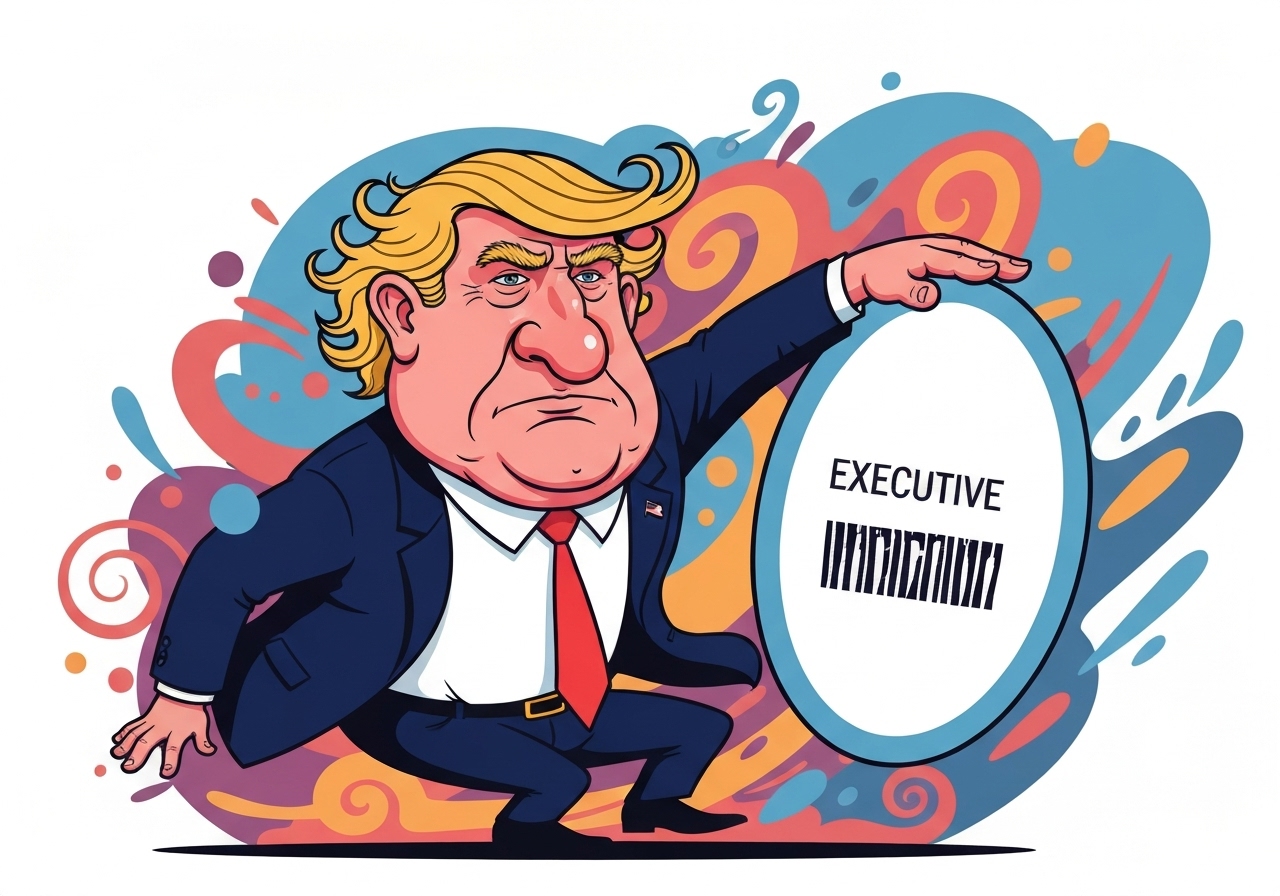
On Dec. 11, 2025 at the White House, President Donald Trump signed an executive order directing federal agencies to challenge state and local laws that regulate artificial intelligence. The order instructs the Justice Department to create an “AI Litigation Task Force,” asks the Federal Trade Commission and Federal Communications Commission to coordinate with DOJ, and tasks Commerce Secretary Howard Lutnick with studying whether federal rural broadband funds can be withheld from states with restrictive AI laws. Legal scholars and tech policy researchers say the move is likely to face lawsuits and that Congress, not an executive order, is the usual route to preempt state law.
Key Takeaways
- The Dec. 11, 2025 executive order directs DOJ to form an “AI Litigation Task Force” to sue states over AI-related laws and directs FTC and FCC to implement White House AI priorities in coordination with DOJ.
- The order asks Commerce Secretary Howard Lutnick to investigate using federal rural broadband funding as leverage against states with “unfavorable” AI rules.
- Administration adviser David Sacks said the White House will not challenge state laws aimed at child safety but will target what it deems the most “onerous” regulations.
- Dozens of states have already enacted AI-related laws, including bans on nonconsensual AI-generated nude images, disclosure mandates for AI use, algorithmic discrimination checks, and whistleblower protections.
- Legal experts cited in reporting say the order is almost certain to be litigated and that many of its preemption theories would likely require congressional authorization.
- The order has triggered criticism from across the political spectrum, including some GOP governors and conservative child-safety groups that say the administration is sidelining stakeholders.
- Observers warn the policy could have a chilling effect on state legislatures, creating legal uncertainty that benefits large technology companies.
Background
Congress has not yet passed comprehensive national AI regulation, a gap that has prompted states to move on their own. Over the last two years, numerous state legislatures have enacted laws responding to different AI risks: privacy and image-based harms, requirements for agencies and companies to disclose AI use, measures to detect algorithmic bias, and protections for whistleblowers who expose faulty or dangerous systems.
The Biden and Trump administrations have taken different tones on AI regulation, but both face pressure to balance innovation with safety and competitiveness. The current administration frames lighter regulation as necessary to preserve U.S. competitiveness with China; at the same time, domestic debates over child safety and bias in algorithms have produced bipartisan support for some state rules.
Main Event
At the signing ceremony, Sen. Ted Cruz (R-Tex.) stood alongside President Trump and Commerce Secretary Howard Lutnick. The text of the order directs the Justice Department to assemble a litigation unit focused on challenging state and local AI laws the White House considers “onerous,” and instructs the FTC and FCC to work with DOJ to carry out the White House’s AI action plan.
The order also commissions Lutnick to study whether the Commerce Department can condition certain federal funds — specifically rural broadband grants — on states refraining from passing particular AI rules. Administration adviser David Sacks, a venture capitalist tapped as an AI advisor, said publicly the administration would not mount challenges to state laws aimed at protecting children, but would target other regulations it views as harmful to industry competitiveness.
President Trump framed the move as part of a broader economic and geopolitical strategy, saying, “We have to be unified. China is unified because they have one vote, that’s President Xi. He says do it, and that’s the end of that.” The White House simultaneously directed Sacks to work with Congress to pursue statutory solutions to AI governance.
Analysis & Implications
Legal scholars and public-interest lawyers say the executive order raises substantial constitutional and statutory questions. Preemption of state law typically requires either a clear congressional mandate or a preemption theory grounded in the Constitution; experts quoted by reporters argue an administration cannot broadly displace state regulation solely by executive fiat. John Bergmayer, legal director at Public Knowledge, told reporters the order advances theories that are unlikely to survive judicial scrutiny without congressional backing.
Beyond immediate legal risk, the order has political implications for federalism and party unity. Several Republican governors publicly opposed the White House’s apparent effort to block state protections, illustrating tension between a White House favoring industry leeway and state leaders focused on local priorities such as child safety. Conservative child-safety groups also criticized the move as excluding key stakeholders from policy design.
For industry, the tactic aims to reduce a patchwork of state obligations that companies say increases compliance costs and fragments markets. But analysts warn that aggressive federal action that appears to benefit large tech firms could fuel backlash and accelerate state-level defensive measures or new congressional proposals to clarify preemption and standards.
Comparison & Data
| Policy Area | Typical State Action |
|---|---|
| Image-based harms | Bans on creating nonconsensual nude images using AI |
| Transparency | Requirements for businesses and agencies to disclose AI use |
| Algorithmic fairness | Mandated checks for discrimination in automated decision systems |
| Whistleblower protections | Safeguards for employees who report unsafe or deceptive AI practices |
These categories reflect the most common state-level responses reported by national news outlets and policy trackers. While states vary in scope and enforcement, the proliferation of statutes has been a central rationale cited by the White House for seeking national coordination.
Reactions & Quotes
Critics warned that the order could chill state lawmaking and harm local efforts to protect residents. Amy Adam Billen of Encode, a child-safety nonprofit, told reporters the order’s legal threats may deter states from writing protective rules even if courts later reject federal overreach.
“Even if everything is overturned in the executive order, the chilling effect on states’ willingness to protect their residents is going to be huge because they’re all now going to fear getting attacked directly by the Trump administration,”
Adam Billen, Vice President, Encode
Conservative family-policy groups also expressed disappointment that they were not more centrally included in the administration’s consultative process.
“This is a huge lost opportunity by the Trump administration to lead the Republican Party into a broadly consultative process,”
Michael Toscano, Institute for Family Studies (conservative think tank)
Administration supporters argued that national consistency is needed to keep the U.S. competitive with China, a rationale echoed in the president’s remarks at the signing.
“Kid safety, we’re going to protect. We’re not pushing back on that, but we’re going to push back on the most onerous examples of state regulations,”
David Sacks, White House AI adviser
Unconfirmed
- It remains unproven whether DOJ will formally file lawsuits against specific states; the order establishes authority but does not list immediate targets.
- The legal viability of conditioning rural broadband funds on state AI laws is uncertain and would likely face statutory and constitutional challenges.
- David Sacks’s contention that interstate commerce power alone will permit broad federal override of state AI laws has not been tested in court in this context.
Bottom Line
The Dec. 11, 2025 executive order is a high-stakes attempt by the White House to create national uniformity in AI governance by pressuring states and coordinating federal agencies. While it signals the administration’s preference for industry-friendly rules and centralized enforcement, it raises substantial legal and political hurdles that are likely to produce litigation and deep pushback from state officials and advocacy groups.
If courts reject the administration’s preemption strategies, the principal near-term effect may still be a chilling one: states may pause or narrow legislation to avoid legal fights, and companies may use the ensuing uncertainty to delay compliance or expand deployment. Ultimately, durable nationwide AI rules are most likely to come from Congress; the order is a tactical move that could accelerate, complicate or polarize that longer legislative process.