
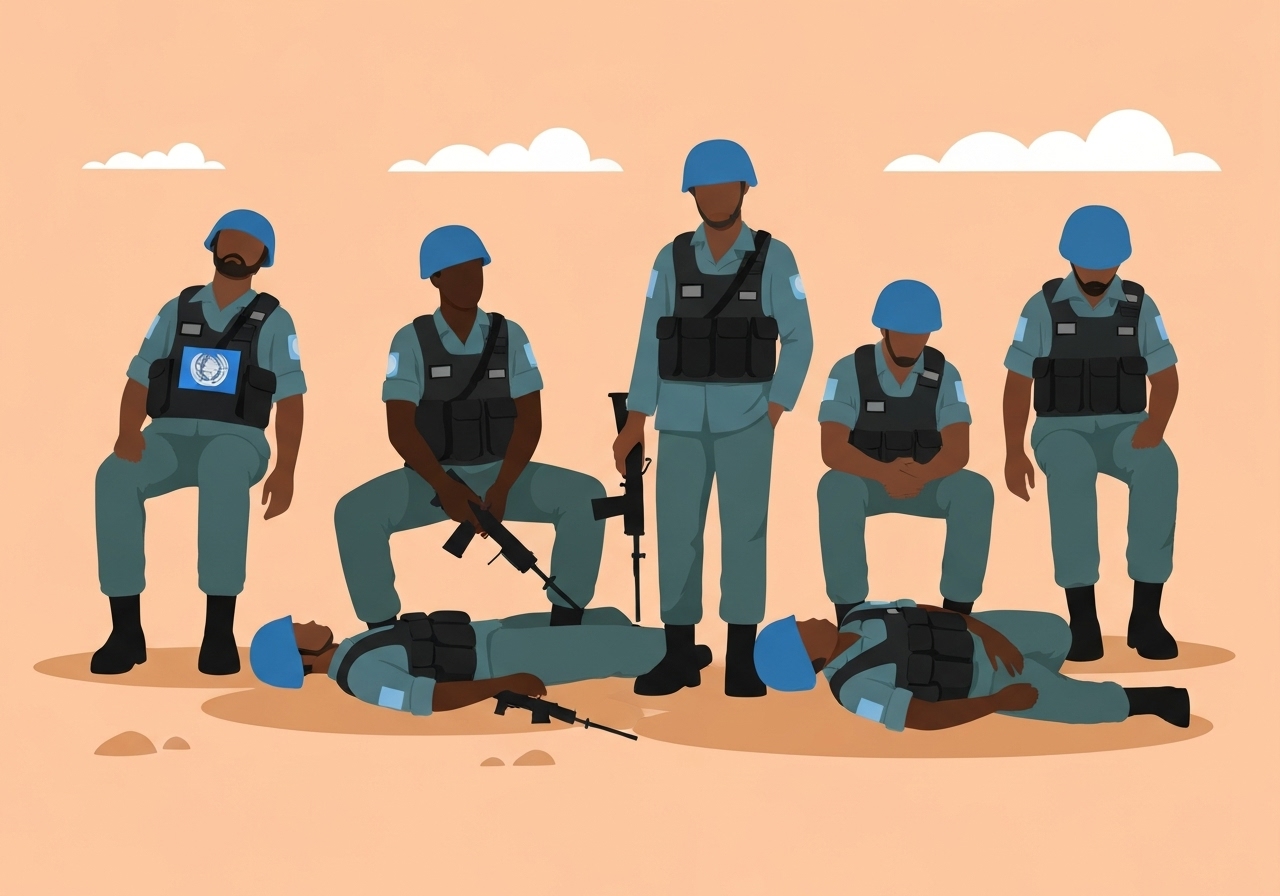
On Dec. 13, 2025, six Bangladeshi U.N. peacekeepers were killed when a drone struck a United Nations base in Kadugli, the capital of South Kordofan, according to U.N. officials. The attack, which also wounded seven peacekeepers and set fire to a warehouse, is the deadliest single incident for U.N. personnel in Sudan since the country’s civil war began in 2023. The U.N. and Bangladesh condemned the strike and called for an independent inquiry, while Sudan’s military blamed the rival Rapid Support Forces (R.S.F.). The incident intensified already high tensions across the main battleground in southern Kordofan.
Key Takeaways
- Six Bangladeshi U.N. peacekeepers were killed on Dec. 13, 2025, in a drone strike on the U.N. base in Kadugli, South Kordofan.
- Seven additional Bangladeshi peacekeepers were reported wounded and a base warehouse was torched in the same attack.
- The U.N. mission in South Kordofan has been deployed since 2011; this is its deadliest single episode in the current civil war.
- U.N. Secretary‑General António Guterres condemned the attack, warning such assaults may constitute war crimes.
- Sudan’s military accused the Rapid Support Forces of firing three missiles into the base; the U.N. has not publicly assigned responsibility.
- Footage circulated online showing heavy smoke was identified by analysts as coming from the Kadugli compound.
- Bangladesh, a major contributor to U.N. peacekeeping, issued a strong condemnation and called for accountability.
Background
Sudan has been engulfed in a large‑scale conflict between the Sudanese Armed Forces and the paramilitary Rapid Support Forces since fighting erupted in April 2023. The rivalry has produced shifting front lines across key regions, including South Kordofan, where local control and access routes have strategic importance. The U.N. peacekeeping presence in the area dates to 2011, with mandates focused on civilian protection, monitoring ceasefires and supporting humanitarian access amid recurring violence. Bangladesh has historically been one of the largest troop contributors to U.N. operations and has deployed sizeable contingents to Sudan under those mandates.
Confrontations in South Kordofan have repeatedly threatened humanitarian operations, displacing civilians and disrupting aid deliveries. Both parties to the conflict have been accused in past incidents of endangering humanitarian workers and violating protections for noncombatants. The escalation in December 2025 follows weeks of intensified clashes around Kadugli, where local infrastructure and markets have already borne heavy damage. International actors have repeatedly warned that continued attacks on protected sites would raise legal and diplomatic repercussions.
Main Event
According to the U.N., a drone strike hit the U.N. compound in Kadugli on Dec. 13, killing six Bangladeshi peacekeepers and wounding seven others. U.N. spokespeople reported that the strike also ignited a warehouse on the base, contributing to the scale of the damage. Video and imagery circulating on social media showed large plumes of black smoke and damage consistent with a strike on the compound, which military analysts subsequently identified as the Kadugli U.N. site.
Sudan’s armed forces issued a statement saying the Rapid Support Forces had fired three missiles at the base; the R.S.F. did not immediately issue a public response. The U.N. mission, which has staff and facilities in the compound, confirmed casualties and said it was investigating the circumstances. Local medical units and humanitarian responders were reported mobilizing to treat the wounded and assess the site after the attack.
Bangladesh’s government issued a formal condemnation and demanded a full investigation into the deaths of its nationals. International officials, including the U.N. secretary‑general, called for restraint and stressed that attacks on peacekeepers undermine humanitarian operations and are prohibited under international law. The incident prompted urgent diplomatic outreach by regional and global actors seeking clarity and accountability.
Analysis & Implications
The killing of six peacekeepers marks a stark escalation with operational and political consequences. For the U.N., the attack undermines the safety of its field personnel and could force a reassessment of force protection measures, troop deployments and mission posture across Sudan. Enhanced security postures may impede humanitarian access at a time when civilians in contested areas require urgent assistance.
Legally, attacks on peacekeepers are proscribed under international law and may amount to war crimes if they are deliberate or indiscriminate. The U.N. secretary‑general’s statement that such attacks “may constitute war crimes” signals intent to pursue accountability mechanisms, but proving responsibility on the ground—where evidence can be scarce and access restricted—will be challenging. An independent, transparent investigation will be central to any criminal or diplomatic follow‑up.
Politically, the incident risks intensifying international pressure on both Sudanese parties and could harden positions among regional backers. Bangladesh may seek reparations, enhanced protective measures for its contingents, or reconsideration of its contribution if risks remain high. For the warring sides, further loss of neutral actors could reduce external mediation options and increase the likelihood of unrestrained hostilities in populated areas.
Comparison & Data
| Item | Detail |
|---|---|
| Date | Dec. 13, 2025 |
| Location | Kadugli, South Kordofan |
| Fatalities | 6 (Bangladeshi peacekeepers) |
| Wounded | 7 (Bangladeshi peacekeepers) |
| Mission | U.N. peacekeeping presence in the area since 2011 |
The table summarizes the confirmed immediate figures released by U.N. officials. While this event is described as the most lethal single incident for U.N. personnel in Sudan’s current civil war, public records of prior peacekeeper casualties in the 2023–25 conflict vary in scope and do not show a larger single‑incident death toll attributed to attacks on U.N. facilities. Analysts caution against drawing firm trend lines from a single episode, but the scale of this strike is significant relative to other reported incidents involving international personnel.
Reactions & Quotes
“Attacks against U.N. peacekeepers like this one are unjustifiable and may constitute war crimes.”
António Guterres, U.N. Secretary‑General (statement on X)
“The R.S.F. fired three missiles into the base, wounding seven and setting a warehouse alight,”
Sudanese Armed Forces (official statement)
“Bangladesh strongly condemns this attack and seeks a full investigation into the deaths of our personnel,”
Government of Bangladesh (foreign ministry statement)
Unconfirmed
- Attribution of the drone strike: the U.N. had not publicly assigned definitive responsibility at the time of reporting.
- Exact weapon type and launch point: open‑source footage and initial analysis identify the compound but do not conclusively trace the strike to a specific launch location or platform.
Bottom Line
The Dec. 13 strike that killed six Bangladeshi U.N. peacekeepers in Kadugli represents a serious escalation with immediate humanitarian and legal ramifications. It raises urgent questions about the safety of neutral international personnel in Sudan and the feasibility of maintaining current peacekeeping and aid operations in frontline zones.
How governments and the U.N. respond—through protection measures, independent investigations and diplomatic pressure—will shape whether the attack prompts broader restraints or contributes to further deterioration. For civilians in South Kordofan, the most immediate consequence is likely deeper disruption of relief efforts at a time of growing need.