
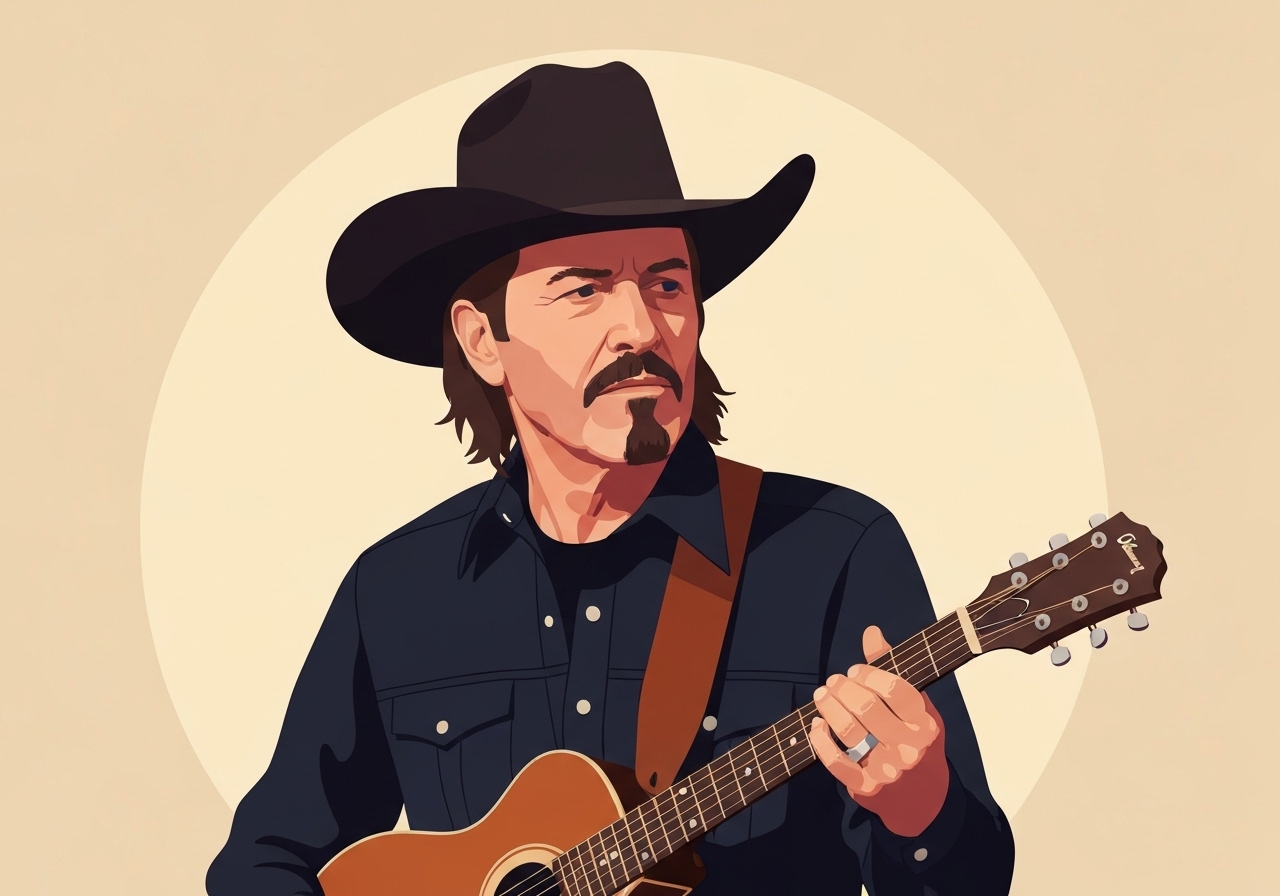
Joe Ely, the Texas-born singer-songwriter whose restless touring and genre-spanning songs helped define modern Americana, died on Dec. 15, 2025, at his home in Taos, New Mexico. He was 78. His family said the immediate cause was pneumonia and that he had been diagnosed with Lewy body dementia and Parkinson’s disease. Ely’s work — mixing country, rock, Tex-Mex and blues — earned him the nickname “Lord of the Highway” and a lasting influence on alt-country and roots music.
Key Takeaways
- Joe Ely died on Dec. 15, 2025, at age 78 at his home in Taos, New Mexico; the family cited pneumonia as the cause and disclosed prior diagnoses of Lewy body dementia and Parkinson’s disease.
- Born and raised in West Texas, Ely drew on country, rock, Western swing and honky-tonk to craft a distinctive, road-focused songwriting voice that emerged in the 1970s.
- He was widely regarded as an early architect of Americana and alt-country; his peers included Jimmie Dale Gilmore, Butch Hancock and Delbert McClinton, with whom he shared audiences and influence across the U.S. and Europe.
- Ely earned the sobriquet “Lord of the Highway” for songs that chronicled travel, small-town life and working-class experience, and for an unapologetic, relentless touring schedule that built a devoted following.
- Critics and musicians credited him with blending musical traditions — from Buddy Holly-style rockabilly to Tex-Mex accordion textures — at a time when the Nashville mainstream favored polished commercial production.
Background
Joe Ely hailed from the broad plains and highways of West Texas, a region that produced a string of storied songwriters and performers. His formative influences ranged from country legends such as Gene Autry, Bob Wills and Ernest Tubb to rock pioneers like Elvis Presley, Jerry Lee Lewis and Buddy Holly, giving his music a hybrid sound that resisted tidy categorization. In the mid-1970s, a generation of Texas musicians began reacting against the slickness of the Nashville Sound; Ely and several contemporaries favored a rawer, roots-oriented approach that later coalesced into what critics called Americana or alt-country. That movement found audiences both domestically and abroad, where listeners were receptive to authentic storytelling and cross-genre experimentation.
Alongside collaborators and peers, Ely toured extensively, often performing long sets and mixing standards with originals that evoked open roads and working lives. The itinerant performance model was as much a part of his identity as his songwriting: live shows were central to how his reputation and influence spread. Over decades, Ely recorded and released albums that documented his evolving blend of styles while keeping recurring themes of travel, longing and ordinary lives at the center of his work. His role in that scene both reflected and helped shape a broader roots revival in American music.
Main Event
On Dec. 15, 2025, Ely died at his home in Taos, New Mexico, aged 78, his family announced. The immediate cause of death was reported as pneumonia; the family also disclosed earlier diagnoses of Lewy body dementia and Parkinson’s disease, conditions that can severely affect mobility and cognition. News of his passing prompted tributes from musicians, critics and fans who noted both his songwriting and his influence as a live performer.
Ely’s career was marked by an insistence on musical breadth. He mixed honky-tonk, rockabilly, blues and Tex-Mex elements in performances that often blurred genre boundaries, making him a natural fit for clubs and festivals where audiences sought roots-based authenticity. In the 1970s and 1980s he toured widely, building a reputation in the United States and Europe that outstripped his chart success. That touring ethos helped him sustain a long career even as commercial tastes shifted in the decades after his commercial debut.
Peers and collaborators remember him not only for songs but for the way he wrote about travel and small communities — the people, motels and highways that populated his lyrics. Those recurring images became a shorthand for a certain strand of American songwriting that prized narrative detail and a sense of place over production gloss. In interviews and profiles, Ely often framed his work around the road: as a setting, a metaphor and a livelihood.
Analysis & Implications
Ely’s death closes a chapter in the history of Americana at a time when the genre has entered the mainstream and diversified in multiple directions. His blend of styles anticipated later developments in roots music by refusing to privilege a single tradition; that pluralism helped make Americana a productive home for artists who draw from multiple regional and historical sources. As a result, Ely’s legacy will be judged both by his own recordings and by the way his approach opened space for others to experiment with hybrid sounds.
Economically and culturally, Ely’s model — lengthy touring, a focus on live performance and cultivating dedicated audiences rather than pursuing radio hits — offers a template for artists in the streaming era. While recorded-music revenue has shifted away from unit sales, Ely’s career underscores how an emphasis on touring and on building direct relationships with listeners can sustain an artist’s livelihood and influence. That lesson remains relevant for contemporary musicians navigating a fragmented marketplace.
Politically and socially, Ely’s work reflected a strand of American life often underrepresented in mainstream country radio: working-class perspectives, regional detail and the complexities of movement and displacement. His songs did not propose solutions, but they preserved voices and scenes that contribute to a fuller understanding of American experience. Internationally, his acceptance in Europe demonstrates how regionally specific music can find universal resonance when it emphasizes narrative and emotional clarity.
Comparison & Data
| Musical Element | Ely’s Use | Representative Peers |
|---|---|---|
| Country & Honky-Tonk | Story songs, dancehall rhythms | Butch Hancock, Jimmie Dale Gilmore |
| Rockabilly & Early Rock | Driving backbeat, guitar leads | Buddy Holly influences |
| Tex-Mex | Accordion and border rhythms | Regional West Texas players |
The table above sketches how Ely combined discrete musical threads into a cohesive live and recorded style. Though Ely never dominated mainstream country charts, his consistent touring and cross-genre appeal produced sustained critical recognition and a lasting influence on musicians who followed. His career arc illustrates that cultural impact does not always align with commercial peak metrics; influence often accrues through sustained grassroots engagement.
Reactions & Quotes
“He died at his home in Taos on Dec. 15, 2025,” the family statement reported, confirming pneumonia as the immediate cause.
Family statement (reported)
“A defining voice in early Americana whose songs mapped lives on the move,” wrote observers in industry coverage, noting his role in the 1970s roots revival.
Music coverage (reported)
Fans and fellow performers posted memories of long tours, late-night shows and the way Ely’s songs conjured wide skies and small-town interiors.
Public tributes (reported)
Unconfirmed
- Specific timelines for when Ely received Lewy body dementia and Parkinson’s diagnoses have not been published by the family and remain unconfirmed.
- Reports of Ely’s final public performance and its date vary online; no comprehensive, independently verified final concert listing has been confirmed in the sources cited here.
Bottom Line
Joe Ely’s death marks the loss of a musician whose work helped map a strand of American music that values storytelling, regional texture and stylistic openness. He did not chase mainstream formulas; instead, he built an audience through relentless touring and an unmistakable voice that blended Texas-born traditions with rock and blues energy. That approach helped shape what later became known broadly as Americana.
For artists and fans, Ely’s career offers both a model and a reminder: influence can be accrued through commitment to place, to the road, and to musical curiosity. In the months and years ahead, his recordings and the testimony of peers and listeners will remain primary sources for assessing his impact on American roots music.
Sources
- The New York Times — news outlet (obituary, reported family statement and profile)