
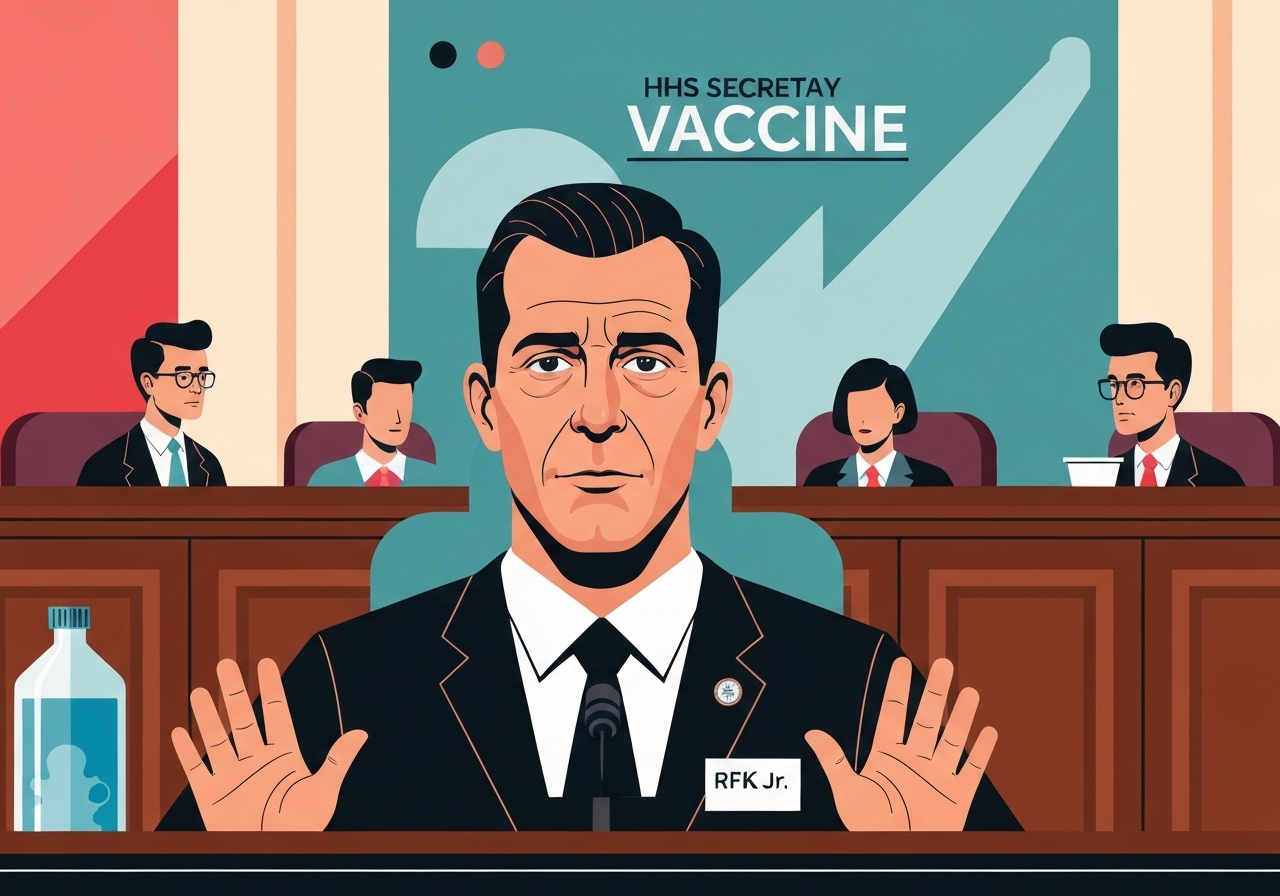
Lead: On September 4, 2025, U.S. Health and Human Services Secretary Robert F. Kennedy Jr. testified before the Senate Finance Committee in Washington, D.C., reiterating assertions that mRNA vaccines pose serious risks while defending recent changes to federal vaccine policy that have affected CDC advisory bodies and funding for mRNA shot development.
Key Takeaways
- Kennedy backed a new Advisory Committee on Immunization Practices member’s claim that mRNA vaccines pose dangerous risks.
- The HHS secretary canceled funding for mRNA shot development and revised vaccine recommendations for some groups.
- Kennedy removed all 17 prior ACIP members and appointed new members, including critics of vaccines.
- CDC leadership was recently shaken: Director Susan Monarez was fired and four senior officials resigned amid concerns about politicization.
- Extensive research shows mRNA Covid vaccines from Pfizer and Moderna are generally safe and effective; serious adverse events are rare.
- An analysis cited in coverage estimates Covid vaccines saved more than 2 million lives worldwide between 2020 and October 2024.
Verified Facts
On September 4, 2025, Secretary Kennedy appeared before the Senate Finance Committee as lawmakers reviewed his changes to immunization policy and management of federal health agencies. Senators questioned his appointments, budget decisions, and public statements about vaccine safety and effectiveness.
Kennedy confirmed support for comments attributed to Dr. Retsef Levi, a newly appointed member of the Centers for Disease Control and Prevention’s Advisory Committee on Immunization Practices, who has been reported as saying evidence is mounting that mRNA vaccines cause serious harm. Kennedy reportedly said he agreed with that assessment during the hearing.
In recent weeks HHS changed its approach to Covid vaccination guidance and funding. Reported policy moves include canceling funding streams aimed at mRNA shot development and replacing all 17 previous ACIP members with a new roster. Separately, the White House removed CDC Director Susan Monarez and four senior CDC officials resigned shortly afterward, citing concerns about politicization and threats to public health.
Context & Impact
The Advisory Committee on Immunization Practices advises the CDC on vaccine recommendations and insurance coverage decisions; membership and guidance from ACIP materially affect vaccine access and public messaging. Replacing committee members and altering federal vaccine guidance can change who is recommended to receive specific vaccines and how insurers cover them.
Public trust in vaccines and federal health agencies can be sensitive to shifts in leadership and messaging. Experts and public-health officials warn that high-level officials repeating claims that contradict large bodies of evidence risk increasing confusion and reducing vaccination uptake, particularly among groups already hesitant.
Policy shifts that remove funding for mRNA development may influence future vaccine innovation and preparedness, including the speed at which new mRNA-based vaccines for emerging threats could be developed and deployed.
We were told again and again the vaccines would prevent transmission, they prevent infection. It wasn’t true. They knew it from the start,’ and ‘I agree with it’ were phrases reported from the hearing.
Robert F. Kennedy Jr., HHS Secretary
‘A deliberate effort to weaken America’s public-health system and vaccine protections,’ an opinion piece said, criticizing the recent policy changes.
Susan Monarez, former CDC Director
Unconfirmed or Disputed Claims
- Claim that mRNA vaccines cause widespread ‘serious harm, including death, especially among young people’ is not supported by the totality of peer-reviewed evidence and surveillance data; this remains unconfirmed and contradicted by multiple studies.
- Statement that vaccine developers and regulators knew from the start that vaccines would not prevent transmission is a characterization disputed by public-health analyses showing vaccines reduced infection and transmission to varying degrees, especially before variant evolution; the precise intent or knowledge of all actors is not independently verified here.
Bottom Line
Secretary Kennedy’s Senate testimony deepened an ongoing policy and public debate by endorsing contested claims about mRNA vaccine risks while implementing changes that affect federal vaccine advisory structures and funding. Those shifts have immediate operational consequences for vaccine guidance and longer-term implications for public confidence and vaccine innovation.
Moving forward, independent data from public-health agencies and peer-reviewed studies will be central to evaluating the safety and impact of vaccines and to informing policy. Lawmakers have signaled continued oversight, and scientific bodies will likely continue to publish analyses relevant to the disputed assertions.
Hey team readtrends.com,
I would like to discuss SEO!
I can help your website to get on first page of Google and increase the number of leads and sales you are getting from your website.
May I send you a quote & price list?
Bests Regards,
Ankit
Best AI SEO Company
Accounts Manager
http://www.letsgetoptimize.com
Phone No: +1 (949) 508-0277