
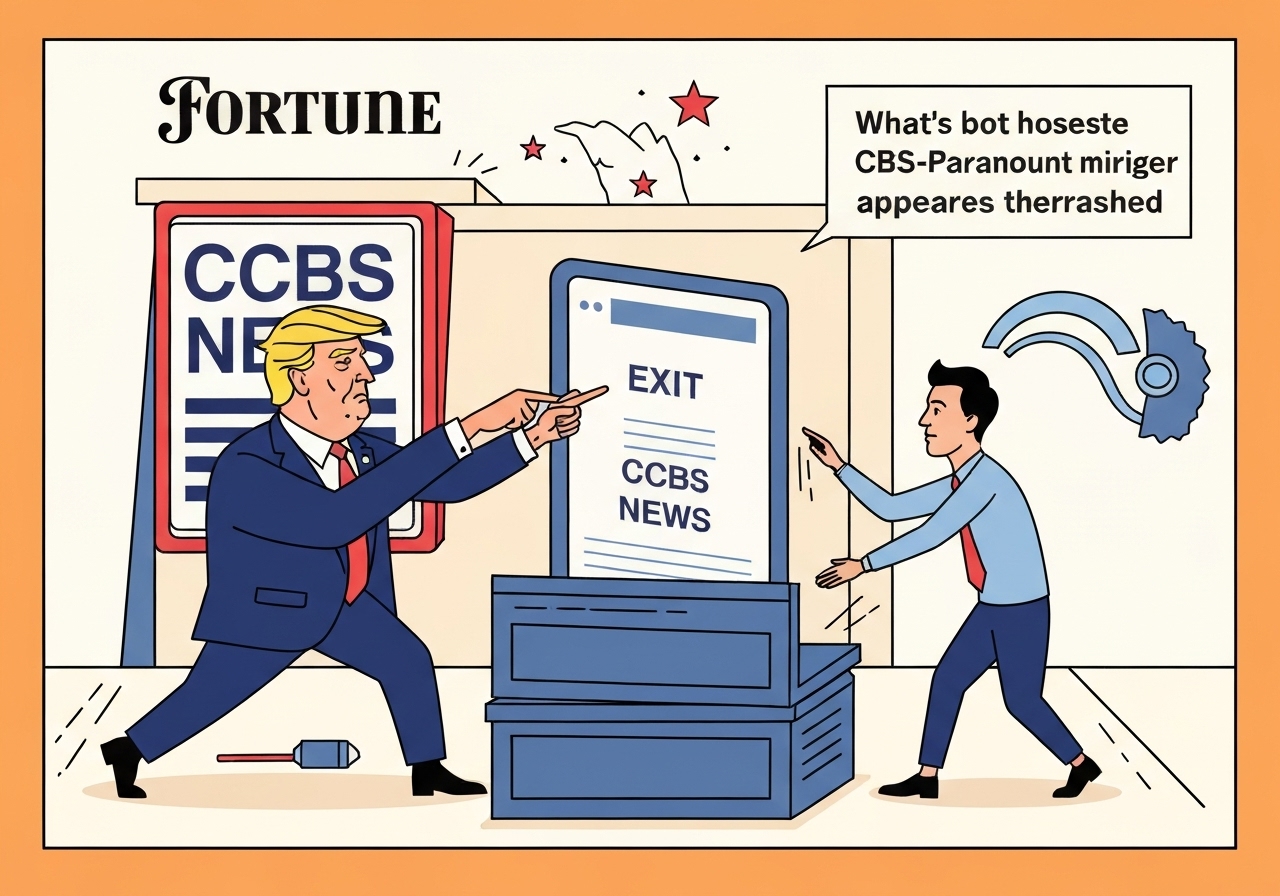
Lead: On Dec. 16, 2025, Paramount’s hostile offer for Warner Bros. appeared to unravel after President Donald Trump publicly attacked CBS and Jared Kushner’s Affinity Partners withdrew from the deal. The pullout followed Trump’s complaint that CBS’s 60 Minutes treated him worse since its change in ownership, and Affinity cited a shift in “investment dynamics”. Reports then circulated that Warner Bros. planned to reject Paramount’s $77.9 billion bid over financing concerns, leaving consolidation plans in doubt.
Key Takeaways
- Paramount submitted a $77.9 billion hostile offer for Warner Bros. Discovery, following Netflix’s roughly $72 billion bid one working day earlier.
- Jared Kushner’s Affinity Partners withdrew its roughly $200 million equity commitment hours after the president’s public criticism of CBS.
- President Trump said CBS’s 60 Minutes had treated him “far worse” since the network changed ownership, a remark that industry observers linked to the bid’s perceived political advantage.
- Industry reports indicate Warner Bros. planned to reject Paramount’s offer, citing financing concerns rather than a strategic preference for Netflix.
- Paramount CEO David Ellison’s family ties to Trump and CBS editorial hires such as Bari Weiss had been read as sending a political signal prior to the reversal.
- The sequence—public criticism, investor withdrawal, and reported board resistance—illustrates how political statements can affect high‑stakes M&A dynamics within hours.
Background
The takeover effort began in earnest when Netflix proposed roughly $72 billion for Warner Bros. Discovery and its streaming asset HBO Max. Paramount responded the next business day with a $77.9 billion hostile bid for the entire company, escalating a rare bidding war among major media owners. The size and speed of the offers reflected mounting pressure in the streaming and content markets to consolidate scale, distribution, and intellectual property.
Paramount’s bid arrived amid public scrutiny of its leadership and perceived political ties. CEO David Ellison has publicly noted connections to President Trump, and his father Larry Ellison is a longtime Trump donor. Under Ellison’s ownership, CBS News made senior editorial hires—including Bari Weiss of The Free Press—that some in Washington and Hollywood read as gestures toward critics of so‑called “woke” media culture.
Affinity Partners’ announced equity commitment—reported at about $200 million—was viewed by analysts as both financing and a political signal given Jared Kushner’s relationship to the president. That combination of money and perceived access had been cited as a potential advantage in smoothing regulatory or political obstacles to a hostile transaction.
Main Event
The turning point came when President Trump posted public complaints about CBS, saying 60 Minutes had treated him worse since the network’s change in ownership. His comments circulated widely within hours. Industry sources say the post altered assumptions about the bid’s implicit political cover, narrowing an advantage that had been factored into Paramount’s calculus.
Shortly after the president’s remarks, Affinity Partners announced it was exiting the Warner bid, attributing the move to a change in “investment dynamics” amid competition from Netflix. The firm’s withdrawal removed a high‑profile financial backer and a politically resonant participant in the group backing Paramount’s hostile approach.
Within the same day, multiple reports said Warner Bros. planned to reject Paramount’s offer on the grounds of financing and related execution risk rather than immediate strategic preference for another bidder. Those reports signaled that the hostile bid might lack the stable funding and board support typically needed to succeed against entrenched management.
Analysis & Implications
The episode highlights how political statements from high‑profile actors can reshape M&A narratives almost instantaneously. What had been perceived as a tacit political cushion for Paramount collapsed once the president publicly distanced himself and criticized a key network division tied to the buyer. In dealmaking, perception can be as consequential as capital—especially for hostile approaches that already face management resistance and regulatory scrutiny.
From a financing perspective, the loss of Affinity’s $200 million commitment raised immediate questions about Paramount’s ability to present a fully underwritten bid. Even large strategic acquirers rely on signaling—bringing in known financial partners can reassure boards and institutional investors; losing one does the opposite, increasing perceived execution risk and potentially scaring off other backers.
Regulatory and antitrust considerations are also in play. A high‑profile political connection does not guarantee favorable regulatory outcomes, but perceived proximity to the White House can influence market expectations about enforcement posture. Once that perceived proximity is publicly eroded, opponents of the deal—whether regulators, shareholders, or rival bidders—may feel emboldened to resist.
Finally, the public sequence may affect future bids across media: buyers and their advisors are likely to reassess the political signaling embedded in financing structures and public communications. Hostile bids that depend on thin margins of political or market advantage may be particularly vulnerable to rapid reversal.
Comparison & Data
| Bidder | Target | Proposed Value (approx.) |
|---|---|---|
| Paramount | Warner Bros. Discovery (whole company) | $77.9 billion |
| Netflix | Warner Bros. / HBO Max (streaming + studio) | $72 billion |
The two offers were close in scale but differed in timing and structure. Paramount’s $77.9 billion hostile offer outbid Netflix’s reported $72 billion proposal by about $5.9 billion, yet sources indicate financing commitments and political dynamics played an outsized role in how Warner’s board and advisors evaluated those bids. The withdrawal of a key investor compressed certainty around Paramount’s financing package, a common decisive factor in board deliberations.
Reactions & Quotes
Industry and public reactions arrived quickly, reflecting the interplay of politics and finance.
“For those people that think I am close with the new owners of CBS, please understand that 60 Minutes has treated me far worse since the so‑called ‘takeover,’ than they have ever treated me before. If they are friends, I’d hate to see my enemies!”
President Donald Trump (public statement)
Trump’s comment was widely circulated and interpreted by market participants as a signal that any informal political goodwill toward Paramount had diminished.
“We are exiting the deal due to a change in investment dynamics amid competitive interest,”
Affinity Partners (firm statement)
Affinity’s terse explanation removed a prominent backer from the financing mix, prompting analysts to downgrade the probability that a hostile bid could be completed on proposed terms.
Unconfirmed
- Reports that Warner Bros. had formally decided to reject Paramount’s bid were circulating but not confirmed by an official Warner filing at the time of reporting.
- The extent to which David Ellison’s or Bari Weiss’s moves materially influenced regulatory review remains a matter of interpretation rather than settled fact.
- The claim that Kushner’s stake functioned primarily as a political signal—rather than a conventional financial commitment—has been advanced by analysts but is not established in primary documents.
Bottom Line
Within hours, a public presidential remark, a major investor withdrawal, and reports of board resistance combined to cast doubt on Paramount’s hostile $77.9 billion bid for Warner Bros. The episode underscores how quickly political communications can alter the calculus of high‑value corporate takeovers, especially in sectors where public policy and reputation matter.
For market participants, the near‑term focus will be whether Paramount can rebuild financing certainty or whether Warner opts to pursue alternatives, including Netflix’s earlier proposal. For observers of media consolidation, the incident is a reminder that deals of this size are contested terrains where capital, governance, and politics intersect—and where momentum can shift in a single news cycle.
Sources
- Fortune — media report summarizing chronology and statements