
Lead
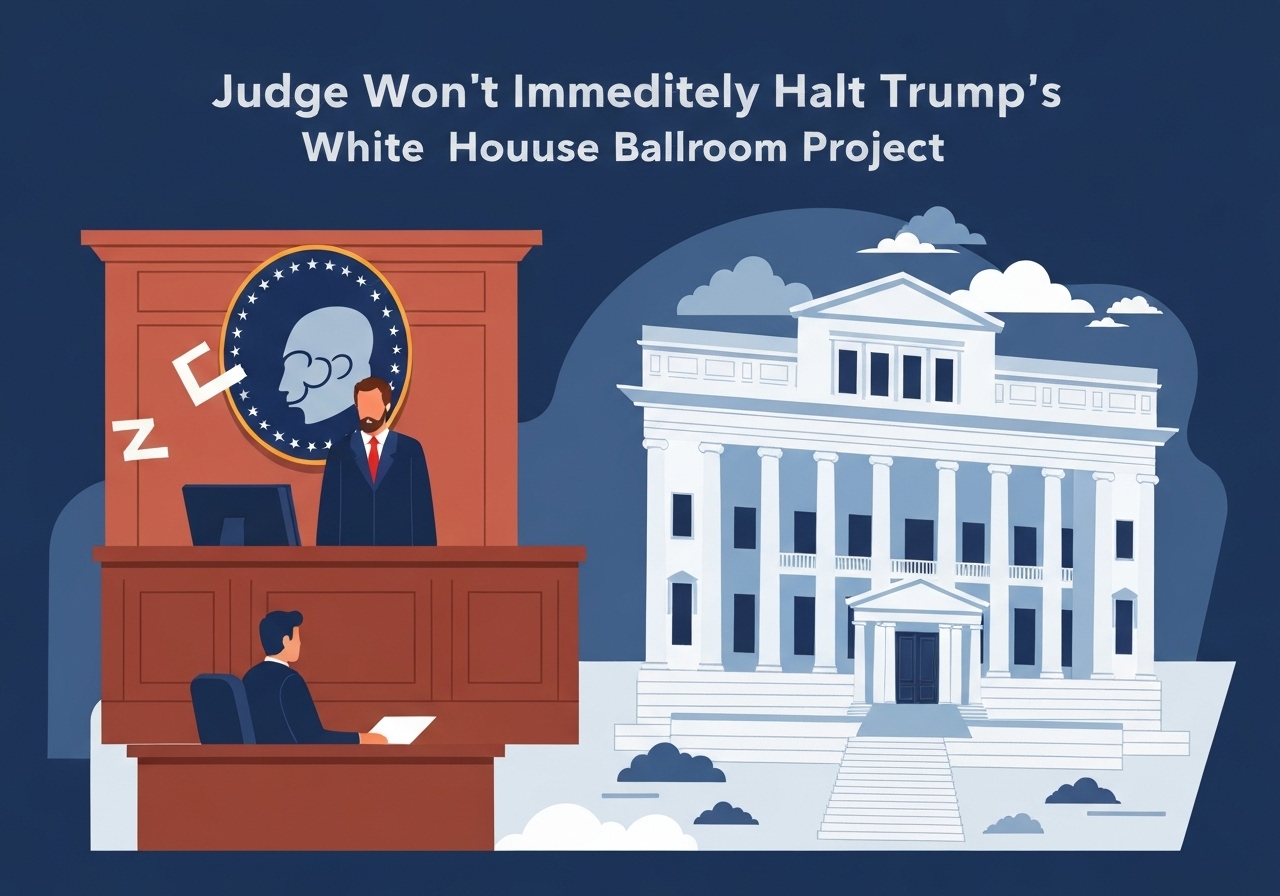
On Dec. 16, 2025, U.S. District Judge Richard J. Leon declined to order an immediate stop to construction on a proposed White House ballroom, provided the administration files formal plans by the end of the month. The National Trust for Historic Preservation had sought an injunction to halt the work, arguing the project sidesteps required review procedures. The administration told the court it will submit the design for a roughly 90,000-square-foot ballroom to two federal review bodies and limit activity to underground preparatory work until those filings are complete. Judge Leon scheduled a follow-up hearing in mid-January to assess compliance and next steps.
Key Takeaways
- Judge Richard J. Leon agreed not to impose an immediate stoppage after the government pledged to file formal plans by the end of December 2025.
- The proposed ballroom is described by the administration as roughly 90,000 square feet and would replace the East Wing footprint.
- The administration will send plans to the National Capital Planning Commission and the Commission of Fine Arts for review, agencies with statutory and advisory roles.
- For now, construction is limited to underground preparatory work while formal review materials are prepared and submitted.
- The National Trust for Historic Preservation is pursuing litigation alleging procedural and preservation shortcomings in the project’s approval process.
- Judge Leon set a mid-January 2026 hearing to determine whether the administration followed required protocols and to consider further relief.
Background
The White House ballroom proposal has evolved since initial discussions in October 2025, growing from smaller concepts to a plan the administration now describes as a 90,000-square-foot facility replacing the East Wing area. The project has drawn interest because it affects a historic federal complex and touches multiple review authorities and preservation statutes. Federal review of certain developments in the District involves bodies created by Congress to oversee planning and aesthetics; these include the National Capital Planning Commission (NCPC) and the Commission of Fine Arts (CFA).
The NCPC, established in 1924, holds statutory authority to review and approve federal development projects in the capital region and includes members appointed by the president alongside local appointees. The CFA provides expert, design-focused advice on architecture and landscape matters affecting federal lands. Preservation groups and local stakeholders say those reviews are central to ensuring changes to the White House grounds respect history, planning rules and public interest.
Main Event
At a Dec. 16, 2025 hearing, the administration told Judge Leon it would submit the ballroom plans to the NCPC and the CFA by the end of the month. In response, Judge Leon declined to immediately enjoin construction but warned the government it would be held to its commitment. The administration described the work currently underway as limited to subsurface preparatory tasks, not above-ground construction of new structures.
The National Trust for Historic Preservation, which filed suit seeking to stop building, argued that proceeding before required reviews could cause irreversible harm to historic fabric and public planning processes. Plaintiffs argued the scale of the project and expedited timetable circumvented customary input from preservation professionals and the public. The administration countered that it would comply with review processes and that limited site work did not undermine the substance of those reviews.
Judge Leon set a follow-up hearing for mid-January 2026 to evaluate the submitted materials and decide whether a temporary halt or other remedies were warranted. He emphasized the court’s intent to ensure the government met the procedural commitments it had made. Both sides left the hearing preparing for further briefs and factual submissions ahead of that January date.
Analysis & Implications
The judge’s decision to delay an immediate injunction reflects a balance courts often strike between preventing potential irreparable harm and allowing government functions to proceed where remedies can still address procedural violations. By requiring the administration to file plans promptly and setting an early follow-up, the court preserved a path for review without imposing a blunt, immediate stop that could complicate federal operations or contracts.
If the NCPC or CFA identify substantive procedural or design deficiencies, their findings could strengthen the National Trust’s case, potentially prompting the court to order alterations or a pause. Conversely, if the filings satisfy statutory and advisory requirements, the administration may proceed subject to any conditions those bodies recommend or require. The outcome will signal how rigorously federal planning bodies and courts will enforce review rules for high-profile projects on executive branch-managed lands.
Politically and legally, the case tests the interaction between preservation law, executive branch prerogatives, and statutory review mechanisms. A ruling that emphasizes strict compliance could set a precedent prompting earlier and more detailed reviews for future White House-area projects. A decision favoring the administration’s timeline could incentivize faster, more assertive project pushes that still attempt to conform to review procedures retroactively.
Comparison & Data
| Item | Size / Year |
|---|---|
| Proposed ballroom | ~90,000 sq ft (2025 proposal) |
| East Wing (existing footprint) | Smaller operational footprint; not fully comparable (historic complex) |
| NCPC established | 1924 |
The quantitative comparison is limited because published public documentation on East Wing square footage varies by source and historical configuration; the administration’s 90,000-square-foot figure provides a benchmark for public debate. The NCPC’s founding date (1924) underscores the long-standing federal framework for capital planning, reflecting nearly a century of institutional practice that informs current review expectations.
Reactions & Quotes
The court will hold the government to the timetable it offered and revisit compliance at the January hearing.
Judge Richard J. Leon (court remarks)
Judge Leon framed the procedural timeline as a firm requirement rather than a flexible suggestion, signaling careful judicial oversight of the next steps. The administration’s counsel emphasized cooperation with review bodies while describing the current work as limited and preparatory.
We are pursuing all available procedural avenues to ensure historic resources are protected and review rules are followed.
National Trust for Historic Preservation (plaintiff statement)
The National Trust stressed procedural protections and preservation priorities, indicating litigation will continue unless the court and review bodies find the administration’s filings address those concerns. Commenters from preservation and planning communities said the case may influence how future executive projects are vetted.
Unconfirmed
- No public record yet confirms whether the administration’s end-of-month filings will include final architectural drawings or only schematic materials; that distinction could affect the depth of review required.
- Reports that above-ground structural work will begin immediately after filings are submitted are unverified; the administration has described ongoing activity as limited to underground preparatory work.
Bottom Line
The court’s temporary decision preserves an opportunity for formal review while keeping judicial leverage in place via a mid-January hearing. The administration’s pledge to file plans by the end of December 2025 is the key hinge on which near-term outcomes will turn: thorough filings that satisfy NCPC and CFA standards may blunt the National Trust’s legal claims, while inadequate submissions could prompt stronger judicial remedies.
For observers, the case will be a test of how historic-preservation rules and federal planning institutions operate when confronted with high-profile executive initiatives. The mid-January hearing will be the next decisive moment: it will reveal whether the government met procedural expectations and how aggressively the court will enforce compliance.
Sources
- The New York Times — news article reporting on the Dec. 16, 2025 hearing (media)
- National Capital Planning Commission (NCPC) — official agency site with statutory role and review processes (official)
- Commission of Fine Arts (CFA) — official advisory body information (official)
- National Trust for Historic Preservation — plaintiff organization and preservation advocacy (organization)