
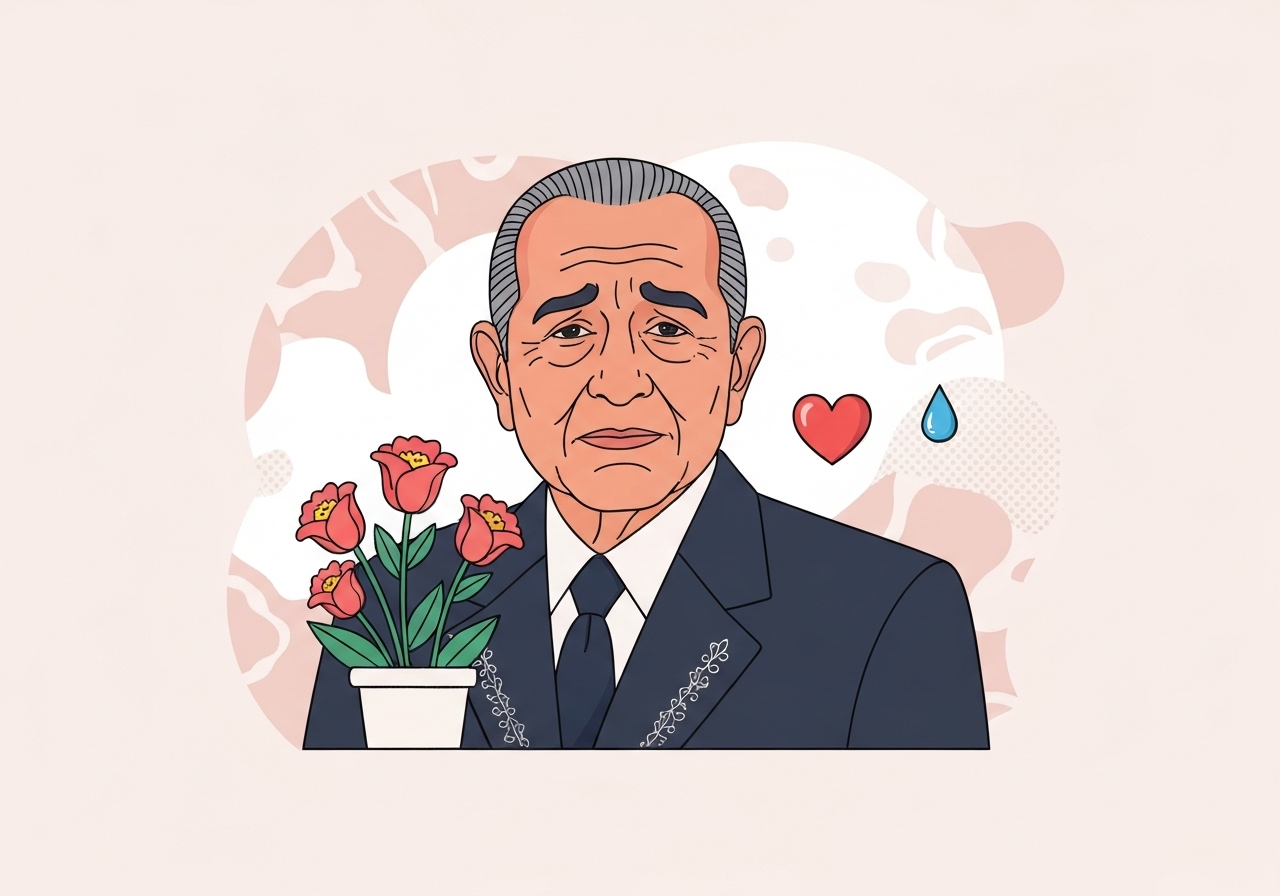
Lead: Abraham Quintanilla Jr., the music producer who discovered and managed his daughter Selena as she rose to become a Grammy-winning star of Tejano music, died on Dec. 13, 2025. He was 86. The death was announced by his son, A.B. Quintanilla, on Instagram; the post did not specify a location or cause. Quintanilla turned a small family band into Selena y Los Dinos and played a central role in her career and in the expansion of Tejano onto national stages.
Key Takeaways
- Abraham Quintanilla Jr. died on Dec. 13, 2025, at age 86; the family announced the death via A.B. Quintanilla’s Instagram post without naming cause or place.
- He managed Selena and guided Selena y Los Dinos from local gigs in Lake Jackson, Texas, to national exposure and a Grammy Award.
- The family moved from Lake Jackson to Corpus Christi in 1982, when Selena was about 10, to pursue larger performance opportunities.
- The band’s breakthrough came in 1985 with an appearance on The Johnny Canales Show, one of Selena’s first national TV performances.
- Quintanilla taught his children music early, having them play at the family restaurant and local weddings, helping them develop stage experience.
- Public assessments of his role vary: many credit him with professional stewardship of Selena’s career, while some fans have described him as controlling at times.
Background
Abraham Quintanilla Jr. was a musician and producer whose early ambitions were rooted in Tejano and regional Mexican music. He cultivated musical skills in his children from a young age, organizing performances at the family’s restaurant and at community events in Lake Jackson, Texas. The family relocation to Corpus Christi in 1982 reflected a strategic move to access larger venues and a broader audience along the Texas Gulf Coast. In Corpus Christi the family band—eventually known as Selena y Los Dinos—performed in dance halls and nightclubs, steadily building a regional following that would later translate into national recognition.
Tejano music blends traditional Mexican forms with American pop and rock influences; by the 1980s it was evolving commercially and reaching bilingual audiences across the Southwest. Managers and family-led ensembles like Selena y Los Dinos were central to that growth, using Spanish-language television, radio and live circuits to expand reach. The Johnny Canales Show, a bilingual variety program with a wide regional audience, provided crucial televised exposure for Tejano acts in the 1980s and proved pivotal for emerging performers.
Main Event
On Dec. 13, 2025, the Quintanilla family announced the death of Abraham Quintanilla Jr.; the notice came via a social media post from his son, A.B. Quintanilla, a longtime collaborator in the band’s musical production. Media reports did not include a cause or location of death at the time of announcement, and further family statements have been limited. The news prompted immediate remembrances from fans, musicians and cultural observers who noted his work shaping Selena’s professional path.
Quintanilla’s early strategy combined hands-on musical instruction with steady performance opportunities for his children, allowing his young daughter Selena to develop a stage presence and vocal craft. That approach culminated in high-profile appearances in the mid-1980s; an appearance on The Johnny Canales Show in 1985 is widely recognized as an early televised showcase that helped expand Selena’s audience beyond local circuits. Over the following years, the band recorded, toured and earned industry recognition, with Selena eventually winning a Grammy and becoming widely referred to as the “queen of Tejano music.”
While many attribute Selena’s rise to her talent and to Abraham Quintanilla’s managerial drive, critics and some fans have described tensions inside the management-family dynamic. Accounts vary: some past interviews and coverage portray him as a decisive manager whose strict approach helped forge a successful act, while other recollections highlight episodes of friction and disagreements about control and artistic choices.
Analysis & Implications
Abraham Quintanilla’s role illustrates a common pattern in popular music where family members act as early managers, blending parental guidance with career planning. That model can accelerate a young artist’s professionalization by concentrating decision-making and channeling resources efficiently; it can also amplify personal strain when business disputes intersect with family relationships. The Quintanilla case underscores how such dual roles shape both career trajectories and public narratives around artists.
Selena’s crossover success helped open commercial pathways for Tejano and Latin artists in U.S. markets, contributing to a longer-term industry shift toward bilingual and Latinx audiences. As manager, Abraham oversaw bookings, media appearances and recording efforts that placed Selena and her band on regional and then national platforms. His decisions about touring circuits, television appearances and repertoire selection were instrumental to the band’s visibility during a pivotal era for Spanish-English popular music in the United States.
Looking ahead, his death will likely prompt renewed evaluation of both his managerial choices and Selena’s artistic legacy. For scholars and industry professionals, the case will remain a study in family-managed careers and cultural mediation: how producers and managers navigate bilingual markets, how regional genres gain mainstream traction, and how familial authority affects creative development. For fans, it may catalyze archival releases, retrospectives and further discussion about how ownership and control are remembered alongside artistic achievement.
Comparison & Data
| Year | Milestone |
|---|---|
| 1982 | Quintanilla family relocates to Corpus Christi |
| 1985 | Appearance on The Johnny Canales Show; broader TV exposure |
| 1990s | Selena achieves national recognition and wins a Grammy |
The timeline above highlights key moments in the family’s progression from local performances to national recognition. These milestones align with wider trends in the 1980s and 1990s when Spanish-language programming and crossover Latin artists increasingly influenced mainstream U.S. music markets. Contextualizing these dates helps clarify how focused management and television exposure contributed to career acceleration.
Reactions & Quotes
Family members and cultural institutions reacted quickly to the announcement, reflecting both personal loss and public remembrance of a figure central to a major American music story.
“the queen of Tejano music”
The New York Times
The phrase above is commonly used in coverage to describe Selena’s cultural standing; it signals the scale of her recognition in Tejano and broader popular music.
“He taught his children to sing and play music from a young age”
Texas State Historical Association
That institutional summary captures Quintanilla’s early role in building musical skill and performance experience inside the family—a formative factor in the band’s later professional trajectory.
Unconfirmed
- No official cause of death or place of death had been released by the family as of initial announcements on Dec. 13, 2025.
- Reports of specific internal family disputes and the extent of managerial control are sourced to interviews and recollections; some claims remain contested or anecdotal.
Bottom Line
Abraham Quintanilla Jr.’s death marks the end of a life that had an outsized influence on one of the most visible stories in late 20th-century Latin music in the United States. As Selena’s manager and father, he shaped career choices that elevated a regional genre to national prominence, even as interpretations of his methods differ. The immediate public reaction will focus on remembrance and the cultural meaning of Selena’s achievements; in the longer term, his passing will likely renew scholarship and public conversation about family management, cultural mediation and the institutional forces that enable crossover success.
For fans and historians alike, the coming weeks should clarify factual gaps—particularly regarding circumstances of death—and produce more comprehensive reflections from family members, collaborators and music historians. His role in Selena’s story will remain a central point of analysis for those studying music, culture and the dynamics of family-led careers in the entertainment industry.
Sources
- The New York Times (news report)
- Texas State Historical Association (historical association)