
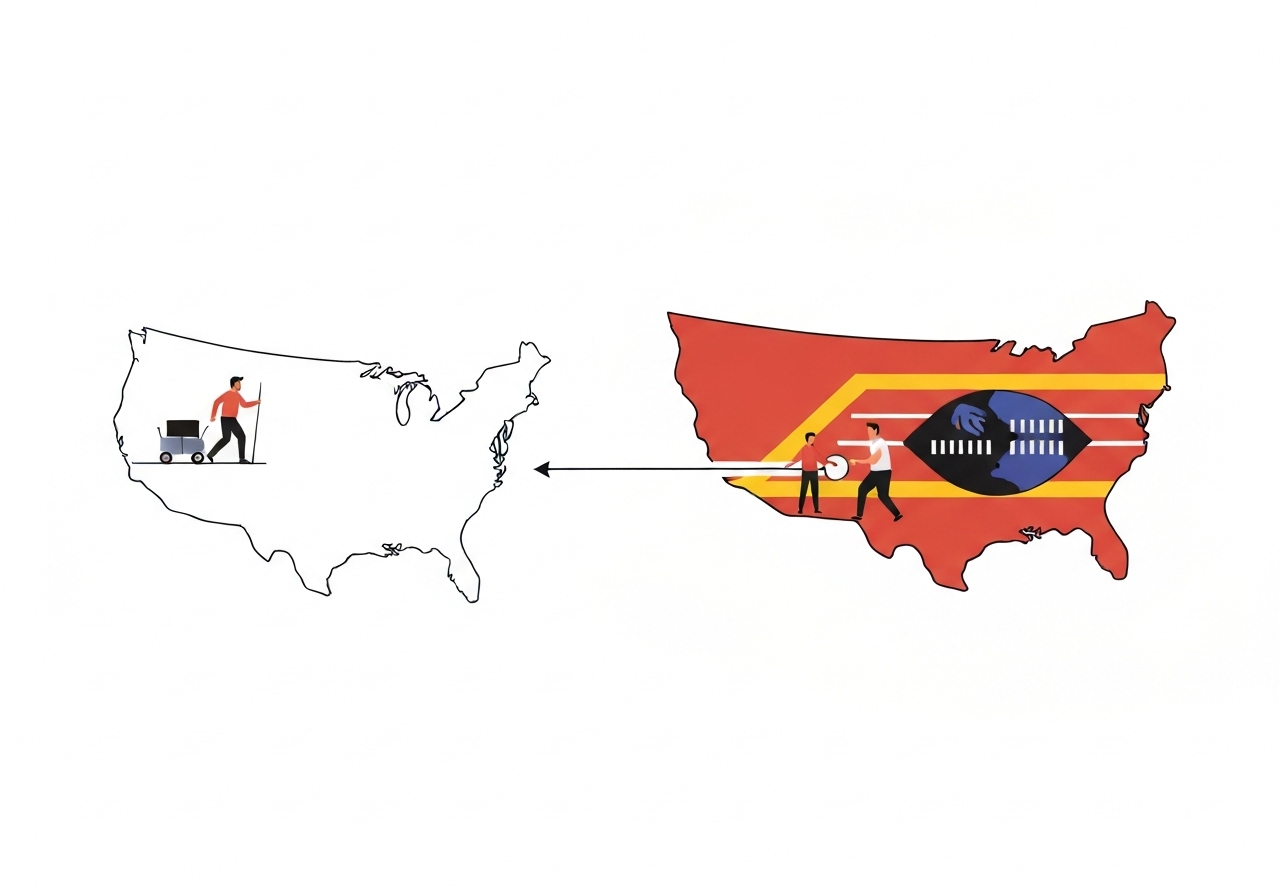
On Friday, Sept. 5, 2025, federal immigration officials told Maryland resident Kilmar Abrego Garcia they intend to remove him to Eswatini, even as he remains in U.S. custody and continues legal challenges to another planned deportation and to his current removal order.
Key Takeaways
- ICE notified Abrego Garcia by email that Eswatini is the new country of removal.
- The government had earlier proposed Uganda; Abrego Garcia objected citing fear of persecution.
- He is in ICE custody facing human smuggling charges after being returned to the U.S.
- A federal judge has delayed his removal until at least early October while related testimony is scheduled.
- Abrego Garcia has asked to go to Costa Rica, which indicated willingness to grant him some status.
- Eswatini is one of four African countries with deportation agreements with the administration, alongside Rwanda, South Sudan and Uganda.
- He also seeks to renew asylum claims before an immigration judge.
Verified Facts
Immigration and Customs Enforcement informed Abrego Garcia on Sept. 5, 2025, via email that, given his objections to removal to several countries, the agency is now seeking to return him to Eswatini. The email noted the client’s attorneys have asserted fears of persecution or torture in at least 22 countries, including El Salvador, his country of birth.
ICE confirmed to reporters that an immigration judge ordered Abrego Garcia removed and that the agency will comply with that order. The man is currently detained after being brought back to the United States to face federal human smuggling charges.
A federal judge overseeing those criminal proceedings recently ruled that Abrego Garcia cannot be deported at least until early October, citing the need for testimony from administration officials about the re-deportation effort. Prosecutors and defense counsel have discussed settlement offers, including an earlier proposal that might have involved transfer to Costa Rica in exchange for a guilty plea, which he declined.
Earlier this year, Abrego Garcia was mistakenly deported and spent several weeks in a high-security prison in El Salvador. He has since been pursuing both criminal and immigration court remedies, including a motion to renew asylum claims that will be adjudicated before an immigration judge in the Justice Department.
Eswatini (formerly Swaziland) is a small Southeast African monarchy roughly the size of New Jersey. The country is governed by a monarch with broad powers. The Trump administration has reached arrangements with Eswatini and three other African nations — Rwanda, South Sudan and Uganda — to accept certain deportees.
Context & Impact
The decision to designate Eswatini highlights the administration’s broader strategy of seeking third-country partners for removals, a tactic that raises legal and diplomatic questions. Human rights groups and some legal advocates have warned that sending asylum seekers or detainees to countries with limited protections can pose risks.
Legally, the case intersects criminal proceedings and immigration law: Abrego Garcia faces federal charges while simultaneously pursuing asylum and challenging removal orders. The judge’s delay to early October means witnesses from the government are expected to explain the decision-making and logistics behind the re-deportation effort.
- Possible diplomatic effects: sending deportees to smaller states may pressure U.S. relations with those governments and invite scrutiny from rights monitors.
- Domestic policy angle: the case tests how quickly the administration can carry out removals while criminal cases and immigration appeals are pending.
“TRUE: An immigration judge ordered him removed and ICE will comply with that order.”
ICE, as reported to CNN
Unconfirmed
- Whether Eswatini has formally agreed to accept Abrego Garcia and under what conditions is not publicly confirmed.
- The precise operational timeline and travel logistics for any removal have not been released.
- Claims that fear was asserted for 22 specific countries come from the ICE email; the full factual basis for each asserted fear has not been independently verified in public records.
Bottom Line
The administration’s move to designate Eswatini as Kilmar Abrego Garcia’s country of removal deepens a complex legal dispute involving criminal charges, asylum claims and international agreements. With a judge pausing deportation until at least early October to hear testimony, the case will test legal limits on expedited removals and the administration’s use of third-country arrangements.