
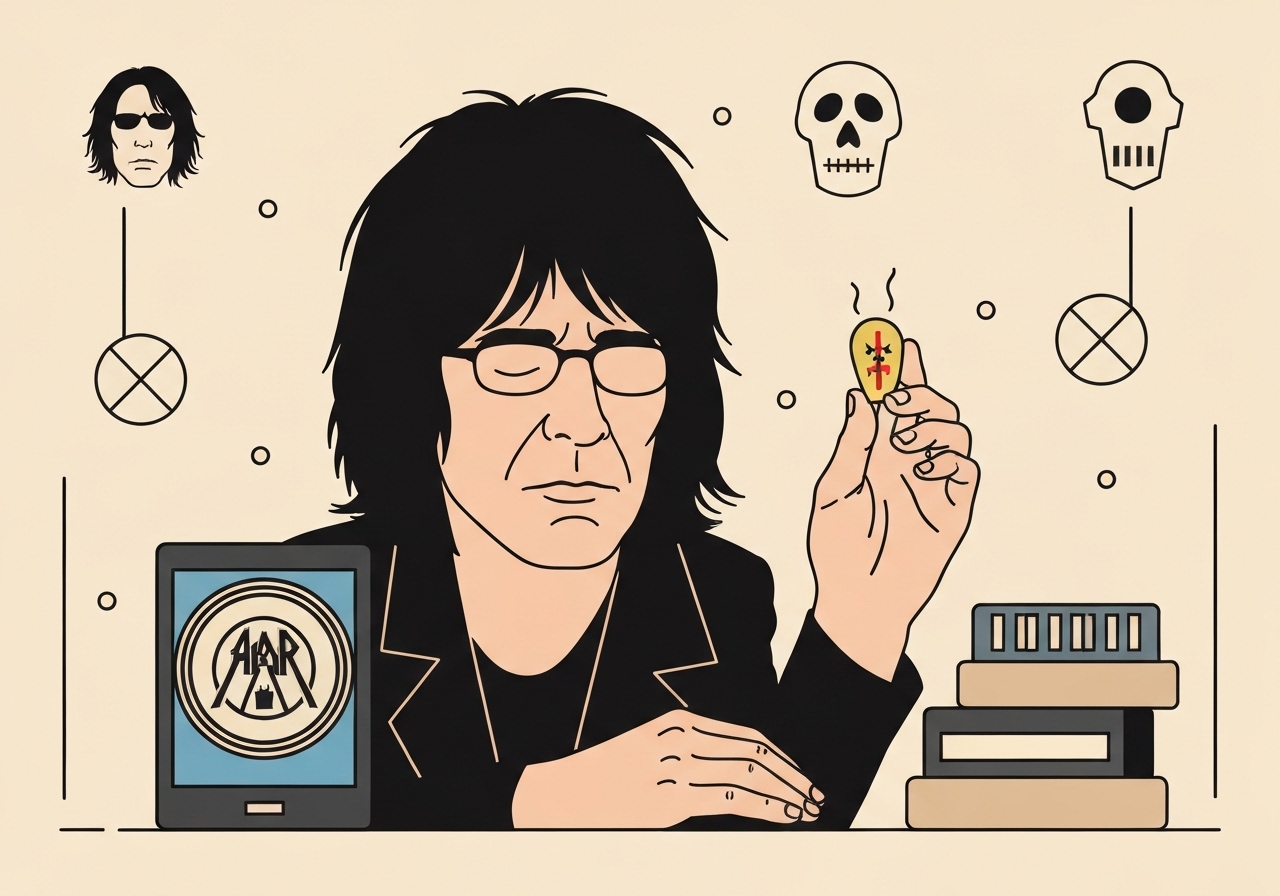
Former KISS lead guitarist Ace Frehley died on Oct. 16, 2025, at age 74; a Morris County Medical Examiner report obtained by People found blunt-force trauma to the head from an accidental fall as the cause. His family had made his death public the same day, saying he had canceled a tour about a week earlier because of “ongoing medical issues.” Frehley—best known as the Spaceman persona in KISS and a 2014 Rock and Roll Hall of Fame inductee with the band—left behind his wife, Jeanette Trerotola, and daughter Monique.
Key Takeaways
- The Morris County Medical Examiner determined the cause of death was blunt trauma to the head due to an accidental fall (report obtained by People).
- Frehley died on Oct. 16, 2025, at the age of 74 and had canceled his tour roughly a week earlier citing ongoing medical issues.
- He co-founded KISS in 1973 and performed with the band from 1973–1982 and again from 1996–2002.
- Inducted into the Rock and Roll Hall of Fame in 2014 as a member of KISS, he later formed Frehley’s Comet and released two studio albums with that band.
- Survivors named in the family announcement are his wife, Jeanette Trerotola, and daughter, Monique.
- Frehley, Gene Simmons, Paul Stanley and Peter Criss were named Kennedy Center Honorees in an announcement referenced to then‑President Donald Trump.
Background
Ace Frehley rose to prominence in the early 1970s as a founding member and lead guitarist of KISS, a group noted for theatrical makeup, stagecraft and arena-sized shows. His onstage persona—the Spaceman, also called Space Ace—alongside aggressive, melodic guitar work and effects helped define KISS’s sound and image during the band’s commercial peak. After leaving KISS in 1982, Frehley formed Frehley’s Comet and later pursued a solo career; he rejoined KISS for a widely publicized reunion tour beginning in 1996 and remained associated with the group until 2002.
Over decades, Frehley developed a reputation for influence on hard rock and metal guitarists, culminating in his 2014 induction into the Rock and Roll Hall of Fame as a member of KISS. In the years before his death he had continued to perform and record intermittently, while also confronting health problems that led to a tour cancellation in early October 2025. Public statements since his passing have emphasized both his musical legacy and the suddenness of the events surrounding his death.
Main Event
The Morris County Medical Examiner concluded that blunt-force injuries to Ace Frehley’s head, caused by an accidental fall, were the proximate cause of death. The medical report—made public through press outlets—did not assign negligent intent and characterized the incident as accidental. The finding follows a family announcement on Oct. 16, 2025, that reported his death and noted earlier tour cancellations related to unspecified medical issues.
Press accounts indicate the family was present in his final hours and released a statement describing those moments as peaceful and attended by loved ones. Local officials and the medical examiner provided the formal cause after completing their review; the published summary focused on the mechanics of injury rather than detailed scene reconstruction. No criminal investigation or foul play has been reported in connection with the medical examiner’s findings.
Frehley’s career milestones—KISS’s formation in 1973, his departure and return cycles, and the band’s induction to the Hall of Fame—frame public reaction, with fans and musicians reflecting on both his technical style and stage persona. His death prompted immediate tributes across social media and statements from music institutions noting his contributions to rock performance and guitar technique.
Analysis & Implications
The medical examiner’s finding that an accidental fall led to blunt head trauma highlights how sudden, nonmedical events can prove fatal for older performers; Frehley was 74. Falls are a leading cause of traumatic brain injury and mortality in older adults, and the result underscores broader public-health issues about fall prevention and post-fall care. For touring musicians, who often maintain rigorous schedules, the interplay of existing health conditions and travel-related risks becomes a point of concern.
Beyond individual health, Frehley’s death will likely prompt reassessments of legacy preservation for classic rock figures. Estate management, catalog rights and archival releases commonly accelerate after an artist’s death—matters that involve family members, record labels and rights holders. Given Frehley’s recorded output with KISS and solo projects, rights and royalties questions may surface in the months ahead.
On a cultural level, Frehley’s passing may catalyze renewed interest in KISS-era catalogs and retrospectives that contextualize his contributions to guitar tone and stagecraft. Tribute programming on radio and streaming platforms tends to spike after such events, affecting listening patterns and potentially influencing chart placements for catalog tracks. Internationally, KISS’s enduring brand means the ripple effects will reach promoters, merchandise vendors and cultural institutions that have staged KISS-related exhibitions and events.
Comparison & Data
| Item | Years | Notes |
|---|---|---|
| KISS founding | 1973 | Band established with Frehley as lead guitarist |
| First departure from KISS | 1982 | Frehley left to pursue solo projects |
| Reunion with KISS | 1996–2002 | High-profile reunion tour and performances |
| Rock Hall induction | 2014 | Inducted as member of KISS |
The table above situates key career milestones that are often cited when evaluating Frehley’s influence. These discrete dates are focal points for discography overviews, biographical timelines and retrospective coverage; they also serve as anchors for legal and commercial considerations that may arise after an artist’s death.
Reactions & Quotes
Family and institutions quickly responded to the medical examiner’s release and to public remembrance. Below are brief excerpts and their contexts.
“We are completely devastated and heartbroken,”
Frehley family statement
The family’s message, issued on Oct. 16, emphasized grief, gratitude for final private moments and a wish to celebrate Frehley’s life and strengths rather than focus on the circumstances of his passing.
“Death resulted from blunt trauma injuries to the head due to an accidental fall,”
Morris County Medical Examiner (report summary)
The medical examiner’s summary framed the event medically and legally as accidental, which typically closes the door on criminal inquiries absent new evidence. Local authorities have not announced further investigatory steps.
Unconfirmed
- Exact location and circumstances of the fall (home, hotel, backstage, etc.) have not been publicly detailed by officials.
- Whether underlying medical conditions or recent medications materially contributed to the fall has not been disclosed.
- Any additional forensic details from full toxicology or supplementary reports were not yet released publicly at the time of reporting.
Bottom Line
Ace Frehley’s death on Oct. 16, 2025, at 74 was ruled accidental by the Morris County Medical Examiner, with blunt-force head trauma from a fall listed as the cause. The finding concludes the immediate question of how he died while leaving typical postmortem queries—such as contributing health factors—still outstanding until comprehensive reports are published.
For fans, fellow musicians and the music industry, the focus will shift from cause to legacy: catalog management, tributes and archival preservation. Public-health observers will note this case as another instance in which falls pose a serious risk to older adults, including those who remain professionally active late in life.