
Lead
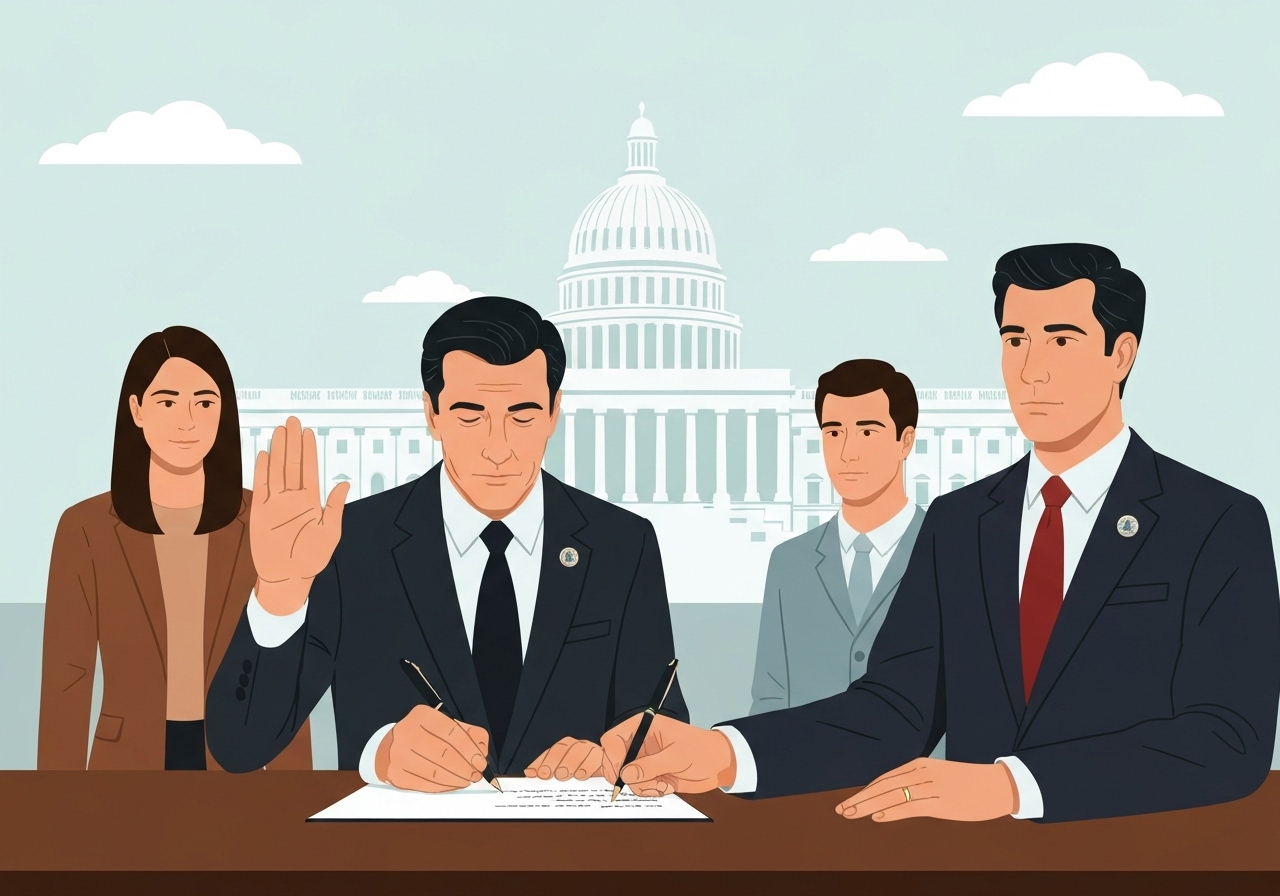
Arizona Democrat Adelita Grijalva was sworn into the U.S. House on Nov. 12, 2025, seven weeks after she won a special election. House Speaker Mike Johnson administered the oath as Democrats applauded, and Grijalva immediately signed a discharge petition that pushes for release of the full Department of Justice files on Jeffrey Epstein. Her signature gave the petition the 218-member threshold required to force consideration on the House floor. The procedural move sets in motion a timetable that could put a vote in early December after the chamber’s Thanksgiving recess.
Key Takeaways
- Adelita Grijalva took the oath of office on Nov. 12, 2025, about seven weeks after winning a special election in Arizona.
- Grijalva signed a discharge petition to compel DOJ to release complete files on Jeffrey Epstein; her signature brought the petition to the required 218 signatures.
- Under House rules the petition must “ripen” for seven legislative days before any signer can call it up; the earliest floor consideration is therefore early December.
- Speaker Mike Johnson administered the oath but has opposed the discharge effort; he retains procedural options, including tabling or referring the measure to committee.
- The House Oversight Committee has already released thousands of documents related to Epstein, but advocates and some lawmakers argue those releases are incomplete.
- If the House passes the measure, the Senate would also need to act; under Senate Majority Leader John Thune there is no guarantee of Senate consideration.
- Arizona filed suit challenging the delay in Grijalva’s swearing-in during the recent shutdown; lawmakers from both parties criticized the speaker’s earlier decision to delay.
Background
The dispute over Grijalva’s swearing-in traces to a mid-September period when Speaker Johnson dismissed members following House passage of a clean continuing resolution to fund the government. The speaker delayed swearing in the newly elected member during the shutdown, prompting criticism and a lawsuit from the state of Arizona. That sequence left Grijalva waiting roughly seven weeks between her special-election victory and taking office.
The discharge petition is a rarely used procedural tool designed to bypass House leadership and force a floor vote when 218 members sign. It has become the vehicle for a bipartisan group of members led publicly by Reps. Thomas Massie and Ro Khanna seeking to compel the Department of Justice to produce its complete records related to convicted sex offender Jeffrey Epstein. Advocates argue the public interest warrants fuller transparency beyond records already released by the House Oversight Committee.
Main Event
On Nov. 12, 2025, after the oath, Grijalva addressed the House floor and framed her signature as a matter of justice and accountability. She referenced newly released Democratic emails that mention Epstein and invoked survivors present in the gallery. Grijalva said, “Justice cannot wait another day,” and characterized the move as part of a broader effort to hold institutions accountable.
Her immediate signature pushed the discharge petition to 218 signatures, the threshold required to force a motion after seven legislative days. Under House Rules, once the petition “ripens” any signer may call it up and give notice of the intention to offer a discharge motion on the floor; the speaker then has two legislative days to schedule a vote. House sources say that timing makes early December the earliest realistic window after members return from Thanksgiving recess.
Speaker Johnson has said he opposes the discharge-petition tactic, citing ongoing Oversight Committee work that has already produced thousands of records, including court filings, trial transcripts related to Ghislaine Maxwell, previously released flight logs, Bureau of Prisons communications from the night of Epstein’s death, and other public court documents from the Florida prosecution. Johnson has authority to try procedural maneuvers — such as tabling the motion or referring it to committee — to delay or block final passage on the floor.
Analysis & Implications
Grijalva’s swearing-in and immediate signature are significant for two reasons: first, they resolve the immediate political dispute over her delayed seating during the shutdown; second, they alter the arithmetic for a high-profile transparency effort concerning files tied to Epstein. The discharge petition route signals that a sizable bipartisan group of members believes existing public releases are insufficient and that a forced floor vote can produce pressure on leadership and the DOJ.
The practical hurdles are substantial. Even if the House votes to approve a measure compelling document release, enforcement depends on executive-branch compliance and on congressional willingness to sustain political pressure. If the speaker or House leadership attempts to table or refer the motion, proponents can still use floor time to highlight the issue but may fall short of immediately securing full document production.
On the Senate side, majority control and leadership priorities will determine whether any House-passed measure advances. With Senate Majority Leader John Thune leading the chamber, advocates face an uncertain path; the Senate could decline to consider the House measure or alter its scope. The dispute therefore underscores a larger institutional tension between transparency demands and procedural control in Congress.
Comparison & Data
| Milestone | Date/Number |
|---|---|
| Special election victory | Early Sept. 2025 (seven weeks before Nov. 12) |
| Sworn into House | Nov. 12, 2025 |
| Signatures required for discharge petition | 218 |
| Ripening period | 7 legislative days |
| Speaker scheduling window | 2 legislative days after call-up |
The table clarifies the procedural timeline: the petition must sit uncalled for seven legislative days before any signer can trigger a motion, and once triggered the speaker has two legislative days to act. Those intervals mean that, barring unusual scheduling, the earliest open-floor vote would fall in early December after lawmakers return from Thanksgiving recess.
Reactions & Quotes
“Justice cannot wait another day.”
Rep. Adelita Grijalva (D-AZ), on the House floor after being sworn in
This remark was delivered immediately after Grijalva took the oath and reflected her argument that existing disclosures do not fully account for Epstein-related records held by the DOJ. She cited survivors present in the gallery as part of her appeal for urgency.
“The Oversight Committee has produced thousands of records; we continue that work.”
Speaker Mike Johnson (R), defending committee releases and opposing the discharge petition
Johnson has pointed to Oversight Committee document releases — including court filings and trial transcripts — as evidence that the House is already addressing Epstein-related records, and he has warned against circumventing committee processes.
“We need transparency for survivors and the public.”
Advocates and several bipartisan members supporting the petition
Supporters frame the discharge petition as a remedy to perceived gaps in the public record and as a response to survivors’ calls for fuller disclosure.
Unconfirmed
- Whether Speaker Johnson will attempt to table the discharge motion or refer it to committee instead of allowing a final vote is not yet determined.
- It is not confirmed that the Senate will consider or take up any House-passed measure compelling DOJ to release additional Epstein files under current leadership.
- Claims that newly released Oversight Committee materials fully reveal all DOJ holdings related to Epstein remain contested and have not been independently verified.
Bottom Line
Adelita Grijalva’s delayed swearing-in resolved a contentious procedural fight that had delayed her seating for seven weeks and immediately shifted the balance on a high-profile transparency push concerning Jeffrey Epstein. By signing the discharge petition upon taking the oath, she converted a months-long dispute into a concrete House process that will force a vote timetable after the required ripening period.
The outcome remains uncertain. Procedural options available to Speaker Johnson and the Senate’s control of next steps mean a final resolution is not guaranteed. Nevertheless, the episode highlights how individual members and rare parliamentary tools can alter legislative dynamics on issues that attract broad public attention, particularly around transparency and survivors’ rights.