
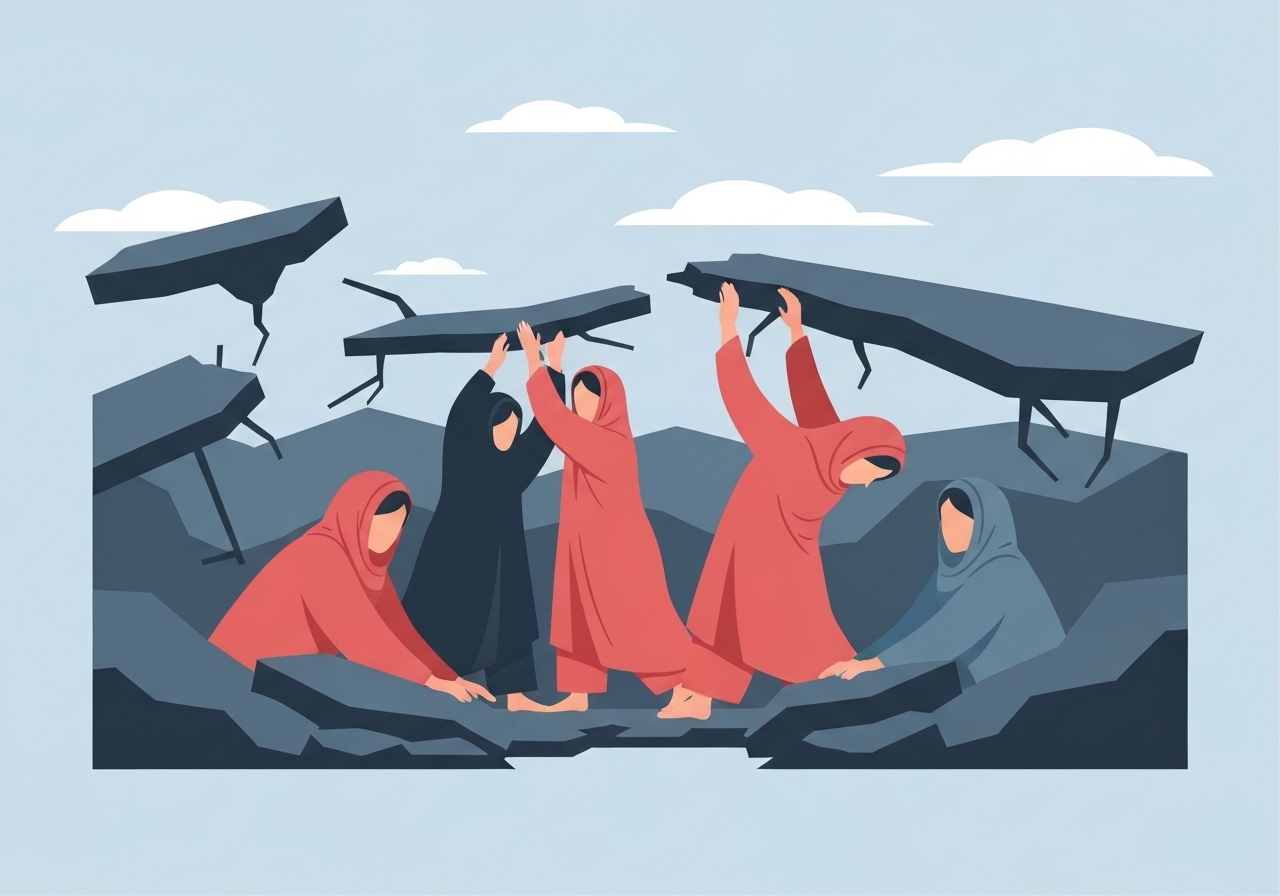
After a magnitude-6 earthquake struck eastern Afghanistan on Sunday, women in hard-hit districts of Kunar province report being sidelined by male-only rescue teams and strict gender rules, leaving many trapped or unassisted while male victims and children were pulled out first.
Key Takeaways
- Rescue teams prioritized men and children in the immediate aftermath, according to survivors and volunteers.
- Local prohibitions on male-female skin contact meant some dead women were removed by their clothing rather than being handled directly.
- In several villages, including Andarluckak and Mazar Dara, women waited for help for more than 36 hours after the quake.
- Afghan government figures put the toll at more than 2,200 dead and about 3,600 injured from the quake.
- Taliban-era restrictions on women’s movement and work have reduced the number of female first responders and aid workers available on the ground.
- Aftershocks, including a 5.6 tremor on Thursday, have complicated relief operations and urgent medical care.
Verified Facts
The earthquake — measured at magnitude 6 by seismic monitors — struck mountainous areas of eastern Afghanistan. Local reporting and survivor accounts cite Kunar province villages such as Andarluckak and Mazar Dara as among the worst affected. Afghan government statements released after the disaster reported more than 2,200 deaths and roughly 3,600 injuries.
Multiple eyewitnesses and a volunteer medic described rescue teams composed largely of men prioritizing male victims and children. In several locations, women and adolescent girls said they were gathered separately and were not examined or extricated with the same urgency as males. Some survivors reported waiting more than a day before receiving attention.
Because many rescue teams were all-male and local norms restrict physical contact between unrelated men and women, rescuers sometimes avoided direct touch. Witnesses said that, in some cases, women who had died were pulled from rubble by their clothing to avoid skin-to-skin contact with male rescuers.
Relief operations have also been hampered by terrain, limited medical capacity in remote districts and a series of aftershocks; officials recorded a 5.6-magnitude tremor on Thursday that hindered ongoing efforts to reach damaged communities.
Context & Impact
The constraints described by survivors reflect broader policies enacted since the Taliban returned to power in 2021. Restrictions on women’s employment and movement have reduced the pool of female health workers and search-and-rescue personnel available for disaster response, particularly in conservative rural districts.
Humanitarian groups warn that the gendered gap in response capacity can increase mortality and delay access to urgent medical care for women and girls. Where female rescuers or female relatives are not present, cultural rules can prevent timely examination and evacuation of injured women.
Immediate impacts include delayed treatment for injured women, unequal distribution of life-saving aid, and psychological harm to survivors forced to wait in separate areas without basic assistance. Longer-term effects may include decreased trust in relief efforts and slower recovery for families who lose female caregivers.
- Health: delayed access to emergency surgery and infection risk for untreated wounds.
- Protection: increased vulnerability for women in makeshift camps without adequate female staff.
- Humanitarian access: international agencies face operational limits when female staff cannot operate freely.
Official Statements
“It felt like women were invisible… the men and children were treated first, but the women were sitting apart, waiting for care.”
Tahzeebullah Muhazeb, volunteer (reported by The New York Times)
Unconfirmed
- The precise gender breakdown of the total casualties has not been released publicly by authorities.
- The extent to which local commanders or individual rescue teams enforced “no skin contact” rules varies by district and remains under investigation.
Bottom Line
The earthquake’s human toll is compounded by social and institutional limits on female participation in rescue and medical teams. Without immediate measures to deploy trained female responders or appropriate protocols to care for women in conservative areas, many survivors face delayed treatment and higher health risks. International and local aid agencies say expanding culturally acceptable response options will be essential to reduce preventable deaths in the coming days.