
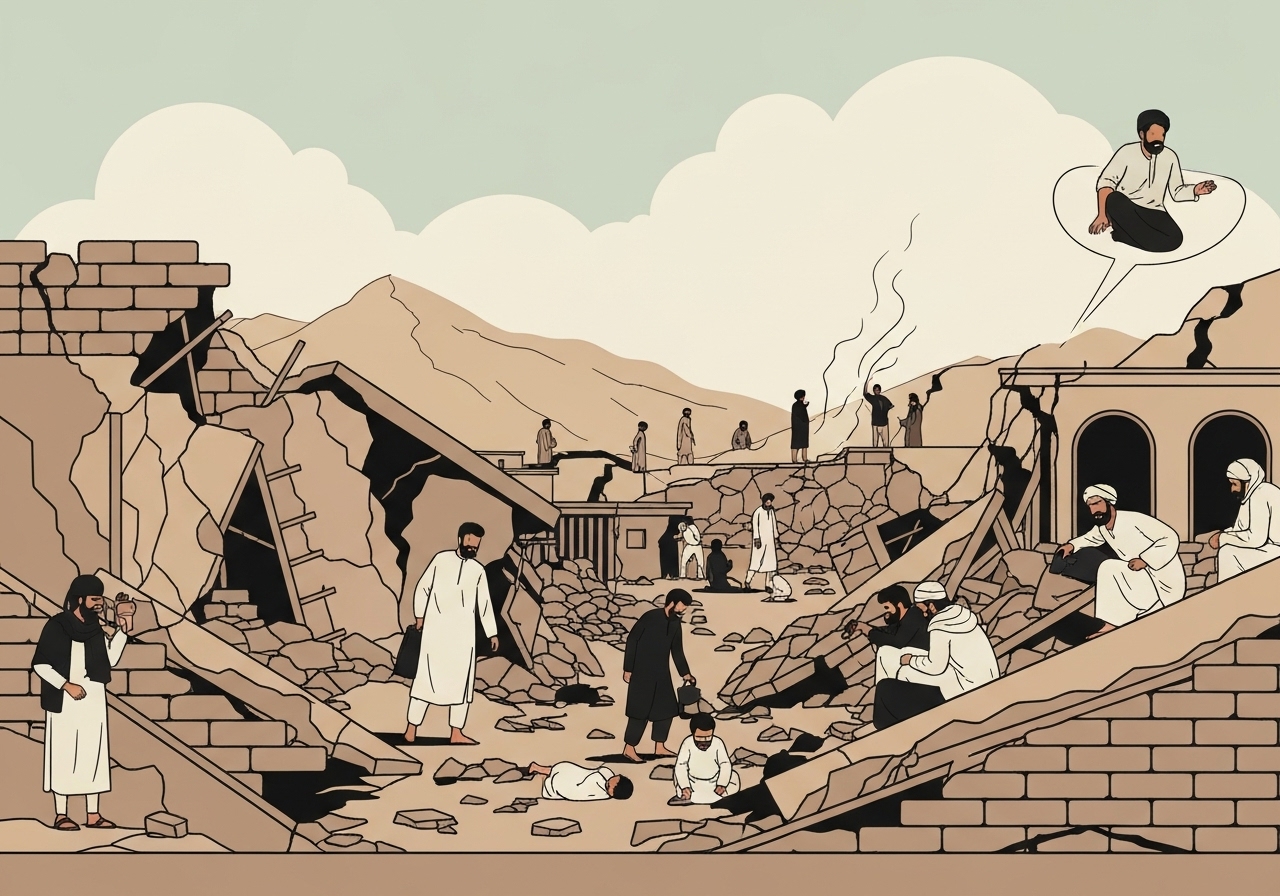
— A magnitude-5.5 aftershock struck eastern Afghanistan on Tuesday, two days after a shallow magnitude-6 quake leveled villages, halting rescues and triggering new landslides as the confirmed toll rose to at least 1,411 dead and 3,124 injured, according to the Taliban administration.
Key Takeaways
- New 5.5 aftershock hit the same region two days after a 6.0 quake.
- Official toll: 1,411 dead, 3,124 injured; over 5,400 homes destroyed.
- Rescues paused amid rockfalls and blocked mountain roads.
- WHO: 12,000+ affected; local health capacity overwhelmed.
- Kunar and Nangarhar are among the worst-hit eastern provinces.
- UK pledges £1 million; India sends 1,000 tents and 15 tonnes of food.
- Further increases in casualties are expected, UN officials warn.
Verified Facts
Tuesday’s tremor—recorded at a depth of roughly 10 km (6 miles), similar to Sunday’s quake—sparked panic across isolated mountain communities and forced rescue teams to pull back as fresh rockslides cut off roads, local aid workers said.
Safiullah Noorzai of Aseel, a humanitarian tech platform coordinating teams in the area, reported additional injuries after the aftershock and warned the death count is likely to rise. He said the terrain and continuing aftershocks make it dangerous to dig through collapsed structures.
A Reuters journalist who reached the disaster zone ahead of the aftershock observed that nearly every home was damaged or destroyed, with residents searching debris for survivors. Some houses weakened on Sunday collapsed entirely after Tuesday’s quake, locals said.
Taliban spokesperson Zabihullah Mujahid said at least 1,411 people have been confirmed dead, 3,124 injured, and more than 5,400 houses destroyed so far. The UN’s coordinator in Afghanistan indicated the toll will almost certainly increase as access improves.
Relief operations continued where possible: ambulances queued along damaged mountain roads toward Kunar, while helicopters ferried supplies in and evacuated the wounded to hospitals, according to on-the-ground reports. UNICEF said it is dispatching medicines, warm clothing, tents, tarpaulins, and hygiene kits including soap, detergent, towels, sanitary pads, and water buckets.
| Indicator | Latest reported value |
|---|---|
| Main quake (Sun) | Magnitude 6.0 at ~10 km depth |
| Aftershock (Tue) | Magnitude 5.5 at ~10 km depth |
| Confirmed deaths | 1,411 |
| Injured | 3,124 |
| Homes destroyed | 5,400+ |
| People affected (WHO) | 12,000+ |
Context & Impact
Afghanistan sits atop the seismically active Hindu Kush, where the Indian and Eurasian plates collide. Shallow earthquakes in this region inflict outsized damage on mud-brick and unreinforced homes common in rural areas, especially on steep slopes prone to landslides.
The World Health Organization said damaged roads, ongoing aftershocks, and the remoteness of many villages severely impede aid delivery. It added that the pre-quake fragility of the health system has left local capacity overwhelmed, increasing reliance on outside support.
International assistance has begun to flow but remains limited. Britain has allocated £1 million (about $1.35 million; $1 = £0.7402) to support UN and Red Cross operations. India delivered 1,000 tents and is moving 15 tonnes of food to Kunar, with additional consignments planned. China, the United Arab Emirates, the European Union, Pakistan, and Iran have pledged help, though much of it had not arrived by Tuesday.
Broader aid constraints loom over the response. Funding reductions, including cuts announced in January to U.S. government humanitarian programs, and donor concerns over restrictions on women and female aid workers under the Taliban have tightened resources, diplomats and aid officials say.
Official Statements
“This is now a race against time to get injured people out and to deliver clean water, food, and shelter.”
Samira Sayed Rahman, Save the Children
“Damaged roads, aftershocks, and remote locations severely impede delivery; local capacity is overwhelmed.”
World Health Organization
Unconfirmed
- Exact number of additional casualties from Tuesday’s aftershock remains unclear.
- Full access to all cut-off villages is pending due to landslides and damaged roads.
- Timelines for pledged international aid deliveries have not been finalized.
Bottom Line
With fresh tremors compounding widespread destruction, Afghanistan’s quake zone faces a narrowing window for life-saving rescues. Rapid access, sustained funding, and coordinated logistics will determine whether the casualty count stabilizes—or climbs further—in the coming days.