
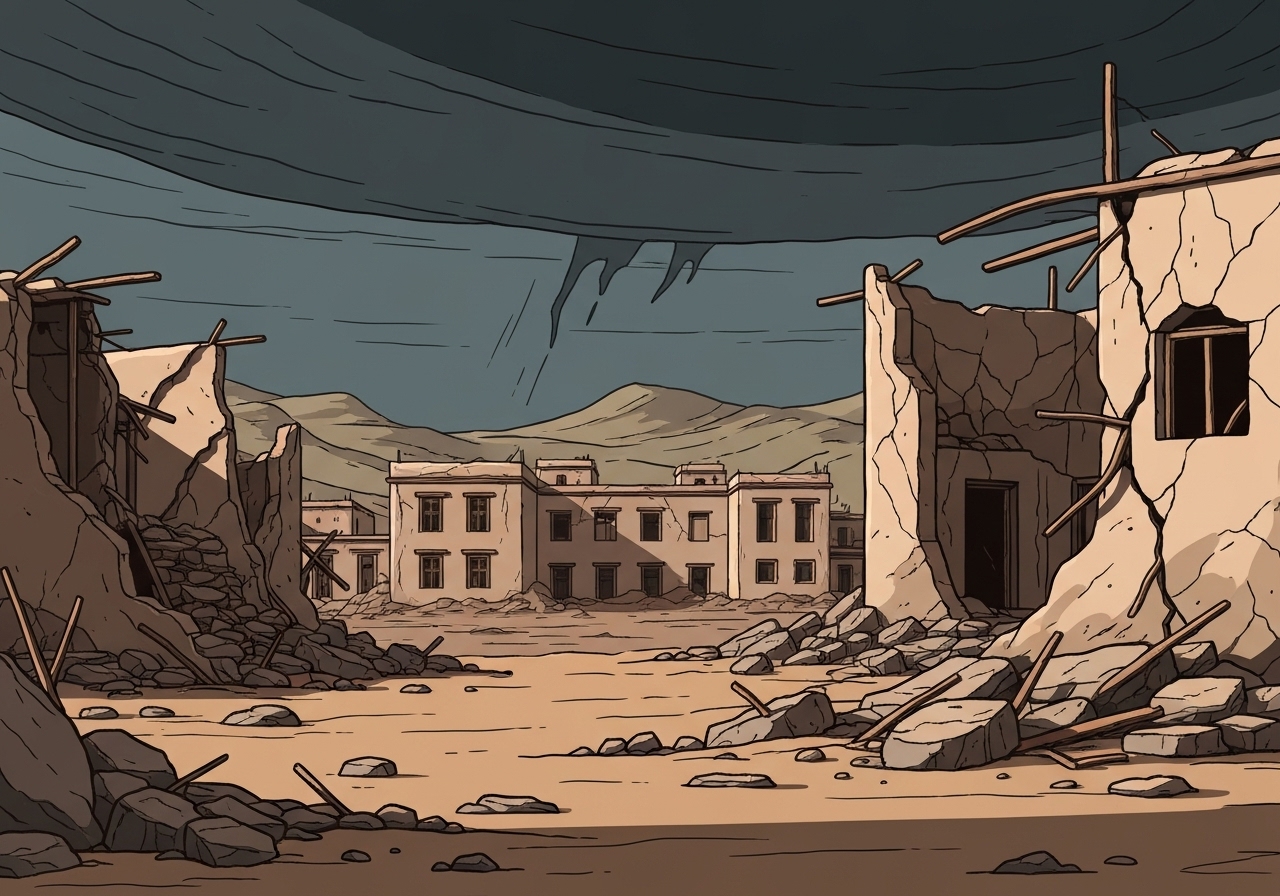
Rescuers worked into Monday night across eastern Afghanistan after a magnitude‑6.0 earthquake struck around midnight Sunday, collapsing mud-and-stone homes in steep valleys of Kunar and neighboring Nangarhar. The Taliban administration appealed for international assistance as officials reported at least 812 deaths and thousands injured, with tolls expected to rise as teams reach cut-off villages.
Key Takeaways
- Magnitude 6.0 quake hit around midnight local time Sunday at a depth of about 10 km (6 miles).
- Worst damage reported in Kunar province near the Pakistan border; three villages were razed, authorities said.
- Taliban officials cited 812 deaths across the east; local counts include at least 610 in Kunar and 12 in Nangarhar.
- Heavy rain, landslide risk, blocked roads, and patchy mobile networks slowed search-and-rescue.
- Afghan military helicopters conducted 40 flights, evacuating 420 wounded and dead, according to the defense ministry.
- Taliban health ministry requested international aid; UNOCHA warned of impassable roads and contamination risks.
- UK pledged £1 million via UNFPA and IFRC; India sent 1,000 family tents and 15 tonnes of food; China signaled readiness to assist; U.S. offered condolences.
- Humanitarian funding to Afghanistan has fallen to about $767m in 2025 from $3.8bn in 2022, complicating relief.
Verified Facts
The earthquake struck shallowly at roughly 10 km depth, amplifying shaking in fragile hillside settlements. Kunar province bore the brunt, with authorities describing entire hamlets flattened, including areas of Nurgal district. Survivors recounted walls collapsing without warning, trapping families beneath the rubble.
Rescue efforts were hampered by days of rain that heightened the risk of landslides and rockfalls. The UN Office for the Coordination of Humanitarian Affairs (UNOCHA) noted multiple routes were washed out or blocked, leaving some valleys accessible only by air. To prevent waterborne disease, responders prioritized rapid burial of animal carcasses and protection of springs.
The Taliban administration’s spokesperson said 812 people were confirmed dead across Kunar and Nangarhar, while provincial tallies cited at least 610 deaths in Kunar and 12 in Nangarhar. Officials cautioned that figures would likely rise as teams reach isolated communities near the Pakistani border.
Afghan defense officials reported military rescue teams fanned across the region, with helicopters shuttling the injured to hospitals in Jalalabad and other hubs. Health authorities said emergency stocks were being redistributed and additional medical staff were being mobilized for trauma care and post-operative support.
Context & Impact
This is Afghanistan’s third major deadly earthquake since the Taliban took power in 2021, a period marked by a sharp decline in external funding and increasing operational hurdles for aid agencies. Donor unease over restrictions on women, including female aid workers, has further constrained programs just as needs have grown.
Immediate priorities include search-and-rescue, trauma care, shelter for families whose homes are unsafe, and water, sanitation, and hygiene (WASH) services to curb disease outbreaks. With rain continuing, emergency shelter materials, blankets, and tarpaulins are urgently required to stabilize affected communities.
International responses varied. The UK announced £1 million in emergency support routed via UNFPA and the IFRC to avoid direct transfers to Afghan authorities. India delivered 1,000 family tents to Kabul and began moving 15 tonnes of food to Kunar, with more consignments slated from Tuesday. China said it stands ready to help within its capacity. The United States expressed condolences but did not immediately confirm assistance.
Official Statements
We need international assistance because many people have lost their lives and homes.
Sharafat Zaman, Afghanistan Ministry of Public Health
Heavy rain over the past two days means landslides are a serious risk and many roads are impassable.
Kate Carey, UNOCHA
The UK remains committed to the people of Afghanistan; this support will deliver critical healthcare and supplies.
David Lammy, UK Foreign Secretary
India has delivered 1,000 family tents and is dispatching 15 tonnes of food to Kunar.
Subrahmanyam Jaishankar, External Affairs Minister of India
China is ready to provide disaster relief in line with Afghanistan’s needs and our capacity.
Ministry of Foreign Affairs of China
Unconfirmed
- Final death and injury figures remain fluid as rescuers reach remote hamlets beyond mobile coverage.
- The precise number of villages fully destroyed beyond the three cited by local authorities is not yet verified.
- Potential U.S. material assistance had not been confirmed at time of publication.
Bottom Line
The race to find survivors in eastern Afghanistan is colliding with rain, landslides, and scarce resources. With hundreds dead and entire villages flattened, rapid, well-coordinated international support—delivered through capable humanitarian partners—will be critical in the coming days.