
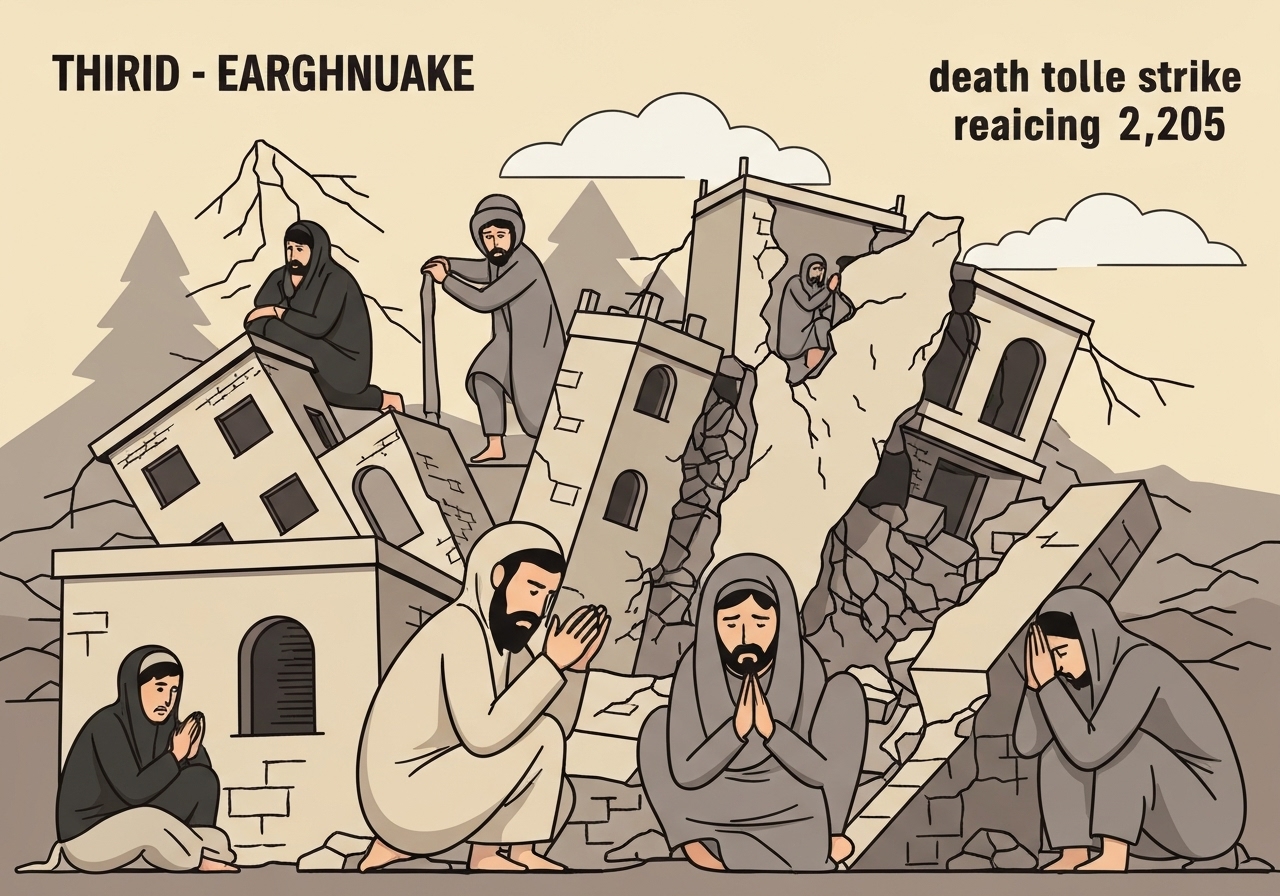
Lead: On the night of 4 September 2025 a magnitude 6.2 quake struck south‑eastern Afghanistan—the third temblor this week—while authorities confirmed the death toll from a separate magnitude 6.0 event that hit around midnight on Sunday has reached 2,205 as rescue teams continue to search devastated mountain villages.
Key takeaways
- A 6.2 magnitude quake struck south‑eastern Afghanistan on Thursday night (Helmholtz Centre for Geosciences).
- An earlier 6.0 quake around midnight on Sunday left at least 2,205 people dead, mostly in Kunar province.
- A 5.5 aftershock on Tuesday interrupted rescue operations and triggered new rockfalls.
- Islamic Relief assessed roughly 98% of buildings in Kunar were damaged or destroyed; about 84,000 people have been affected.
- Landscape and landslides are blocking roads; Taliban authorities have used helicopters and airdrops to reach cut‑off communities.
- Aid organisations face severe staff, supply and funding shortfalls; the Norwegian Refugee Council reports fewer staff and a reported immediate funding gap.
Verified facts
Seismic activity this week included a magnitude 6.2 event on Thursday night reported by the Helmholtz Centre for Geosciences in Germany. Officials and humanitarian responders said the third quake followed a magnitude 6.0 tremor that struck around midnight on Sunday and a 5.5 aftershock on Tuesday that disrupted rescue work.
The Taliban spokesperson Hamdullah Fitrat confirmed a death toll of 2,205 from Sunday’s quake, an increase from earlier estimates. Most fatalities and destruction have been reported in Kunar province, where homes built from wood and mud brick are especially vulnerable to shaking and to fast‑moving landslides.
Rescue teams and local authorities say entire villages were levelled and that bodies continued to be recovered from rubble as teams gained access. Islamic Relief’s rapid assessment reported about 98% of buildings in Kunar were either damaged or destroyed. Humanitarians say roughly 84,000 people have been affected so far.
Rough, mountainous terrain and fresh rockfall have cut roads, slowing convoys and forcing aid workers to walk for hours to reach survivors. Taliban forces have used helicopters and airdropped personnel to locate and extract people from isolated areas while UN and NGO medical points are treating the injured.
Context & impact
Afghanistan was already facing prolonged drought and a fragile economy before the quakes. Since the Taliban returned to power in 2021, international aid flows and the operational footprint of some NGOs have been reduced, complicating emergency response capacity.
Humanitarian groups report diminished staffing and prepositioned relief stocks compared with previous major quakes. The Norwegian Refugee Council said it has under 450 staff in Afghanistan compared with roughly 1,100 in 2023 and limited warehouse capacity. NRC staff flagged an immediate funding shortfall that will delay procurements for tents, medicine and shelter.
Local medical workers at UN‑run camps in hard‑hit districts such as Nurgal say supplies are running low and that urgent needs include surgery supplies, antibiotics, tents, clean water and food. Tens of thousands are displaced and sleeping outdoors amid ongoing aftershocks and the threat of additional landslides.
- Immediate priority needs: emergency medical care, shelter (tents), clean drinking water, food, and safe access routes for aid convoys.
- Longer‑term concerns: temporary shelter capacity, reconstruction of mud‑brick housing, and replenishing clinic stocks if international funding is delayed.
“The death toll from the Sunday quake has reached 2,205,”
Hamdullah Fitrat, Taliban spokesperson
Unconfirmed
- The full scale of damage from the Thursday 6.2 quake is not yet clear; assessments are ongoing.
- Casualty and displacement figures may change as rescue teams reach more isolated villages.
Bottom line
Three strong quakes in less than a week have compounded one of Afghanistan’s deadliest recent disasters. Immediate lifesaving aid is constrained by terrain, damaged infrastructure and reduced humanitarian capacity. Without rapid funding and logistics support, medical and shelter shortages are likely to worsen in the coming days.