
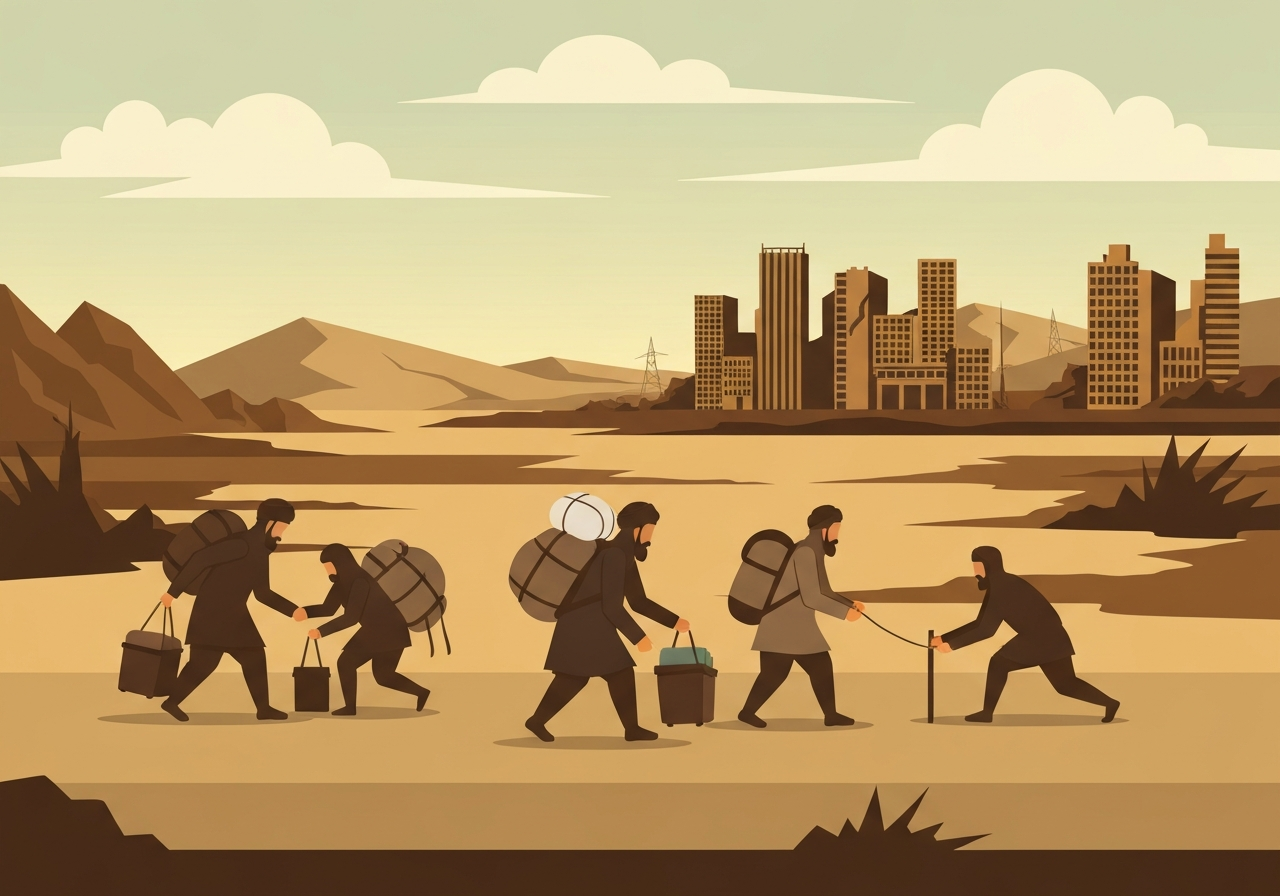
Lead: In late March 2026, more than 70,000 Afghans crossed back into Afghanistan from Iran after the outbreak of war in Iran in late February severed jobs and study opportunities there. Many returnees—students, construction workers and families—arrived through crossings such as Islam Qala, citing campus closures, workplace evacuations and health hazards from burning oil in Tehran. Those who fled have escaped immediate U.S.-Israeli strikes inside Iran but returned to an Afghanistan marked by deep poverty and tighter Taliban restrictions that limit economic and social prospects. The sudden inflow is straining border processing and humanitarian support in western Afghanistan.
Key Takeaways
- Over 70,000 Afghans returned from Iran during the first two weeks of March 2026, according to the United Nations migration agency (IOM).
- Returnees include students (for example, a 26-year-old M.B.A. student from Bushehr), construction workers and family units displaced by university closures and workplace evacuations.
- Crossings have clustered at border points such as Islam Qala, creating long queues and urgent shelter needs at reception sites.
- Health complaints reported by returnees include smoke inhalation after burning oil in Tehran and conditions worsened by overcrowded transit.
- Afghanistan faces limited capacity to absorb new arrivals amid existing economic contraction, with humanitarian agencies warning of funding and logistics shortfalls.
- Many returnees express reluctance to settle permanently under Taliban rule but report having no immediate safe alternatives outside Afghanistan.
Background
The Iran war that began in late February 2026 rapidly disrupted economic links that for years provided livelihoods to many Afghans. Iran hosted sizeable numbers of Afghan workers and students whose remittances and skills were an important lifeline for families and local markets in western and central Afghanistan. Historically, labor migration to Iran has been cyclical and tied to construction and service-sector demand; the present conflict has been unusually disruptive given international strikes inside Iran and domestic unrest.
Afghan migration flows have long been shaped by security, economics and policy. Under the Taliban government, restrictions on education and women’s participation in public life have pushed some citizens to seek opportunities abroad, even as those same restrictions complicate repatriation and reintegration programs. Key stakeholders include host communities in Iran, Afghan local authorities at border provinces, the Taliban-appointed administrative structures, and international agencies such as IOM and UNHCR working on registration and assistance.
Main Event
Beginning in late February, the war in Iran escalated to a level that interrupted universities, construction sites and everyday commerce in cities where Afghan migrants lived and worked. In Bushehr and Tehran, reports of burning oil and air pollution rose as infrastructure came under attack, prompting campus evacuations and company shutdowns. A 26-year-old Afghan M.B.A. student who had been studying in Bushehr described leaving after her dormitory was emptied and her university temporarily closed; she said health concerns and family pressure convinced her to travel the two-day route home.
Border points such as Islam Qala saw surges of people arriving by bus, private car and foot. Local officials and aid workers reported long processing lines and ad hoc shelters set up to receive families with children and elderly returnees. The United Nations migration agency recorded more than 70,000 crossings into Afghanistan in the first half of March 2026, a sharp uptick compared with normal seasonal returns.
Afghan authorities have emphasized that arrivals are being registered and provided basic assistance where possible, but facilities remain stretched. Returnees described mixed prospects: some intended to try to leave again for other countries, others wanted temporary shelter until conditions in Iran stabilized, and many feared the limited economic options awaiting them at home under the Taliban’s governance.
Analysis & Implications
The immediate humanitarian implication is a spike in short-term needs—shelter, medical care for smoke-related and travel-related ailments, food and winterized clothing at border transit sites. Humanitarian organizations face funding and access constraints, and the speed of arrivals complicates orderly assistance. If the flow continues, mid-term pressures will shift to housing and employment in provinces that already have high poverty rates.
Politically, the returns place added strain on a government that lacks broad international recognition and depends on limited domestic revenue. The Taliban’s tighter social controls reduce options for particularly vulnerable groups—women, students and dissidents—who had sought mobility and opportunity abroad. International actors may be reluctant to scale up assistance without guarantees on humanitarian access and protections for returnees.
Economically, the loss of remittances and labor opportunities in Iran could depress household incomes and local markets across affected Afghan provinces. Construction and service sectors that previously relied on migrant wages may contract, increasing the demand for humanitarian cash assistance. Longer-term recovery will hinge on whether alternative livelihoods can be mobilized and whether donor coordination improves.
Comparison & Data
| Period | Recorded Arrivals |
|---|---|
| First two weeks of March 2026 | 70,000+ (IOM) |
| Late February 2026 | Conflict in Iran begins |
The table above summarizes the verified crossing count reported by IOM and the timing of the Iran conflict’s outbreak. While precise month-to-month baseline migration figures for earlier 2026 weeks are not publicly available, agencies note that the scale in early March represents an exceptional spike tied to the new host-country emergency.
Reactions & Quotes
“We tried to endure the disruption, but fear and illness made us decide to return,”
Returnee student from Bushehr (paraphrased)
The student’s remark underscores why many prioritized immediate safety and family pressure over continuing studies amid campus closures and health risks.
“IOM has recorded more than 70,000 returns into Afghanistan in the first half of March and is scaling up reception support,”
International Organization for Migration (IOM), UN migration agency
IOM’s statement frames the scale of movement and the agency’s operational response, while also noting funding and access constraints that limit assistance speed.
“Local authorities are registering arrivals and coordinating with humanitarian partners, but reception capacity is under strain,”
Afghan provincial official (paraphrased)
Provincial officials emphasize coordination efforts but warn that sustained inflows will challenge local service delivery and social stability.
Unconfirmed
- Exact long-term intentions of returnees are not yet verified—many may attempt onward movement or re-migrate depending on changing conditions.
- Comprehensive health assessments for smoke exposure and respiratory illness among returnees have not been completed and remain pending official medical surveys.
- Full demographic breakdowns (age, gender, occupation) of the 70,000+ returns are incomplete pending IOM and local registration data reconciliation.
Bottom Line
The Iran war’s sudden disruption of livelihoods has triggered a rapid, large-scale return of Afghans—more than 70,000 in early March 2026—exposing both humanitarian gaps at border points and longer-term economic vulnerabilities inside Afghanistan. Many returnees escaped immediate violence but face an uncertain future amid a weakened economy and restrictive governance that limits education and work options, particularly for women and young professionals.
Meeting immediate needs will require scaled humanitarian funding, stronger coordination among the Taliban authorities and international agencies, and contingency planning for protracted displacement. For policymakers and aid planners, the core challenge is turning urgent reception into durable support that preserves life chances for those who fled—without assuming swift return to pre-conflict normalcy in Iran.
Sources
- The New York Times — news report on Afghan returns and individual interviews
- International Organization for Migration (IOM) — United Nations migration agency (official data and operational updates)