
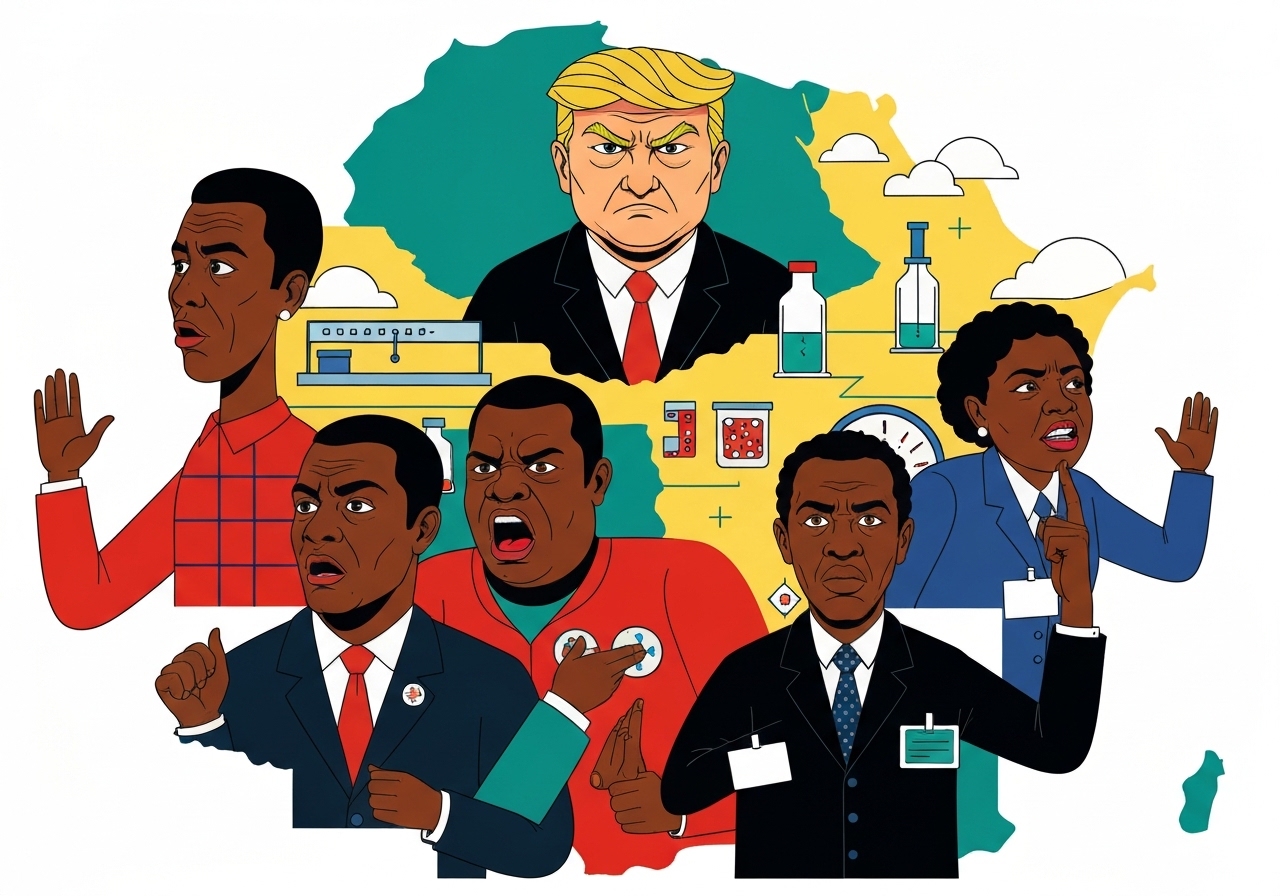
Lead: Last week Africa CDC officials announced Guinea-Bissau had paused a contentious vaccine study that would have placed 7,000 newborns in a no-vaccine control arm, while U.S. health authorities maintained the trial remained active. The U.S. Department of Health and Human Services (HHS) reportedly characterized the Africa CDC as “fake and powerless,” prompting a forceful public rebuttal from Africa CDC director-general Jean Kaseya. Kaseya insisted African sovereignty and regulatory requirements determine whether trials proceed. The dispute centers on ethics, consent and whether external funders can press trials in countries with high hepatitis B prevalence.
- Guinea-Bissau move: Authorities halted the proposed trial after Africa CDC raised concerns; the study planned 14,000 newborns in two arms of 7,000 each.
- U.S. funding: HHS announced roughly $1.6 million in support for the research in December, according to reporting.
- Regulatory safeguards: Africa CDC guidance requires written authorization from the National Medicines Regulatory Authority and approval from national ethics committees and local institutional review boards.
- Local prevalence: Nearly 20% of adults and about 11% of children in Guinea-Bissau carry hepatitis B, raising ethical concerns about withholding vaccines.
- Sovereignty asserted: Jean Kaseya emphasized that African heads of state empowered Africa CDC to convene and that national ministries and regulators hold final authority.
- Ethics debate: Public-health experts cited the need for control groups to receive the standard of care to avoid repeating historical research abuses.
- Diplomatic friction: Africa CDC said HHS officials later denied knowledge of disparaging comments, and Kaseya reported closing the episode after private clarifications.
Background
The proposed study—reported to include 7,000 infants receiving a hepatitis B vaccine and 7,000 in a control group—sparked alarm because withholding standard vaccination in a high-prevalence setting raises clear ethical questions. International trials typically require host-country regulatory sign-off, ethics committee approval and local institutional review board acceptance; Africa CDC notes written authorization from a country’s National Medicines Regulatory Authority is mandatory. Guinea-Bissau’s public-health context, with significant hepatitis B prevalence, shaped local and regional unease about the trial’s design.
Funding and collaboration patterns complicate these dynamics. External grants, research agendas and investigator-initiated protocols often come from institutions in Europe and the United States; critics say research priorities can reflect funder interests rather than local needs. Africa CDC positions itself as a continental convener empowered by the 55 African heads of state, seeking to ensure studies align with African priorities and regulatory frameworks. Historical abuses and unequal power dynamics further sensitize stakeholders to designs that might appear to disadvantage participants in low-resource settings.
Main Event
The immediate flashpoint began when Africa CDC announced local authorities in Guinea-Bissau had moved to stop the proposed trial. HHS, however, told reporting outlets that the trial was still planned, and in one exchange reportedly described Africa CDC in disparaging terms. Africa CDC director-general Jean Kaseya publicly rejected that characterization, stressing the agency’s formal mandate and convening role across the continent.
Kaseya argued that no external actor—be it an international organization, foreign government or outside research team—can override the legal and ethical processes of a sovereign state. He said Africa CDC supports national sovereignty and that any trial must comply with national regulatory and ethics approval processes including the Ministry of Health’s sign-off. Kaseya framed the contest as one over who sets public-health priorities and how consent and protection are upheld.
Medical and academic voices weighed in. Nigerian physician-researcher Abdulhammad Babatunde told reporters that research funding should reflect local needs and ensure participants in control arms receive standard-of-care protections. Observers pointed to historical precedents, such as the Tuskegee study, to explain why deliberate omission of vaccines in control groups is ethically fraught when effective prevention exists.
In response to immediate confusion, Africa CDC said senior HHS officials later told Africa CDC leaders they were unaware of any formal statement intended to disparage the agency. Kaseya reported closing that chapter after those private assurances, though he reiterated the broader policy points about sovereignty and regulatory authority.
Analysis & Implications
The episode highlights persistent tensions between funders, external investigators and host countries. When large donors shape study agendas, there is a risk that local priorities and protections are sidelined unless continental or national mechanisms assert authority. Africa CDC’s public stance strengthens the role of regional institutions in setting norms for ethics and consent, which could shift how global funders design and negotiate trials.
Ethically, placing infants in a no-vaccine control arm where a preventable disease is common raises serious questions about equipoise and beneficence. Institutional review boards and national ethics committees are tasked with ensuring that control arms receive at least the standard of care; failure to meet that bar can delegitimize research and damage public trust. For populations with high hepatitis B prevalence, withholding vaccination—even temporarily—has measurable individual and public-health risks.
Politically, the spat may complicate U.S.-Africa health cooperation in the near term. Public language questioning the competence or legitimacy of a continental health body risks diplomatic friction and could undermine collaborative platforms used during epidemics or vaccination campaigns. Conversely, clear affirmation of national regulatory authority may encourage researchers to engage more substantively with host-country institutions early in protocol development.
Operationally, stricter insistence on national sign-offs and ethics approvals can slow study start-up timelines but may improve community acceptance and trial validity. Sponsors and investigators that adapt by building genuinely collaborative protocols—co-designed with national authorities and aligned with local health priorities—are more likely to secure approvals and generate ethically defensible findings.
Comparison & Data
| Item | Reported Figure |
|---|---|
| Planned participants (total) | 14,000 newborns (7,000 vaccine / 7,000 control) |
| U.S. funding announced | About $1.6 million |
| Hepatitis B prevalence | ~20% adults; ~11% children (Guinea-Bissau) |
The table summarizes the figures central to the dispute: sample size, reported U.S. support and local disease burden. Those numbers underscore why national regulators and ethics committees scrutinize trial design in high-prevalence settings. Even modest funding levels can power studies with sizable public-health implications, so transparent governance and local engagement matter for both ethics and scientific validity.
Reactions & Quotes
Africa CDC’s public response framed the issue as one of mandate and sovereignty. Kaseya positioned the agency as the continental convener backed by African heads of state, rejecting any suggestion that Africa CDC is an irrelevant actor in health governance.
“Let me tell you: we are not an NGO… We are the convening power in Africa,”
Jean Kaseya, Director-General, Africa CDC
Public-health researchers emphasized standard-of-care obligations for control groups. One Nigerian clinician argued that interventions must not leave participants worse off than current practice and that funder curiosity should not override harms to local populations.
“To prevent things like the Tuskegee study… the control group has to get the standard of care,”
Abdulhammad Babatunde, physician and global health researcher
HHS’s reported description of Africa CDC as “fake and powerless” (as relayed to media) provoked diplomatic sensitivity. HHS officials later told Africa CDC representatives they were unaware of any official statement intended to disparage the agency, according to Africa CDC accounts; that exchange appears to have defused an immediate escalation.
Unconfirmed
- Attribution of the exact phrase “fake and powerless” to a formal HHS press release is unconfirmed; Africa CDC reports the phrase as cited to HHS in media briefings.
- The precise internal communications between HHS officials and Danish researchers referenced in reporting have not been independently released for public review.
- Any final decision by Guinea-Bissau’s Ministry of Health on this specific trial had not been published in an official government notice at the time of reporting.
Bottom Line
This episode is less about a single protocol than about who sets the rules for health research in Africa. Africa CDC’s intervention underlines a broader push for African-led priority setting, regulatory oversight and ethical protections—especially in studies involving vulnerable populations such as newborns. Funders and investigators that do not align protocol design with national and continental norms risk delays, refusals or reputational damage.
For policymakers and researchers, the practical takeaway is clear: meaningful early engagement with national regulators, ethics committees and ministries of health is essential. Strengthening transparent, reciprocal partnerships and ensuring control groups receive standard-of-care protections can reduce ethical concerns and bolster the legitimacy of research conducted in low-resource settings.
Sources
- Futurism (news report referencing Africa CDC, HHS and reporting on the proposed Guinea-Bissau trial)
- Africa Centres for Disease Control and Prevention (official continental public health agency)
- U.S. Department of Health and Human Services (U.S. federal health agency)
- The Guardian (news outlet reporting interviews with regional health experts)