
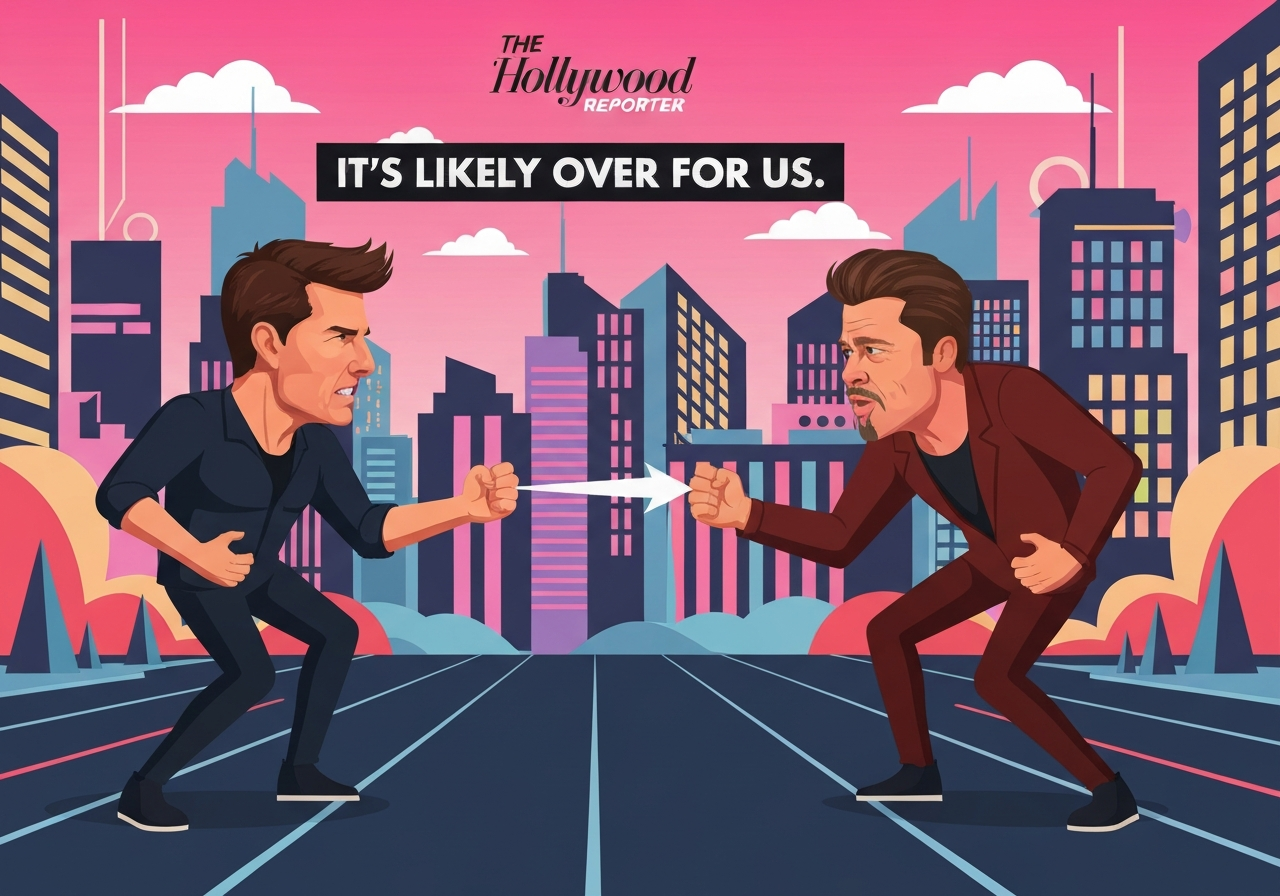
Lead
Two days ago Irish filmmaker Ruairi Robinson posted a 15-second AI-generated clip showing Tom Cruise and Brad Pitt trading blows on a rooftop. Robinson said the clip was produced by entering a two-line prompt into Seedance 2.0, a model tied to ByteDance, the Chinese parent of TikTok. The Motion Picture Association publicly accused the company of large-scale copyright infringement, while veteran screenwriter Rhett Reese warned the technology threatens careers across Hollywood. The incident has reignited debates over copyright, creative labor and the pace of generative video advances.
Key Takeaways
- The clip is 15 seconds long and was posted by Ruairi Robinson, who was Oscar-nominated for a short film in 2002.
- Robinson said the video was made by entering a two-line prompt into Seedance 2.0, which is owned by ByteDance.
- The Motion Picture Association, led by Charles Rivkin, accused the service of engaging in unauthorized use of U.S. copyrighted works and urged ByteDance to stop.
- Screenwriter Rhett Reese (Deadpool & Wolverine, Zombieland) reacted on X, saying ‘It’s likely over for us’ and elaborating on the existential threat to writers.
- Reese warned that someone with great talent could use such tools to produce a film indistinguishable from big-studio releases.
- Industry voices, including entrepreneur Matt Shumer, have warned the acceleration of AI capabilities could disrupt many professions beyond entertainment.
Background
Generative video models have moved from crude, short clips to far higher fidelity in a compressed time span, driven by bigger models, more compute and larger training sets. For years the entertainment industry has flagged deepfakes and synthetic media as risks to reputation, copyright and the value of professional labor. Trade groups such as the Motion Picture Association have long lobbied for stronger enforcement and clearer safeguards as tools to replicate actors, scripts and visual styles emerge. At the same time, the creative sector has historically been gated by access to funding, tools and industry channels; new AI tools promise to lower some of those barriers while raising questions about ownership and attribution.
Ruairi Robinson’s post put those tensions into stark relief: a well-crafted short prompt produced a clip that many viewers found startlingly professional. That immediacy prompted both alarm and fascination inside Hollywood, where producers, writers and advocacy groups are weighing legal, economic and ethical responses. The MPA framed its response in copyright terms; creators and workers are framing theirs in terms of livelihoods and the future role of craft in a world of synthetic media.
Main Event
The clip, posted by Robinson, depicts two leading actors in a rooftop brawl. Robinson said the footage was generated using Seedance 2.0 and that it took only a simple two-line text prompt to produce. The post quickly circulated across social platforms, drawing attention from creators, executives and the Motion Picture Association. The MPA issued a denunciation that focused on alleged extensive unauthorized use of U.S. copyrighted works by the service and called for ByteDance to halt the activity.
Screenwriter Rhett Reese responded on X with a short, stark assessment: ‘It’s likely over for us.’ He expanded in subsequent posts, saying his reaction was born of fear for colleagues and for the craft itself rather than excitement about the tool. Reese suggested a scenario in which an individual with exceptional cinematic taste and storytelling ability could use such systems to make films that rival studio releases, accelerating creative democratization while threatening many jobs.
Industry reaction was not uniform. Some observers downplayed the clip’s current technical limits, while others highlighted how quickly capabilities have improved. Entrepreneur Matt Shumer compared the moment to the sudden shock many experienced at the start of the COVID-19 pandemic, warning that tools have shifted from ‘helpful’ to ‘does my job better than I do’ in a short span. The mix of technical demonstration, high-profile commentary and a major trade association’s public complaint turned a short clip into a broader industry flashpoint.
Analysis & Implications
Technically, the clip illustrates two converging trends: higher-fidelity generative models and greatly simplified user interfaces. If a convincing short scene can be created from a minimal prompt, the threshold for producing longer, coherent narratives is lower than many expected. That accelerates both creative opportunity and competitive pressure; independent creators can use the same tools as studios, but so can bad actors and those willing to bypass licensing and consent.
Legally, the MPA’s statement signals an escalating confrontation over training data, copyright and derivative works. Trade groups will likely press for clearer rules around model training, explicit opt-outs for rights holders and faster takedown mechanisms. Those efforts could lead to litigation, regulatory proposals or negotiated licensing regimes, but they may lag behind technical change unless lawmakers and platforms move faster.
Economically, routinizable parts of film production — previsualization, certain VFX passes, background performances, and even early script treatments — are vulnerable to automation. That does not erase high-end craft or established auteurs, but it could compress budgets, shift bargaining power and change career trajectories. Conversely, lower-cost, high-quality tools could enable novel voices to make work that was previously unreachable, reshaping gatekeeping dynamics in the industry.
Comparison & Data
| Era | Typical Access | Output Fidelity | Typical Prompt Complexity |
|---|---|---|---|
| Early deepfakes (pre-2020) | Specialist teams, moderate resources | Low to medium | High technical input |
| Generative video models (2021-2023) | Growing research groups, nascent tools | Medium | Moderate |
| Recent consumer-facing tools (Seedance 2.0 example) | Wider public access, low friction | Medium to high (short clips) | Simple text prompts |
The table is qualitative, based on observable trends and public demonstrations. It highlights how accessibility and ease of use have risen even as fidelity climbs, a combination that typically accelerates diffusion and adoption across sectors.
Reactions & Quotes
Rhett Reese framed his response as personal alarm over job loss rather than technical admiration. He warned that, while many outputs will be poor, a gifted individual using advanced models could produce work rivaling studio films.
It’s likely over for us.
Rhett Reese, screenwriter
The Motion Picture Association framed the issue as a copyright and jobs matter, urging the company behind the model to stop what it described as widespread unauthorized use of copyrighted material.
ByteDance should immediately cease its infringing activity.
Charles Rivkin, Chairman and CEO, Motion Picture Association
Entrepreneur Matt Shumer sounded a broader societal alarm, comparing the current moment to the sudden, systemic shocks of early 2020 and warning that many professions will feel AI’s competitive pressure quickly.
The experience of watching AI go from ‘helpful tool’ to ‘does my job better than I do’ is about to be widespread.
Matt Shumer, entrepreneur
Unconfirmed
- Whether Seedance 2.0’s training set included specific copyrighted films cited by the MPA has not been independently verified.
- The claim that a single person will imminently be able to produce feature-length films indistinguishable from studio releases remains speculative and depends on many technical and logistical factors.
- Predictions about immediate mass job losses in Hollywood are plausible but unquantified; detailed economic studies have not yet validated timing or scale.
Bottom Line
The short AI clip of Tom Cruise and Brad Pitt did more than surprise viewers: it crystallized a set of legal, economic and creative tensions that the entertainment industry must address. Trade groups like the MPA are emphasizing copyright enforcement, while many creators are grappling with what rapid automation means for careers and craft. Policymakers, platforms and industry leaders face tradeoffs: protect existing creative labor through regulation and licensing, or adapt to a rapid influx of new creators enabled by low-cost tools.
Whatever path emerges, the episode underscores urgency. The technology’s trajectory suggests continued, fast improvements; legal and industry responses will need comparable speed and nuance to balance innovation, public interest and the livelihood of creative workers. For now, the clip is a warning and a prompt: the debate over how to govern synthetic media has moved from abstract to immediate.
Sources
- The Hollywood Reporter — trade press report summarizing the clip, reactions from Ruairi Robinson, Rhett Reese and the Motion Picture Association.