
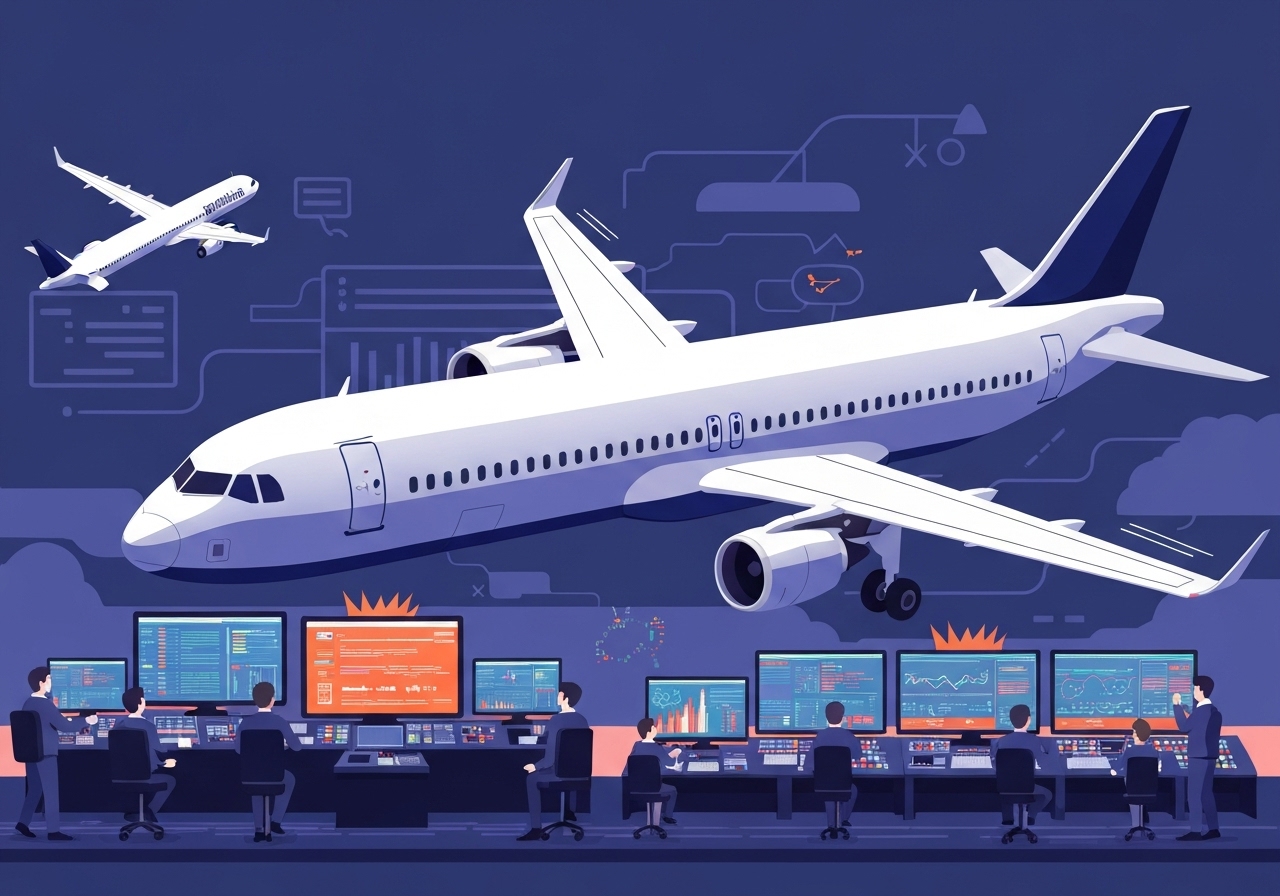
Airlines Rush Software Update for Airbus A320 After JetBlue Altitude Drop
Lead: Airlines worldwide canceled and delayed flights heading into the weekend after regulators ordered a software correction for Airbus A320-family jets following a sudden altitude loss on a JetBlue flight. The incident, on Oct. 30 en route from Cancun to Newark, saw the aircraft diverted to Tampa and at least 15 passengers treated for injuries. Airbus and European and U.S. safety agencies said an analysis pointed to intense solar radiation corrupting data used by flight-control systems. Regulators required an immediate software update affecting more than 500 U.S.-registered aircraft and fleets across several carriers.
Key Takeaways
- Regulators: The FAA joined the European Union Aviation Safety Agency (EASA) in mandating a software update for the A320 family after a JetBlue incident on Oct. 30, 2023.
- Scope: More than 500 U.S.-registered A320-family aircraft are impacted; American Airlines has about 480 A320-family planes, of which 209 require the fix.
- Operational impact: The update typically takes about two hours per aircraft; airlines reported cancellations and delays, with ANA canceling 65 domestic flights for Saturday.
- Affected fleets: Delta expects fewer than 50 of its A321neo jets affected; United reported six affected aircraft; Hawaiian said it was unaffected.
- Cause identified: Airbus said intense solar radiation can corrupt data critical to flight-control functions, and that the behavior was introduced by a previous software update.
- Passenger safety: The JetBlue flight diverted to Tampa after the altitude drop on Oct. 30; at least 15 passengers were hospitalized.
- Airline responses: American prioritized minimizing cancellations while completing most updates Friday; Air India reported completion of resets on more than 40% of its affected planes without cancellations.
Background
The Airbus A320 family is one of the world’s bestselling single-aisle airliners and competes directly with Boeing’s 737. Over the past decade the family expanded with neo variants that feature new engines and software systems; many operators run mixed fleets of older and newer A320s. Aircraft operating systems receive periodic software updates intended to improve safety and performance, but complex changes sometimes introduce unexpected interactions with onboard sensors and avionics.
On Oct. 30, JetBlue Flight from Cancun to Newark experienced a sudden altitude drop and diverted to Tampa, Florida; 15 passengers were taken to hospital for treatment. That event prompted a focused engineering review by Airbus and safety agencies. The subsequent analysis pointed to the interaction of a recent software update with intense solar radiation as a contributing factor. Regulators moved quickly because of the A320’s ubiquity in global fleets and the potential for widespread operational disruption if a fix were delayed.
Main Event
Airbus said its examination of the JetBlue event found intense solar radiation can corrupt certain data streams relied on by flight-control software on A320-family aircraft. EASA and the FAA required operators to implement a specific software update designed to eliminate the vulnerability and restore normal redundancy and checks. The agencies warned airlines the mandated work could cause short-term schedule disruptions as updates were applied.
Carriers responded immediately. American Airlines, with roughly 480 A320-family aircraft and 209 affected units, said the update takes about two hours for many planes and expected the overwhelming majority to be completed Friday, with a handful finishing Saturday. All Nippon Airways canceled 65 domestic flights for Saturday among more than 30 A320-family planes in its fleet and left open the possibility of further cancellations on Sunday.
Other airlines reported smaller fleet impacts: Delta estimated fewer than 50 A321neo aircraft affected; United cited six affected aircraft and anticipated only minor disruptions; Air India said engineers completed the reset on more than 40% of affected planes without cancellations; Hawaiian Airlines reported no impact. Airlines emphasized safety as the overriding priority while attempting to limit cancellations and passenger disruption.
Analysis & Implications
The rapid, regulator-mandated software update highlights both the interconnected benefits and vulnerabilities of modern avionics. As aircraft depend more on software and integrated sensor data, a single software change can have ripple effects across large global fleets. The A320 family’s scale — hundreds of aircraft per major carrier — amplifies operational consequences when a corrective action is required on short notice.
From an operational perspective, the two-hour update window reduces the long-term disruption risk because many airlines can apply fixes during overnight checks or between flights. Still, timing was poor: the mandate fell as U.S. travelers were returning from the Thanksgiving holiday, increasing the potential for cancellations and passenger inconvenience. Airlines must balance rapid compliance with minimizing knock-on effects to schedules and crew rotations.
Regulatory coordination between EASA and the FAA is significant: simultaneous directives across major jurisdictions shorten the time airlines can defer action and underscore the cross-border nature of aviation safety. Economically, the immediate cost is passenger rebooking and schedule reshuffling; longer-term effects include scrutiny of software change management processes at OEMs and operators and potential additional investments in radiation-hardened validation for critical avionics.
Comparison & Data
| Item | Number / Note |
|---|---|
| U.S.-registered A320-family aircraft affected | >500 aircraft |
| American Airlines A320-family fleet | ~480 total; 209 affected |
| Delta A321neo affected | <50 aircraft |
| United affected aircraft | 6 aircraft |
| ANA flight cancellations (Saturday) | 65 domestic flights |
| JetBlue incident | Oct. 30 from Cancun to Newark; diverted to Tampa; 15 passengers hospitalized |
The table compiles figures supplied by carriers and safety agencies in the immediate response. While the update itself is short, scale matters: an airline with hundreds of A320-family jets must coordinate maintenance windows, crew schedules and airport operations to apply the patch with minimal service disruption. Smaller fleets or isolated aircraft can often be updated between flights, limiting passenger impacts.
Reactions & Quotes
“Definitely not ideal for this to be happening on a very ubiquitous aircraft on a busy holiday weekend.”
Mike Stengel, AeroDynamic Advisory (industry consultant)
Stengel emphasized that while the timing increased passenger inconvenience, the relatively short update time offered a practical mitigant.
“It only should take a few hours to update the software.”
Mike Stengel, AeroDynamic Advisory (industry consultant)
Regulators framed the order as urgent but feasible, citing the need to prevent recurrence and to maintain redundancy in flight-control data.
“The issue may cause short-term disruption to flight schedules.”
European Union Aviation Safety Agency (EASA)
EASA highlighted that operational impacts were expected but that the update was the most direct path to restoring full safety margins.
Unconfirmed
- Whether solar radiation alone caused the JetBlue altitude drop remains under technical review; Airbus identified it as a likely contributor but full causal chains are still being analyzed.
- No publicly confirmed reports link this software issue to other in-flight injuries beyond the Oct. 30 JetBlue passengers; investigations are ongoing.
Bottom Line
The coordinated regulatory action to force a software update for the Airbus A320 family was prompted by a significant in-flight incident on Oct. 30 and the identification of a vulnerability triggered by intense solar radiation. The fix is relatively quick to apply, and most airlines expected to complete updates within a short window, but the timing around a major travel holiday increased short-term disruption to schedules and travelers.
In the medium term, the episode will likely prompt closer scrutiny of software change management, validation against environmental effects and operational contingency planning. For passengers, the immediate takeaway is that regulators and carriers acted to restore a safety margin; for airlines and manufacturers, the event underscores the need for conservative validation of changes that affect flight-critical systems.
Sources
- Associated Press — news report on regulator orders and airline responses
- Airbus — official newsroom and corporate statements (official)
- Federal Aviation Administration (FAA) — regulator homepage (official)
- European Union Aviation Safety Agency (EASA) — regulator homepage (official)
- American Airlines Newsroom — airline statements and operational notices (official)
- JetBlue Newsroom — incident and service updates (official)