
Lead
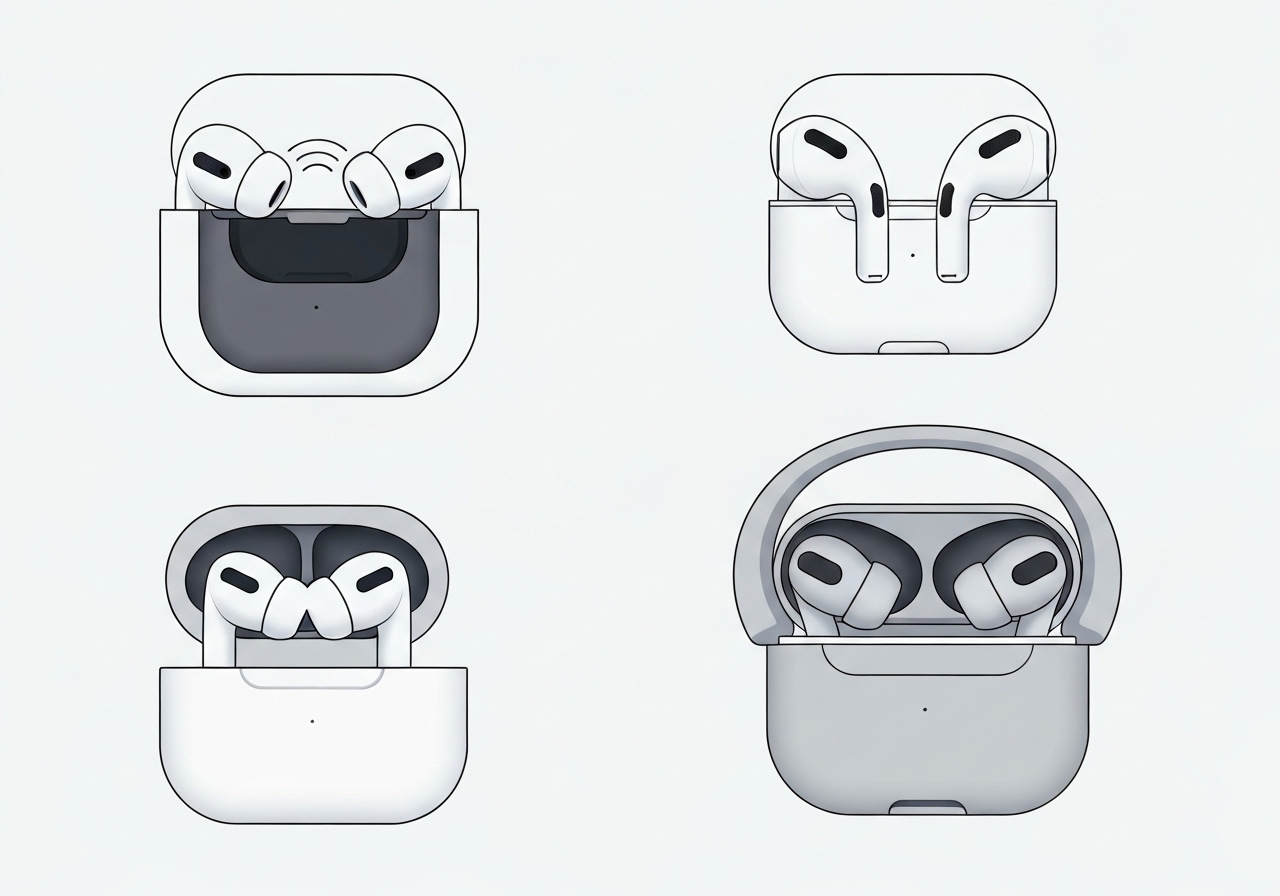
Apple unveiled the third-generation AirPods Pro at its September 9, 2024 “Wonderlust” event, with the earbuds arriving in stores on September 19 and available for preorder now. Priced at $249, the AirPods Pro 3 position Apple’s earbuds further into fitness and translation use cases by adding a built‑in heart‑rate sensor, Workout Buddy features and a real‑time translation capability. Apple also says the new model delivers improved audio and up to twice the active noise cancellation (ANC) of the prior Pro model thanks to foam‑infused tips and new hardware. The broader AirPods family still spans entry models at $129 through over‑ear AirPods Max at $549, keeping cheaper alternatives available for buyers who don’t need every new feature.
Key Takeaways
- The AirPods Pro 3 launch was announced on September 9, 2024, and the earbuds go on sale September 19, 2024, with a $249 MSRP.
- Apple added a built‑in heart‑rate sensor and support for tracking more than 50 workout types through the iPhone Fitness app; the new Workout Buddy offers personalized insights.
- Apple claims the Pro 3 delivers improved sound and up to 2x the ANC of the AirPods Pro 2, aided by new foam‑infused ear tips and a redesigned fit that adds an XXS tip size.
- The AirPods Pro 3 carry an IP57 rating for earbuds and case, improving dust and water resistance versus IP54 on lower models.
- Battery figures: earbuds up to 8 hours (with conditions noted by Apple), case extends total listening time up to 24 hours; other models range from 4–20 hours for earbuds depending on model.
- Connectivity and chips: AirPods Pro 3 use Bluetooth 5.3 and Apple H2 with a U2 chip in the case; the lineup otherwise mixes H2 and H1 silicon across models.
- Price tiers remain: AirPods (4) $129, AirPods (4) with ANC $179, AirPods Pro 2 often discounted around $199 through third parties, AirPods Max $549.
Background
Apple’s wearable audio line has evolved from simple earbuds to a multi‑tier catalog that targets different use cases and budgets. The base AirPods (fourth generation) and the mid‑tier ANC variant serve price‑sensitive buyers, while the AirPods Pro family has been Apple’s premium true‑wireless offering since the first Pro model. The AirPods Max occupies a separate over‑ear category at the top of the range and remains the only over‑ear option in Apple’s audio lineup.
The previous major Pro update arrived as the AirPods Pro 2, which introduced stronger ANC, improved drivers and new sensors; a minor refresh in 2023 added a USB‑C charging case and better dust resistance. Over the same period Apple has pushed integration with iOS features—Hearing Aid compatibility, Live Translation and increased fitness tracking—so the Pro 3’s fitness and translation emphasis extends a clear product strategy rather than a departure.
Main Event
At the September 9 event Apple presented the AirPods Pro 3 as a fitness‑forward upgrade. The earbuds include a heart‑rate sensor that feeds workout metrics into the iPhone Fitness app and support tracking for more than 50 workout types. Apple also introduced Workout Buddy, a new software experience that surfaces personalized metrics and achievement‑based coaching based on a user’s exercise history.
On the hardware side, Apple says the Pro 3 sports foam‑infused ear tips that improve noise isolation and fit; the tips are physically smaller than before and add a fifth XXS size option for more users. Apple claims these changes help the Pro 3 achieve up to twice the ANC of the previous generation, although independent testing is still required to verify the exact gain in real‑world environments.
Other changes include an upgraded IP57 rating for both earbuds and charging case, USB‑C wired charging, Bluetooth 5.3 connectivity and H2 silicon with a U2 chip in the case. Apple also highlighted a live translation feature for real‑time language conversion and reiterated compatibility with Lossless audio via Apple Vision Pro or wired USB‑C connections to supported devices.
Analysis & Implications
The addition of a heart‑rate sensor signals Apple’s intent to make earbuds part of a broader health and fitness ecosystem, not merely audio accessories. By routing heart rate and workout classification through the Fitness app and offering tailored Workout Buddy insights, Apple is packaging hardware and software to compete with wrist‑based trackers for certain exercise metrics. That said, earbuds are limited compared with chest straps or dedicated heart‑rate monitors, so their data will likely be best suited to casual fitness users rather than athletes needing medical‑grade precision.
Pushing ANC and fit improvements addresses a core challenge for many true‑wireless buyers: finding earbuds that isolate sound without discomfort. Foam‑infused tips and a new tip size range should broaden the Pro 3’s appeal, but efficacy will depend on individual ear anatomy and how well the foam performs over weeks of use. If Apple’s ANC claims hold up in third‑party testing, the Pro 3 could close the gap with competing high‑end earbuds on noise suppression while retaining deep iOS integration.
On pricing and lineup strategy, Apple keeps clear differentiation across tiers: $129 and $179 entry points for basic and ANC‑enabled AirPods, $249 for the new Pro 3, and $549 for the Max over‑ears. This preserves options for cost‑conscious buyers and upgraders who value fitness and translation features. Third‑party discounts on the Pro 2 (often near $199) will complicate buying decisions for consumers weighing incremental upgrades against a lower‑priced, proven model.
Comparison & Data
| Model | Price | ANC | Earbud battery (hrs) | Case battery (hrs) | Water rating | Heart‑rate sensor | Chip |
|---|---|---|---|---|---|---|---|
| AirPods 4 | $129 | No | Up to 5 | Up to 30 | IP54 | No | H2 |
| AirPods 4 w/ ANC | $179 | Yes | Up to 4 | Up to 20 | IP54 | No | H2 |
| AirPods Pro 2 | Discontinued (commonly on sale ~$199) | Yes | Up to 6 | Up to 30 | IP54 | No | H2, U1 in case |
| AirPods Pro 3 | $249 | Yes (Apple: ~2x Pro 2) | Up to 8 | Up to 24 | IP57 | Yes | H2, U2 in case |
| AirPods Max | $549 | Yes | Up to 20 | N/A | No | No | H1 |
The table highlights how Apple staggers features across models. The Pro 3 raises the minimum for dust/water resistance (IP57) and puts a heart‑rate sensor into earbuds for the first time in Apple’s true‑wireless family. Battery numbers are manufacturer estimates and can vary by usage, ANC settings and software features such as Hearing Aid mode.
Reactions & Quotes
Apple framed the Pro 3 as a multi‑purpose device for audio and fitness during the product introduction; the company emphasized personalized workout feedback and improved noise control as key selling points. Early commentary from reviewers has focused on the new sensors and tips but stressed the need for hands‑on tests to confirm ANC and sound claims.
“Workout Buddy”
Apple (official announcement)
Apple used that term to describe the new fitness experience tied to the iPhone Fitness app; the phrasing underscores the company’s approach of blending hardware sensors with software coaching. The effectiveness of Workout Buddy will depend on data quality from ear‑based sensors and how Apple surfaces insights compared with existing wrist‑based fitness tools.
“We’ve yet to put them to the test.”
The Verge (Sheena Vasani)
The Verge’s early coverage notes that independent testing is still required to validate Apple’s claims about ANC improvement and fit. That caution is typical in initial hands‑on reporting when manufacturers’ specifications need third‑party verification.
Unconfirmed
- Independent verification of Apple’s claim that ANC is “up to 2x” better than the AirPods Pro 2 is pending third‑party lab tests and long‑term user reviews.
- Real‑world accuracy and reliability of the ear‑based heart‑rate sensor across different exercises, skin tones and fit profiles remain to be fully validated.
- How much battery life will be affected by continuous use of live translation or Workout Buddy features has not been confirmed by independent endurance tests.
Bottom Line
The AirPods Pro 3 mark a distinct pivot toward fitness and live‑language features while iterating on fit and noise cancellation. For users who prioritize exercise tracking, better dust/water resistance and the newest ANC and fit options, the $249 Pro 3 represents a logical step up from base AirPods or older Pro hardware—provided Apple’s performance claims hold in independent reviews.
However, price‑sensitive buyers or those satisfied with current ANC and sound from older AirPods Pro models will find strong value in discounted AirPods Pro 2 units and the $129–$179 AirPods 4 lineup. Ultimately, the decision hinges on whether heart‑rate sensing, Workout Buddy and the revised fit offer meaningful improvements for the way you use earbuds.